20 Awa People Seen Near Guajajara Village in Rare Isolation Contact
Brazilian authorities activated emergency coordination mechanisms after the uncontacted group approached a neighboring community in Maranhao on Monday.
By Julian Schulz ·
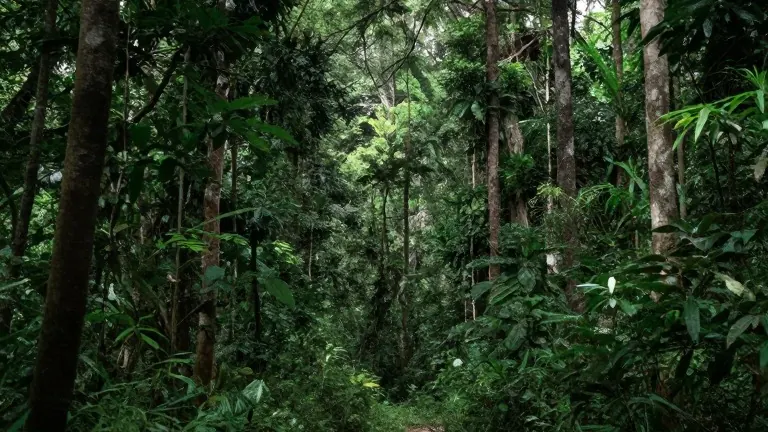
Brazil’s Ministry of Indigenous Peoples confirmed on Tuesday that approximately 20 members of the Awa people, who live in voluntary isolation, were sighted near the Guajajara village of Tawari in the northeastern state of Maranhao. The sighting occurred Monday near a government access control post within the Arariboia Indigenous Territory. Authorities stated that the group approached a government team, requested yams, and then retreated into the forest. The ministry emphasized that the information remains preliminary while officials assess the situation and monitor the health risks associated with the contact.
The Arariboia territory has faced decades of pressure from illegal logging, hunting, and other intrusions. Sarah Shenker, head of Survival Brasil, an arm of the advocacy group Survival International, described the incident as a crisis moment and a wake-up call. She urged Brazilian authorities to crack down on illegal intrusions to protect the Awa’s forest home. Shenker noted that the Awa have spent decades avoiding outsiders while hunting, fishing, and gathering food. The recent approach to a neighboring community has raised questions about why a group that typically avoids contact would suddenly move toward a populated area.
Footage recorded by Guajajara community members and shared by Survival International shows Awa adults and children gathered in dense vegetation. The video depicts some individuals carrying bows and arrows and wearing feathered headdresses and necklaces. Shenker stated that the images help reinforce the existence of isolated Indigenous groups, a fact sometimes disputed by those seeking access to their lands. However, she expressed a preference for the Awa to remain unseen, living undisturbed in their chosen manner. She said the organization would rather not have video footage of the uncontacted Awa if it means they are living in the way they choose.
Funai, the federal Indigenous affairs agency, stated that the Awa group is registered in the official database of isolated Indigenous peoples. A specialized protection team is currently monitoring the situation. Funai personnel and Indigenous health workers have deployed to the area, and authorities activated an emergency coordination mechanism to assess potential contact situations and health risks. The ministry stressed that its policy is not to encourage contact but to protect the Awa’s right to remain isolated. A brief encounter does not necessarily mean the group has chosen to establish permanent contact with outsiders.
The Arariboia territory is also home to the Guajajara people, whose Indigenous forest guardians have monitored their lands for years. Shenker said that these efforts have led to violence against the community, including the killings of some members. She stated that responsibility for protecting the territory rests with the Brazilian government. Shenker said the only way the Awa will survive is if intruders are kept out of their forest once and for all. Survival International has previously estimated that around 100 Awa remain uncontacted, though that figure is not necessarily a current population count. Other Awa live in settled villages and maintain contact with outsiders.