Dangote refinery prepares for Lagos debut with valuation near $47 billion
The Nigerian refinery's planned share listing has attracted worldwide interest as rising fuel exports support its growth, while analysts question costs and future margins.
By Nia Foster ·
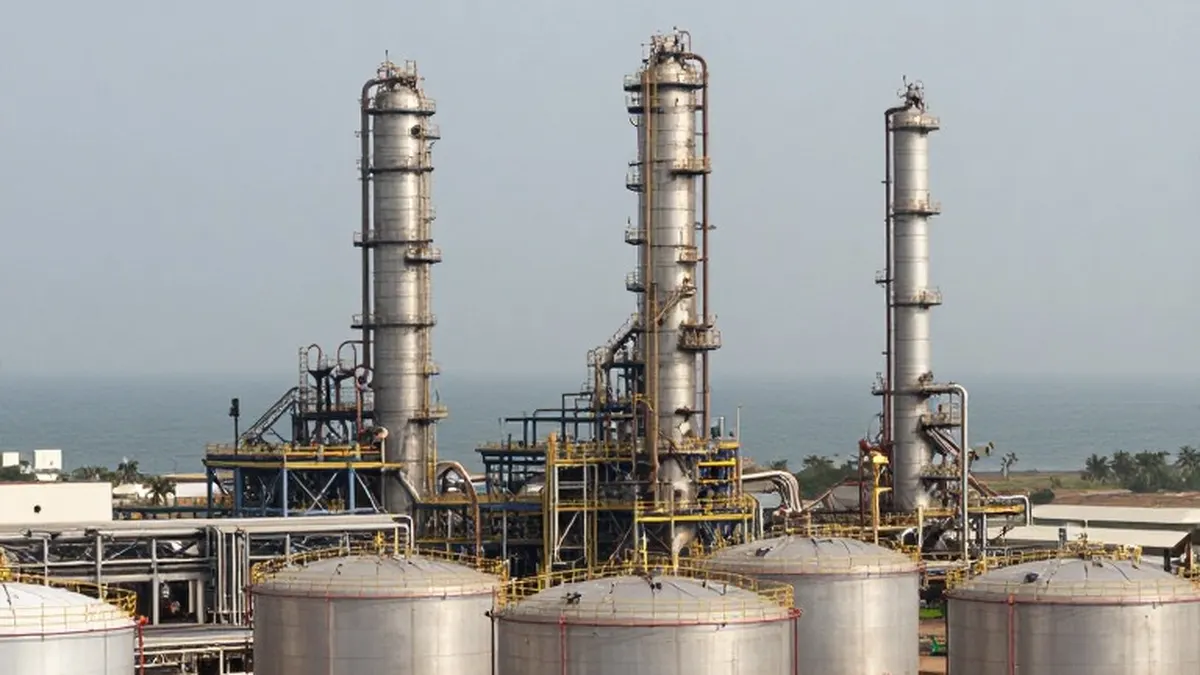
Nigerian billionaire Aliko Dangote's petroleum refinery is expected to start trading on the Lagos stock market on Dec. 1, in an offering that could make it Africa's largest publicly listed company. Multiple media reports say the planned debut follows regulatory approval. A refinery spokesperson did not respond to CNBC's request for comment.
The sale of a minority stake in Dangote Petroleum Refinery and Petrochemicals FZE has reportedly drawn applications far beyond the shares available. According to the refinery, prospective investors came from 120 countries, including every one of Africa's 54 nations. Shares were offered at 525 naira, or $0.39, each. Reuters calculated an implied valuation of roughly $47 billion using that price and the registered share count, which would make the listing Africa's biggest ever.
Dangote, Africa's richest man, has promoted the transaction as an "IPO for the people." At its launch in early September, he said a minimum purchase of 10 shares was intended to let ordinary Nigerians and other Africans become shareholders. He presented the offering as both a way to raise capital and a chance for workers, entrepreneurs and other Nigerians to benefit from the refinery's future expansion.
The Lagos facility began operating in 2024 and has since helped reshape Nigeria's fuel market. Built at a cost of about $20 billion, it ranks among the world's largest refineries, with crude distillation capacity of between 650,000 and 700,000 barrels daily. In recent months, it has also become an important jet fuel supplier as buyers turned toward West Africa following disruptions to Middle Eastern supplies caused by the Iran war.
Vortexa market analyst Mick Strautmann told CNBC that the refinery had recorded a particularly strong year. The firm's data put seaborne refined product loadings at approximately 400,000 barrels a day from January through October, about 50% above the corresponding period last year. Loadings then reached a record 575,000 barrels daily during the first three weeks of November, exceeding October's record of 550,000.
Strautmann said the rapid increase had brought substantial volumes of fuel to market while prices were exceptionally high. The refinery was among the few facilities adding significant supply to the Atlantic Basin, he said, while also reducing West Africa's dependence on fuel imports from elsewhere, especially European gasoline.
Cyril Widdershoven, a maritime, energy and geopolitical analyst at Blue Water Strategy, told CNBC that strong global demand for refined products had reinforced the refinery's position in the Atlantic Basin. Its plan to double refining capacity to 1.4 million barrels a day by 2029 could improve its international competitiveness. Still, he questioned the investment case, pointing to construction expenses, commissioning delays and the risk that additional capacity might arrive when refining margins are weaker.
David Omojomolo, an economist covering African emerging markets at Capital Economics, said the offering had attracted international attention partly because the refinery was viewed as an uncommon industrial policy success on the continent. He said the optimism surrounding it raised the question of whether other billionaire industrialists would commit their own money to supporting the region's industrial development.
More News · National news · Report a business · Got a Story?