Anthropic IPO Fails to Rekindle AI Rally as Market Volatility Persists
Despite a record-setting debut, Anthropic's IPO did not stabilize the tech sector, which faced renewed pressure from export control fears and competitive pricing pressures.
By Nia Foster ·
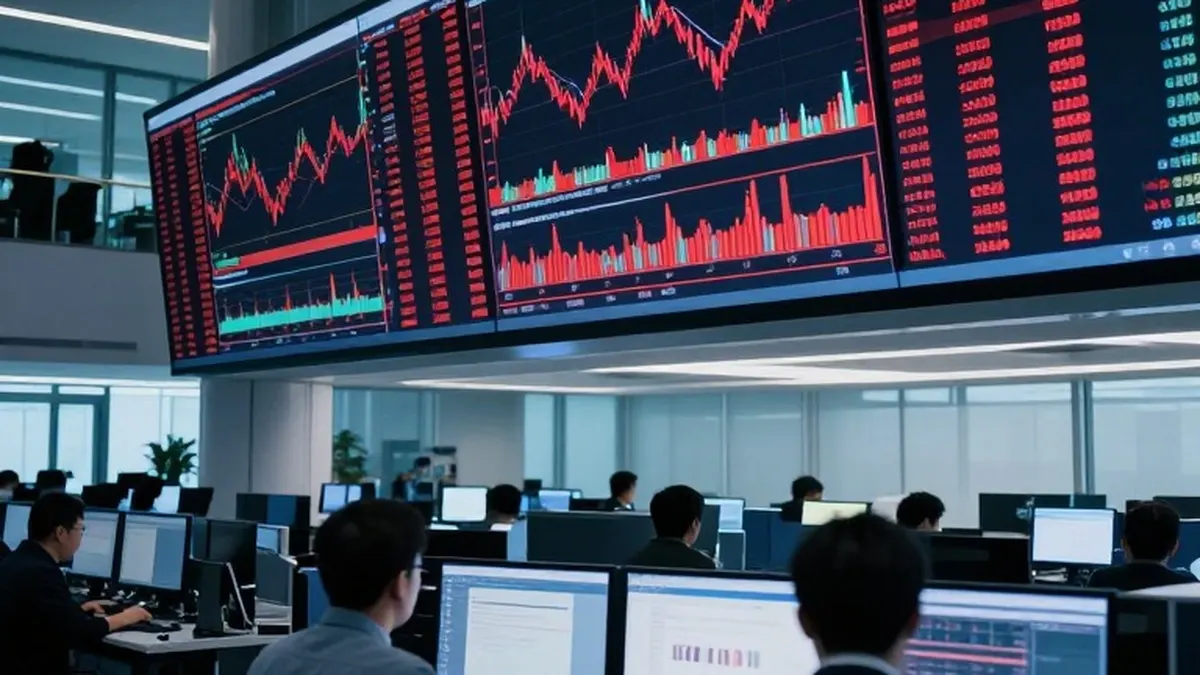
Anthropic completed the largest initial public offering in U.S. history, securing a significant financial victory for the company and its shareholders. However, the event failed to achieve its secondary purpose of reviving investor confidence in the broader artificial intelligence sector. The Nasdaq Composite finished the session down 2.25%, while the S&P 500 dropped 2% to close at 7,175. This outcome contradicted the expectations of many market participants who viewed the listing as a catalyst for a new phase of growth.
Market observers had anticipated that the Anthropic listing would serve as a clearing event to stabilize the tech sector. This anticipation followed months of volatile trading, the Nvidia espionage scandal, and mounting concerns regarding AI chip sales to Asia. Washington's tightening of export controls has raised fears that sales to the region may decline. These anxieties were amplified on Thursday when Hunterbrook Media, a short seller, released a report alleging that AMD firmware was found in companies blacklisted by the U.S. government. AMD shares fell by more than 7% following the report, though the chipmaker stated to CNBC that it complies with current regulations.
Additional scrutiny emerged from the House Foreign Affairs Committee, which released documents indicating that a Commerce Department subagency had approved the sale of over 879,000 AI chips to Chinese firms. This revelation reinforced concerns about potential sales slowdowns in Asia under stricter regulatory frameworks. Despite these headwinds, many analysts maintain confidence in the AI trade. They point to Anthropic's strong debut, with the stock closing 17% above its IPO price and the company raising more than $81 billion, as evidence of robust capital spending in the technology sector.
However, investors acknowledge that the current market environment is high-tension, requiring a more strategic approach. Dan Niles, founder of Niles Investment Management, describes his stance as that of a circumspect bull. He draws a parallel to market conditions in 2022, noting that while profits were possible, they required a precise combination of long and short positions. Niles highlights a price war between frontier labs Anthropic and OpenAI as a key challenge, arguing that intense competition is squeezing revenue and profit potential while increasing capital expenditures.
Niles provided specific data to illustrate this trend, noting that combined revenue growth for OpenAI and Anthropic slowed from 75% sequentially in the second quarter to 48% in the third quarter. During the same period, their combined losses expanded from $7.9 billion to approximately $8.4 billion. Trading experts suggest that the recent tech sector struggles are more significant than merely capital being diverted to Anthropic. JJ Kinahan, senior vice president at Cboe Global Markets, described the situation as a general reset in the AI landscape.
Kinahan noted that the traditional strategy of buying dips in tech stocks is facing an attitude change. He observed that investors can no longer blindly assume that purchased assets will rise, a shift influenced by Nvidia's ongoing declines. The coming days will be critical in gauging market strength. Kinahan identified Friday as a wildcard, where the market could experience a final sell-off or a bounce into no man's land with elevated volatility. A more definitive signal may arrive on Monday, when options trading on Anthropic begins. This will reveal whether retail investors are backing the company in force, which would serve as a broader vote of confidence in the AI trade.
Kinahan explained that if investors anticipate price increases, they will buy stock, but retail traders specifically tend to buy call options. He characterized Monday as a bigger test for the sector. In the interim, selling pressure on AI-related stocks continues. Neoclouds, which are highly indebted computing providers at the periphery of the AI trade, saw substantial declines, with CoreWeave closing down more than 6%. Hyperscalers like Alphabet and Amazon, often viewed as defensive positions, also finished lower.
One sector showed resilience, with cybersecurity stocks continuing to rally. Palo Alto Networks and CrowdStrike both closed higher. This strength is attributed to AI identifying security vulnerabilities across software infrastructure, prompting a race to patch these holes before hackers can exploit them. The market remains in a state of flux as it digests the implications of the IPO and broader regulatory developments.
More News · National news · Report a business · Got a Story?