Army sets Iowa explosives blast for Tuesday amid cold snap
Officials cite rising risks from lead azide degradation as temperatures fall below 30 degrees, overriding local health concerns.
By Julian Schulz ·
The U.S. Army will detonate unstable explosives in Iowa by Tuesday to prevent a potential uncontrolled blast during an incoming cold front. The operation targets 68 barrels of degraded lead azide stored at the Iowa Army Ammunition Plant in Middletown, a town of roughly 320 residents located just west of Burlington.
The decision follows a legal challenge from environmental groups who sought to halt the explosion in federal court. In a court filing dated Saturday, the Army stated that the risk of the chemical exploding naturally as temperatures drop below 30 degrees Fahrenheit in the coming days posed a greater threat to the public than a controlled detonation.
Officials originally planned for two controlled blasts on Friday, November 20. That date was postponed after local residents and officials raised concerns about the impact on the community. Acting Army Secretary Adam Telle explained on X that the plan was to wait until the last possible moment before a forecasted temperature drop, which could further destabilize the material.
Lead azide is a chemical compound used to ignite military ammunition. The Environmental Protection Agency classifies it as hazardous waste when it is no longer in use. Over time, the compound degrades and becomes sensitive to friction and shock. Matthew McConnell, an assistant professor of chemistry at Western Illinois University, noted that even small quantities can detonate with heat or friction, making transport dangerous.
Because hauling the material by truck was deemed too risky, the Army obtained an emergency permit from the EPA on November 13 to destroy the chemicals on site. The agency said temperature swings have dramatically increased the risk of an uncontrolled explosion.
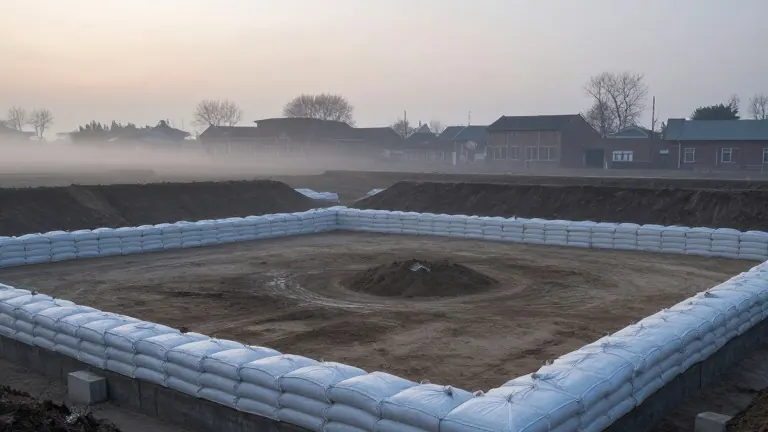
Crews will stack two-story sand barriers around the blast site to contain debris. They will also wet the soil and spray water to trap dust. While public health officials have expressed concerns, the Army maintains the operation will have no significant impact on the surrounding environment.
The detonation is scheduled to occur by Tuesday, November 24.