As AI Data Centres Strain Energy Grids, Denmark Harvests Their Wasted Heat
Engineers in Denmark are capturing the enormous heat generated by AI data centres and piping it into homes and hospitals, offering a partial answer as the industry's energy demand soars.
By Julian Schulz ·
As AI data centres multiply and strain the world's energy systems, engineers in Denmark are showing how to put their vast output of waste heat, usually lost to the open air, to good use.
More than 12,500 data centres are operating worldwide, with more coming online every day. Beyond consuming hundreds of billions of litres of water, they place massive demand on electrical grids and are likely contributing to global warming on a massive scale. According to the International Energy Agency, data centres used 485 terawatt hours of electricity in 2024, about 1.5 percent of the world's total energy supply and equivalent to Germany's entire electricity generation, a share expected to double to 3 percent by 2030, with an exponentially growing proportion driven by AI.
The surge collides with nations' efforts to achieve energy independence and cut CO2 emissions. The UN Economic Commission for Europe has warned that the rapid expansion of AI hyperscalers such as Google, Amazon and Microsoft poses a "growing threat to electricity systems worldwide". Backlash is building: in the Netherlands, police arrested protesters on Friday opposed to a new Microsoft data centre near Amsterdam.
In Texas, Elon Musk has angered residents by moving his AI and SpaceX operations there for tax breaks. Voters this week elected their first Democratic senator in nearly 40 years, James Talarico, despite Musk spending hundreds of millions on Republican campaigns.
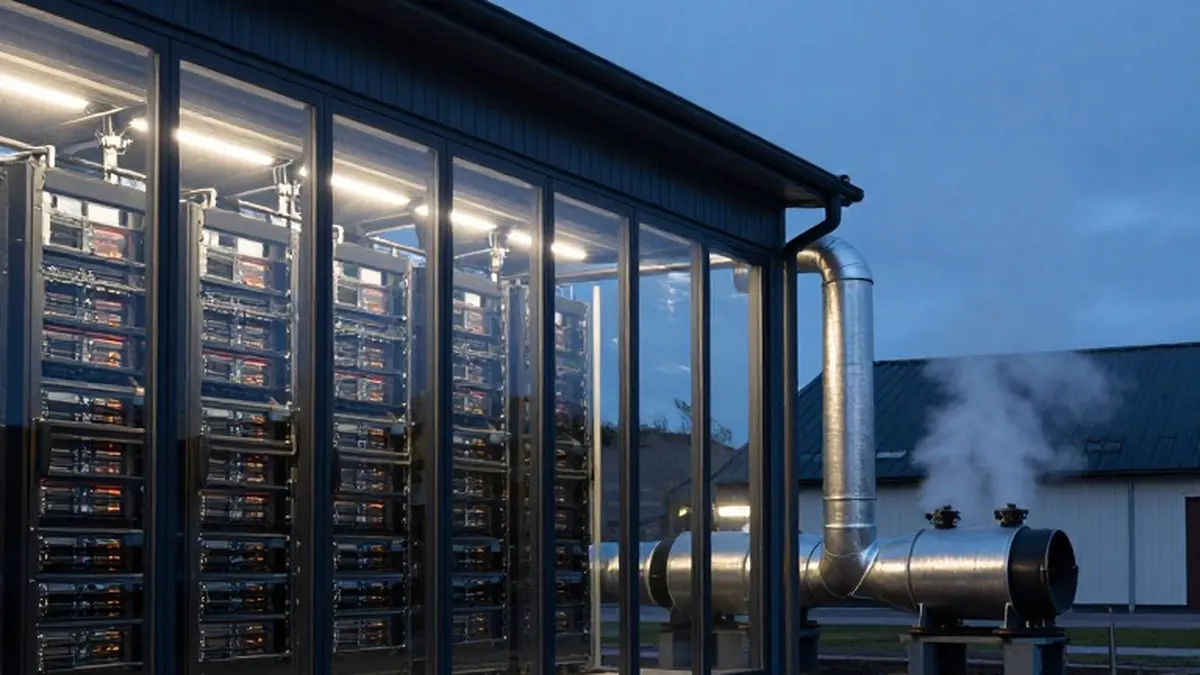
The Bitten supercomputer in Sonderborg, Denmark, points to a different path. Launched in May at the University of Southern Denmark, it is the country's go-to AI resource for academic research, powering deep data analysis and complex scientific simulations. Its specialised processors generate extreme heat nonstop, but 100 percent of it is recovered through advanced liquid cooling designed by Danish engineering company Danfoss, replacing traditional air conditioning and fans.
The system pumps coolant directly over the high-temperature chips, absorbing the heat and feeding it into Sonderborg's district heating network, helping to warm the town's 75,000 residents. Every photo taken or document uploaded activates processing in a data centre, Kristian Strand, president of Danfoss Climate Solutions, told Al Jazeera. "That creates heat which we have to remove," he said. "With the waste heat recovery system, at the end of the process you basically have a tap of hot water coming out of the data centre. That hot water can then be used not only to heat homes but in industrial processes, too."
The potential is huge: Danfoss calculates the heat wasted across Europe in a year could power Paris for 48 years, while roughly two-thirds of global energy is expelled as excess heat. The US hosts the most data centres, about 4,000, drawing 5 percent of national electricity, yet recovers little heat because it has nowhere to go.
"We should be building data centres where their heat can be used, not just where land is cheapest," said Jan Rosenow, professor of energy and climate policy at the University of Oxford. Scandinavia leads, he said: Meta's data centre in Odense, Denmark, recovers around 100 GWh a year, enough for 6,900 homes, and Stockholm, Sweden, has been feeding data centre heat into its network since 2014.
At Sonderborg Hospital, engineers replaced two carbon-intensive gas boilers with a heat pump system capturing waste heat from MRI scanners and temperature regulation in operating theatres, wards and corridors, heat once vented outside through cooling towers. The hospital is now energy independent for nine months of the year and can feed heat back into the district network.
"There was a very good business case for making this happen," said Lasse Bo Madsen, head of technical services at Sonderborg Hospital. "The project will pay for itself inside two years," he said, freeing money for patient care and new equipment. "We have a vast untapped source of energy in waste heat," Strand said. "Putting that energy to use reduces reliance on fossil fuels while also making business sense."