New Baghdad museum preserves the history of Iraq’s Jewish community
The Shamash Jewish Museum has opened in a former Jewish school, drawing visitors while questions remain about its organizers and official backing.
By Nia Foster ·
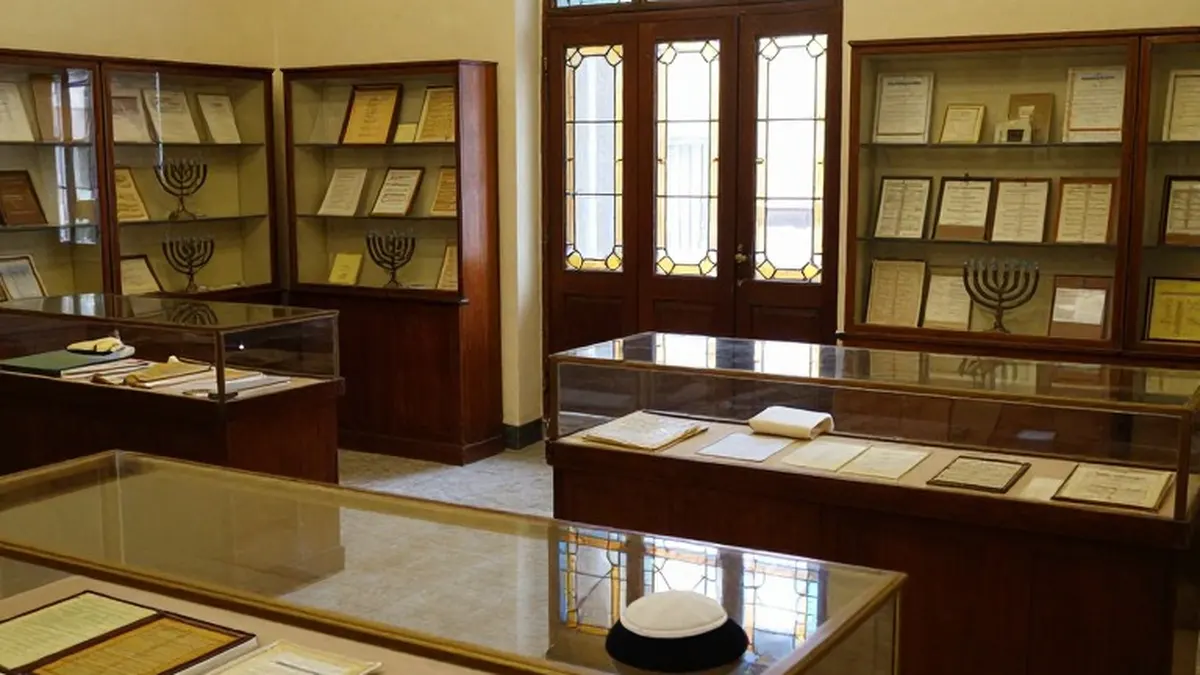
A recently opened museum in central Baghdad is bringing the history of Iraq’s once substantial Jewish community into public view. The Shamash Jewish Museum, on al-Rashid Street, displays religious objects, historical records and personal testimonies in the country’s first museum devoted entirely to Iraqi Jewish heritage.
The museum occupies the former Shamash School, established in 1928 to serve the growing community. Its exhibits include Hanukkah menorahs, a kippah and a prayer shawl, alongside photographs, school certificates and documents about communal life. Recorded interviews feature Jews who previously lived in Iraq and appear to have been filmed abroad.
More than 100,000 Jews lived in Iraq in the early 20th century, and Jews accounted for about a quarter of Baghdad’s population. Antisemitism intensified, culminating in the Farhud pogrom of 1941, and persisted after Israel’s establishment in 1948. The overwhelming majority of Iraqi Jews eventually fled, mainly to Israel. Only a handful remain in Iraq.
Despite coverage in Arab media and the circulation of museum footage online, the identities of the people behind the project and the extent of government support remain uncertain. Iraqi authorities have issued no official announcement about the opening, and the official news agency has not covered it. Ammar al-Tamimi, a lawyer for the committee of Iraqi Jews responsible for community properties, appeared to suggest in an interview with Saudi broadcaster Al Hadath that local authorities had approved the project.
Tamimi told AFP that the government seized the school property in the 1970s and turned it into a public school. A court returned it to the Jewish community in 1992. Attempts to revive the school subsequently encountered sanctions, the US invasion in 2003, sectarian fighting in 2006 and 2007, and the rise of the Islamic State terror group between 2014 and 2017.
JIMENA, an American organization dedicated to preserving Sephardic and Mizrahi Jewish heritage, said it met in early October with Iraqis leading the school’s restoration and had followed their work. It withheld further information about those involved inside Iraq because of concerns for their safety. The origins of the museum’s collection, and whether Jewish community members helped assemble it, also remain unclear.
Beyond a large wooden entrance decorated with menorahs and geometric stained glass, displays recognize prominent Iraqi Jews. They include Sassoon Eskell, Iraq’s first finance minister, and physician Dhafer Fouad Eliyahu, known for offering free medical services. AFP reported that dozens of Iraqi and foreign visitors have attended since the opening. Among them, 74-year-old Ramzi al-Saadi recalled his childhood Jewish neighbors on al-Kifah Street.
The opening follows another Baghdad heritage initiative reported in November 2025: the restoration of Rabbi Isaac Gaon’s tomb. That project reportedly cost $150,000 and was financed by Iraq’s Jewish community, likely with help from overseas donors, with limited government involvement. The site had deteriorated after most Jews left the country.
Fewer than 50 synagogues and Jewish sites remain in Iraq, chiefly in Baghdad and Hilla. Community preservation efforts have sought to repair buildings damaged by neglect and war, some of which became warehouses. In 2022, a tomb said to belong to the biblical prophet Nahum and a neighboring synagogue reopened in Alqosh, in Iraqi Kurdistan, after a secretive restoration supported by the US government and local Kurdish authorities.
Source: The Times of Israel