Baltimore taps river to fill 20-year low reservoirs as drought spreads across Maryland
A nor'easter bringing up to two inches of rain arrives just as moderate drought covers more than half the state, prompting continued reliance on Susquehanna River water.
By Julian Schulz ·
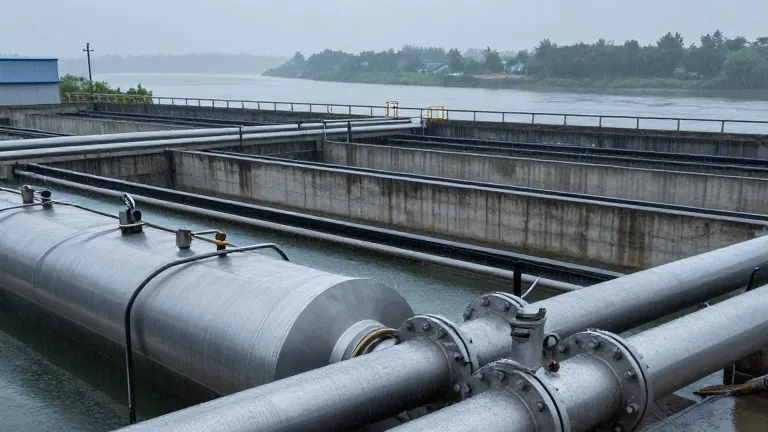
Baltimore City is pulling roughly 30 million gallons of water from the Susquehanna River every day to keep its reservoirs full while a new coastal storm approaches the region. The Department of Public Works activated the Deer Creek Pump Station in northern Harford County on October 5 to supplement the Prettyboy and Loch Raven reservoirs, which had dropped to critically low levels. The water travels about 39 miles to the Montebello filtration plants, where it is mixed with local reservoir water at a ratio of 20% to 40%.
The need for this supplemental supply has grown as dry conditions have worsened across the state. The U.S. Drought Monitor, released on Thursday with data valid through November 17, shows that about 52% of Maryland is now in moderate drought, designated as D1. That figure represents a sharp increase from approximately 18% of the state a week earlier. Additionally, about 80% of Maryland is classified as at least abnormally dry, up from about 66% the previous week.
These figures mark a shift from the start of 2026, when nearly 20% of the state was in severe drought, designated as D2. While no part of Maryland currently remains in severe drought, the dry autumn has pushed drought conditions back across much of the state in the weeks leading up to Thanksgiving. Matthew Garbark, director of the Baltimore City Department of Public Works, noted that the Prettyboy Reservoir, the city's northernmost source, has fallen to 20-year lows.
A nor'easter is expected to bring rain to the Baltimore metro area on Sunday, with the National Weather Service forecasting between 0.5 inch and 2 inches of precipitation. The wide range in estimates reflects uncertainty about the storm's track as it moves north along the coast. Areas that experience steadier bands of rain on Sunday afternoon and evening are likely to receive amounts at the higher end of that spectrum. Forecasters indicate that the rain could begin on Sunday morning and linger into Monday evening, accompanied by northeast winds with gusts of 20 to 30 mph near Baltimore.
The city's water system serves approximately 1.8 million people in Baltimore City and parts of Baltimore, Anne Arundel, Carroll, Harford, and Howard counties. Voluntary water-use restrictions that were first issued in May remained in effect in October, with the Department of Public Works warning that mandatory limits could follow if reservoir levels continued to decline. The department stated that any change in taste or odor from the river water would be minimal and that standard treatment and testing procedures remain unchanged.
One rainy Sunday is unlikely to fully resolve the region's water concerns. The Drought Monitor assesses conditions based on rainfall, streamflow, soil moisture, and groundwater over periods of weeks and months. Because the ground has been dry for an extended period, much of the initial rainfall is expected to be absorbed by the soil rather than running off into the streams that feed the Prettyboy and Loch Raven reservoirs. Reservoir levels typically respond slowly to precipitation, meaning improvement on the weekly drought map will likely be gradual.
Residents are advised to complete outdoor chores before the storm arrives and to clear leaves from gutters and storm drains to facilitate drainage. Light items such as patio furniture and holiday decorations should be secured to withstand the expected wind gusts. The city's voluntary restrictions have not been lifted, so fixing leaks and running full loads in appliances continues to conserve water. The National Weather Service expects a high near 50 degrees on Tuesday, and another storm is possible around Thanksgiving.
Forecasters are monitoring the potential for additional precipitation in the coming weeks. If wetter weather continues into December, the cumulative effect of Sunday's rain and subsequent storms could help replenish soil moisture and reservoir levels. Until then, the city will continue to blend Susquehanna River water with local sources to maintain supply for its nearly 1.8 million customers.