Residents of Congo file landmark lawsuit against mining company and government
Twenty-seven residents in the Democratic Republic of Congo are suing a Chinese-owned mine and the state over alleged pollution that has caused severe health issues.
By Tomas Gonzalez ·
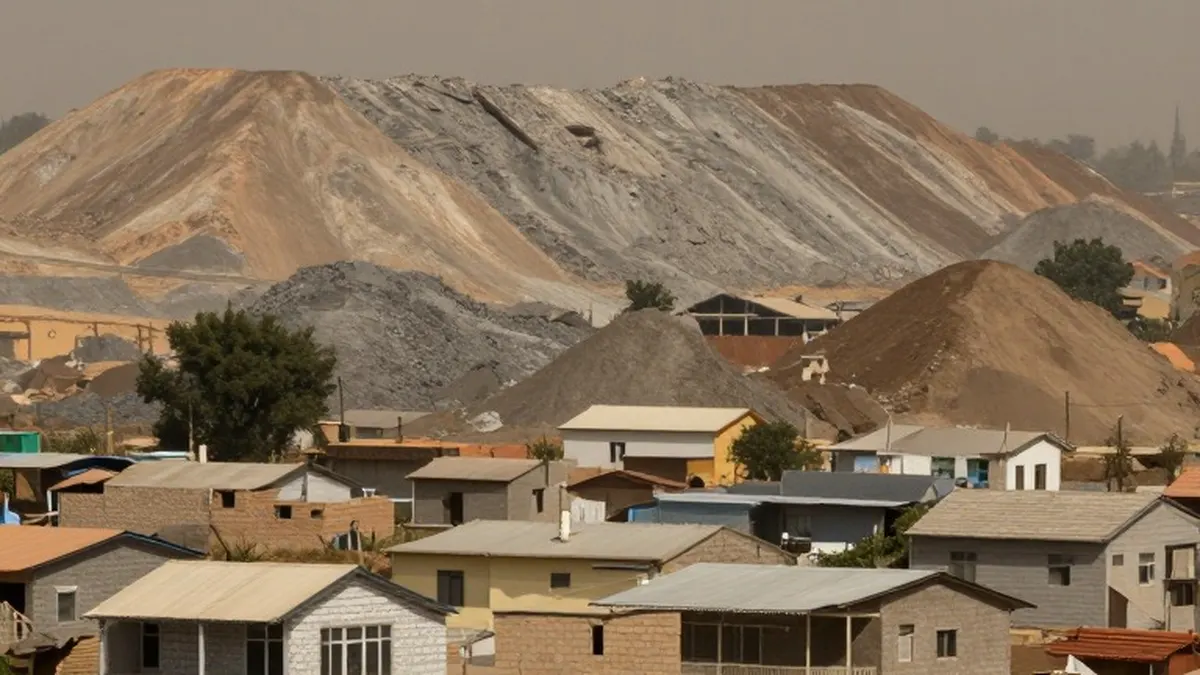
In Kolwezi, a city in the Democratic Republic of Congo, a group of 27 residents has launched a legal action against a major mining operation and the national government. The plaintiffs allege that pollution from a nearby copper and cobalt mine has caused significant health problems, including bleeding, birth defects, and chronic respiratory issues. The case, which officially began on November 3, represents a rare effort to hold industrial polluters accountable in the country.
The mine in question, known as COMMUS, is owned by the Chinese multinational corporation Zijin. It is located in the heart of Congo's copper belt, a region in the south of the country that holds vast mineral reserves. One of the plaintiffs, a mother who requested anonymity to avoid retribution, described losing three of her children to conditions she attributes to the mine. Two died at birth, while a third suffered from repeated nosebleeds before passing away. Her remaining child exhibits stunted growth.
The plaintiffs are suing both the mining company and the government, accusing the state of failing to enforce environmental regulations. They fear that their identity, while public in court documents, may expose them to intimidation from locals or officials. As the sun set over a mound of mine tailings near her home, one plaintiff stated that their children are the first victims and that they are seeking justice.
The symptoms reported by the claimants include contaminated water, skin rashes, miscarriages, and birth defects. A study published in June by the environmental research organization Source International, conducted with advocacy groups and scientists from the University of Lubumbashi, highlighted the scale of the contamination in Kolwezi. The researchers found that levels of fine particulate matter, or PM2.5, were three to six times higher than the World Health Organization's air quality guidelines. The highest concentrations were recorded in the vicinity of the COMMUS mine.
Dust samples tested by the researchers contained residues of copper, cobalt, and manganese, pointing to mining waste as the primary source. Flaviano Bianchini, the executive director of Source International, described the findings as among the most concerning air quality results documented at industrial mining sites in recent years. Although the study did not directly examine health impacts, it recommended further epidemiological research. Residents and health workers in the area continue to link their ailments to the polluted environment.
Héritier Bukassa, a nurse at a local clinic situated near the mine's waste mountain, reported that patients frequently suffer from itchy hives. He noted that some individuals scratch themselves with knives to relieve the itching. Bukassa also mentioned high rates of miscarriage and referred four babies born with congenital malformations, mostly cleft palates, to hospitals this year. Respiratory illnesses are also common, particularly in infants who develop breathing problems shortly after birth. The nurse stated that no one from the mining company has ever come to discuss these issues with the clinic staff.
The Democratic Republic of Congo is the world's second-largest copper producer and supplies over 70 percent of the global cobalt market, a metal essential for electric vehicle batteries. Last year, the United States signed a broad economic partnership with Congo aimed at attracting American investment and challenging the dominance of Chinese firms in the mining sector. Despite the strategic importance of these resources, environmental pollution from the industry has received limited scrutiny.
Zijin and the Congolese ministries of mining and environment did not respond to requests for comment. The Cobalt Institute, an industry lobby, stated that understanding pollution requires an evidence-based approach that considers all potential sources. They added that companies perform environmental monitoring and implement mitigation measures. RAID, an advocacy group supporting the plaintiffs, called the lawsuit one of the most ambitious legal challenges yet brought by Congolese residents over industrial mining pollution.
The plaintiffs are seeking 1.3 million dollars in compensation for health problems and medical expenses, along with 5 million dollars for environmental restoration. Their lawyers expressed concern that clients might face pressure to withdraw testimony. However, the mother who lost three children expressed confidence in their cause, stating that residents have a right to a clean environment and to good health.
More News · National news · Report a business · Got a Story?