Brown Pelican Population in Chesapeake Bay Has Halved Since 2008
Researchers point to a drop in menhaden fish as a likely cause, but funding shortages have prevented a definitive study.
By Nia Foster ·
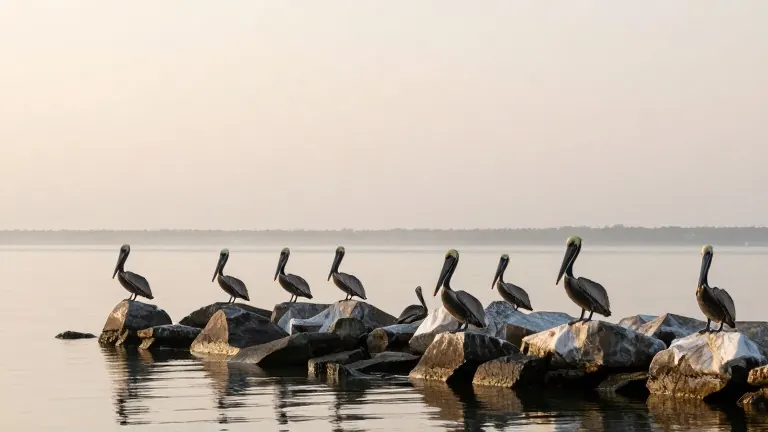
The number of brown pelicans breeding in the Chesapeake Bay region has fallen by roughly half since the late 2000s. Scientists report that the population, which peaked near 3,000 pairs, has dropped to an estimated 1,500 pairs in recent surveys. The sharp decline has left biologists without a clear explanation, largely because funding for further investigation is scarce.
Dave Brinker, an ornithologist with the Maryland Department of Natural Resources, stated that the birds are "going down." He suspects the drop is tied to changes in the availability of Atlantic menhaden, a small fish that serves as a primary food source. Brinker noted that the birds are highly sensitive to prey levels, but admitted that specific food studies are missing.
Atlantic menhaden are the center of an ongoing dispute over commercial fishing in the Bay. The Canadian company Omega Protein operates a reduction fishery that harvests the fish to produce oil and meal. Critics argue that the company removes too many menhaden, leaving insufficient stock for birds and larger predators. Virginia allows the harvest, while Maryland bans the practice. A cap of 51,000 metric tons per year has been in place since 2018, though federal managers are currently considering lowering that limit.
Evidence of stress in other bird species supports the menhaden theory. Researchers have documented a decline in osprey populations, citing fewer eggs laid by females and chicks found dead in nests due to starvation. Reid Nelson, a fisheries scientist at George Mason University, remains cautious. He stated that the data does not yet firmly link the osprey hardships to menhaden availability, hoping that new research will provide clarity.
Omega Protein disputes the connection to pelicans. Ben Landry, a company spokesman, said in a statement that those blaming the fishery should produce peer-reviewed evidence. He pointed to research by Bryan Watts, who leads Virginia’s waterbird survey. Watts suggested that the loss of a specific colony on Shanks Island was caused by steady erosion of the land, not a lack of fish. Landry argued that this documented cause should prevent speculation about the menhaden trade.
Watts, director of the Center for Conservation Biology at the College of William and Mary, acknowledged the erosion factor but believes the population is now down 40% to 50% from its peak. He cited anecdotal reports of colony collapses that suggest the downward trend is continuing. Watts said he lacks the resources to determine if menhaden is a dominant factor, stating, "We just don't have the data to say."
In Maryland, the decline has been equally steep. Breeding pairs fell by more than 50% from the state's 2008 peak to the 2023 survey results. Brinker said the local downturn is a sign that Bay fisheries are struggling. He contrasted the current low numbers with the period when menhaden populations were higher and pelicans bred densely in the central Bay.
Jim Rapp, who leads birding tours to the Smith Island archipelago, noticed the change firsthand. Shanks Island, which once hosted nearly 2,000 nesting pairs, had no pelicans in recent years. Rapp said he had not expected such a dramatic shift. The birds have moved to nearby islands, but not in numbers large enough to offset the loss on Shanks Island. Brinker said there is no research yet to answer whether the missing birds starved or simply relocated to other states.