China pledges to lead global shift to low-carbon electricity
Senior Chinese officials at the Cop31 climate summit have outlined a strategy for rapid electrification and international cooperation to reduce emissions.
By Nia Foster ·
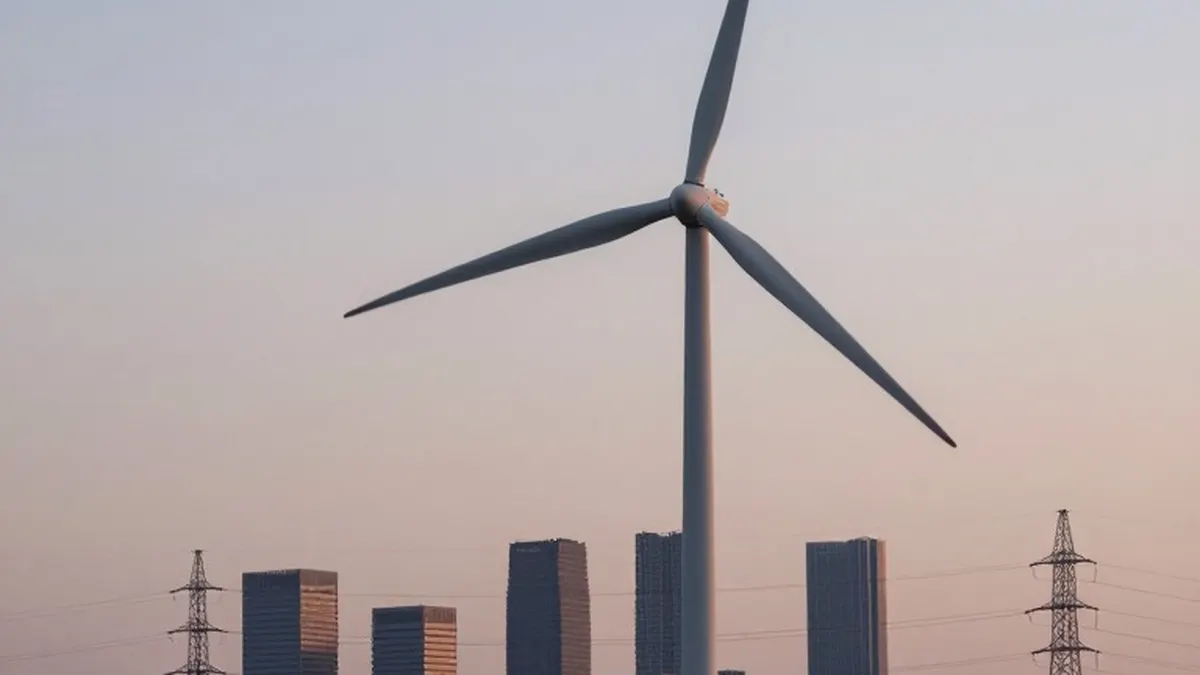
China has committed to accelerating the electrification of its economy using low-carbon energy sources, a move intended to help other nations achieve similar goals. Wang Yi, a senior adviser to the Chinese government and a professor of energy and environment policy at the Chinese Academy of Sciences, emphasized this direction during the Cop31 UN climate summit. He stated that end-use electrification is a clear path forward, provided the source of that electricity remains clean.
The significance of this pledge is substantial given that China is currently the world's largest emitter of greenhouse gases, accounting for more than a quarter of the global total. At the ongoing negotiations in Turkey, nations are being encouraged to adopt a target of deriving 35% of their final energy consumption from electricity by 2035. This specific goal, often referred to as the 35:35 target, has been championed by Australia, which currently presides over the talks, and the host nation, Turkey.
On Friday, Australia and China signed a joint statement endorsing this 35:35 goal. However, the second draft text of the likely outcome from Cop31, released on Thursday, classified the electrification pledge as one of several voluntary options for countries to reduce greenhouse gas emissions. Wang Yi explained that China aims to share its experience with other nations, noting that the country has significantly reduced the cost of clean technology and products.
Experts identify electrification as a critical next step in the transition to a low-carbon economy. This shift is necessary to address the nearly 80% of primary energy that still relies on fossil fuels, particularly in transport, heating, and industrial sectors. Electricity is generally several times more efficient than fossil fuels, meaning electric vehicles, heat pumps, and industrial processes require far less energy to operate than their traditional counterparts.
Despite the progress, civil society organizations have argued that any commitment to electrification should explicitly require clean sources. A voluntary approach is likely to garner broader support, as many nations, including China and India, resist what they perceive as top-down interference in their national plans. Campaigners, however, worry that leaving the choice to individual countries could allow for an increase in gas-fired power plants.
Wang Yi indicated that China is content with the 2035 target but noted that it would be more challenging if the electricity were required to come entirely from low-carbon sources. He remarked that while the target is manageable for China, ensuring clean electrification presents greater difficulties for both China and other nations. The country still operates a large number of coal-fired power stations and plans to build some new ones, though fewer than previously anticipated, to serve as backup during the energy transition.
A major point of contention at Cop31 is the language regarding the transition away from fossil fuels. This phrase was included in the first draft of the cover decision presented on Monday but was removed from the second draft issued on Thursday, causing concern among many delegates and campaigners. Wang Yi acknowledged the UAE consensus on this transition but suggested that different countries may require different roadmaps.
China has also raised concerns about trade barriers affecting its clean technology exports. These include tariffs imposed by the United States under the Trump administration and the European Union's Carbon Border Adjustment Mechanism, or CBAM. The CBAM penalizes imports from countries with looser carbon regulations, requiring companies in high-carbon sectors to pay for their emissions. Some smaller developing nations have criticized the EU for this mechanism, arguing it hampers their manufacturing industries, though the EU maintains it has processes to protect these nations.
Wang Yi called for more collaboration on trade issues at climate conferences, stating that a unified approach is needed. He noted that China and other developing countries in the global south disagree with the EU on these matters, but emphasized the need for continued dialogue. Jiangwen Guo, a senior research fellow at the Chatham House think tank, observed that China's consistent top-down policies and clear direction are creating a global model for the energy transition.
Negotiations at Cop31, which were scheduled to conclude at 6pm on Friday, were delayed after talks stalled. Delegations were sent home late on Friday, with a new draft of the main cover decision expected to emerge on Saturday morning. The discussions are likely to continue into Saturday and potentially beyond, as nations work to finalize the summit's outcome.