Cinema South Festival Marks 25th Edition in Sderot After Years of Rocket Fire and War
The festival, run by Sapir Academic College's School of Audio and Visual Arts, runs from November 1 to 5 and puts local southern filmmakers at the center of its program.
By Nia Foster ·
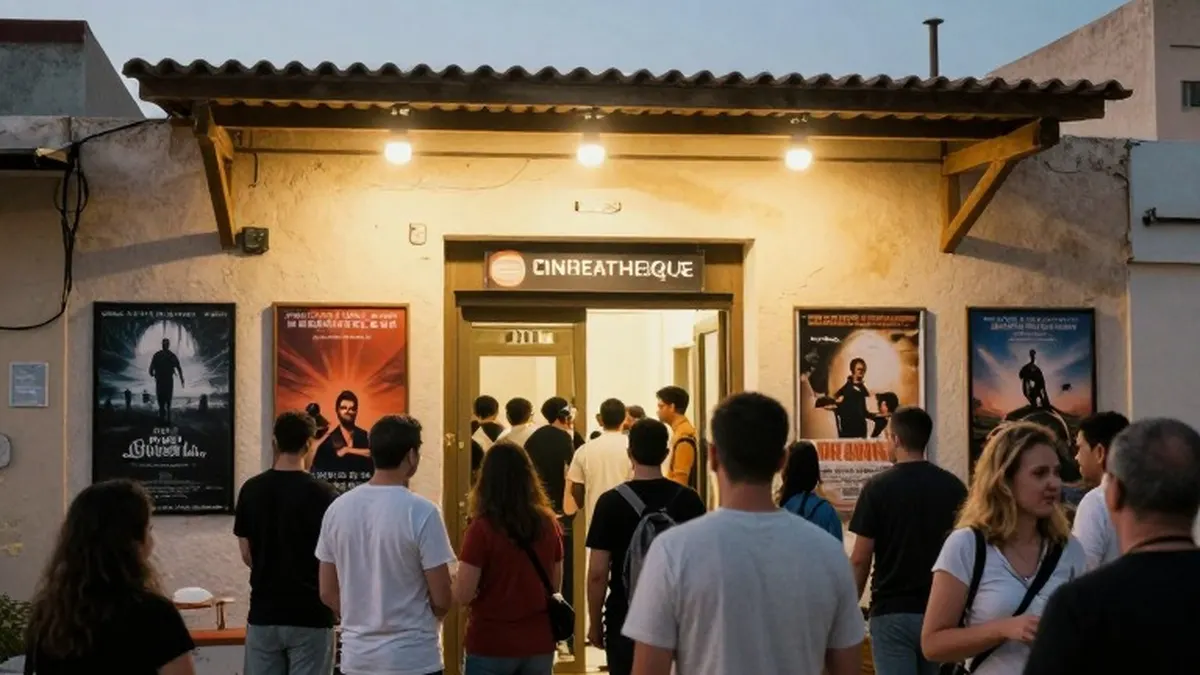
The Cinema South Festival will mark its 25th edition at the Sderot Cinematheque from November 1 to 5. For director Reuma Mantzur, the milestone carries unusual weight. "First of all, let's say that everything happening here is already a miracle," she said.
The claim is easy to understand given the festival's history. It has operated through more than two decades of frequent and unexpected bombings by Hamas from the Gaza Strip, and through the October 7, 2023 attack, which killed more than 50 residents of the area, most of them civilians.
Mantzur sees the festival as inseparable from the community around Sapir Academic College's School of Audio and Visual Arts, where it began and which still sponsors and runs it. The screenings are one part of a wider effort to help filmmakers develop their work and to give them reasons to stay in the South. Mantzur came to Sapir as a student in 2006, when both the festival and the regional film community were smaller. She said the event grew in response to "the atmosphere and the reality of our lives."
For students finishing their graduation films, the festival's pitching events and development incubators offer an answer to the question of what comes next. Mantzur noted a seemingly paradoxical trend: as life in the region has grown harder, the desire to create more work has grown too.
One such initiative is Through a Woman's Eyes, an incubator for Bedouin women filmmakers guided by filmmaker Sigalit Banai and supported by partners including the Negev Film Fund. Mantzur highlighted the role of the Rahat community center and local professionals. "The directors are Bedouin women, and everyone working around them is local," she said. The next group of films has already been shot and is set to screen next year.
The regional focus does not rule out entertainment with national reach. This year's opening presents the first two episodes of the second season of Bros, the series by Guy Amir and Hanan Savyon, which streams worldwide on Netflix. Mantzur said watching television in a cinema creates a shared experience that differs from viewing at home. The closing ceremony will return to local concerns with the launch of Negba, a new incubator for young southern filmmakers.
The festival has long drawn notable guests despite the security situation. Richard Gere gave a master class as guest of honor in June 2004, hours after a missile landed not far from the cinematheque. Then-mayor Eli Moyal gave him a piece of shrapnel, and the actor joked about fitting it into his luggage. Later guests included documentary director Albert Maysles and director Sergei Loznitsa. This year, Swiss director Thomas Imbach will present Nemesis and The Exposure and lead a master class in cooperation with the Swiss Embassy.
Mantzur said bringing in overseas guests and building collaborations has become much harder, and that the obstacles have underlined the importance of backing local creators. Visitors are welcome, she stressed, since they broaden the celebration and bring new audiences, but the festival's character rests on the people making the films. "Let's invest in ourselves," she said.
Asked what sets the festival apart from other Israeli events, Mantzur said recent years have been about survival, with the pandemic and regional upheaval leaving little room for reflection. "The focus in recent years has been on simply continuing to exist," she admitted. She said the next stage will grow from the work itself. "It's a festival that belongs to us and is for us," she said, calling the southern perspective its defining quality. The full program is available on the festival website at www.sapir.ac.il/cinema/csf.
Source: The Jerusalem Post