SpaceX Prepares for Historic Double Catch of Starship Rocket
SpaceX will attempt to capture both the booster and upper stage of its Starship vehicle during a test flight scheduled for Friday, a critical step toward full reusability and NASA's lunar ambitions.
By Julian Schulz ·
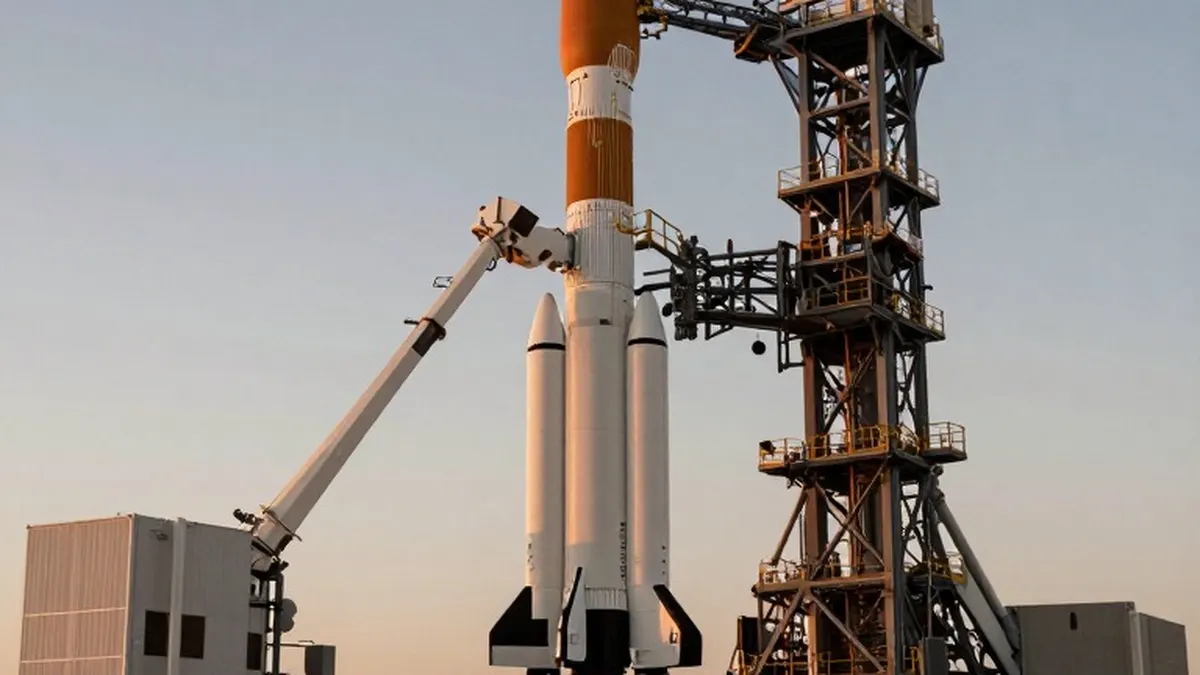
SpaceX is set to undertake a significant milestone in spaceflight history by attempting to recover both components of its Starship rocket during an upcoming test flight. The launch is scheduled for Friday from the Starbase facility in Texas, with a takeoff time of 16:45 local time, or 22:45 GMT. The mission includes a 75-minute window for launch, during which the 124-meter-tall vehicle will be monitored closely by both the company and the National Aeronautics and Space Administration.
The primary objective of this flight is to test the mechanical arms, colloquially known as chopsticks, located on the launch tower. These arms are designed to grab the rocket parts mid-air as they return to Earth. If the maneuver is successful, it will mark the first time a rocket that has reached space has been fully recovered. This achievement would be a crucial step in making Starship reusable, allowing it to fly repeatedly and reducing the cost of space access.
The flight profile involves two distinct catch attempts. Approximately six and a half minutes after liftoff, the bottom section, known as the Super Heavy booster, is expected to return to the launch tower for the first capture. SpaceX has successfully caught this booster on three previous test flights, establishing a precedent for this part of the operation. Meanwhile, the upper stage, referred to as the Ship, will continue its journey into space.
During its time in orbit, the Ship is planned to deploy 26 satellites. These units will join the Starlink constellation, which provides high-speed internet services from space. After completing 14 orbits around the Earth, the upper stage will re-enter the atmosphere for the second catch attempt. This event is expected to occur approximately 22 and a half hours after the initial launch. Unlike the booster, the Ship has not yet been captured by the launch tower arms, having previously splashed down in the ocean after reaching orbit for the first time in September.
SpaceX executives have stated that the decision to attempt the catch of the upper stage will be made after careful assessment of the vehicle while it is in space. If any issues are detected during the flight, the company has identified various points where the stage can be safely brought down into the ocean. This cautious approach reflects the high stakes of the mission, as the company aims to validate the full reusability model of the Starship system.
The push for a fully reusable rocket is a long-held ambition for SpaceX, which first achieved a vertical landing of a rocket part with its Falcon 9 booster in 2015. Since then, Falcon 9 rockets have flown more than 100 times a year, with the reuse of the bottom section dramatically lowering launch costs. Prof Malcolm Macdonald, President of the Royal Aeronautical Society, noted that while a single successful flight will not prove the entire model, it could mark an important transition from demonstrating that Starship can fly to demonstrating how it could operate.
The outcome of this flight will be closely watched by SpaceX shareholders, who gained access to the company's financials after it went public earlier this year. It will also be a critical indicator for NASA, which relies on Starship for its Artemis program. The US space agency has awarded SpaceX a contract to configure the Ship into a lander that will eventually transport astronauts to the lunar surface. NASA aims to land humans on the Moon in 2028, a timeline that requires significant progress in the coming months.
SpaceX is not the only entity involved in these lunar efforts. Blue Origin, owned by Jeff Bezos, also holds a contract to use its New Glenn rocket and lander for the Moon touchdown. Both companies are expected to play key roles in Artemis III, currently planned for summer 2027. This mission involves four astronauts in the Orion spacecraft attempting to dock with both the SpaceX and Blue Origin landers. The pace of development for Starship has been slower than originally intended, adding pressure to meet these ambitious commitments.
Blue Origin faces its own challenges, having suffered a major setback earlier this year when its rocket exploded and destroyed its launchpad in Florida. The company had initially targeted a return to flight by the end of this year, but that schedule has now been delayed to early 2027. NASA Administrator Jared Isaacman has emphasized that the United States is in a race with China to return to the Moon, with China planning to land its Taikonauts on the lunar surface by 2030.