Gaza rescue crews forced to respond on foot as vehicle fleet collapses
Palestinian Civil Defence officers describe critical delays in emergency responses as a lack of functioning vehicles and spare parts cripples operations across the territory.
By Julian Schulz ·
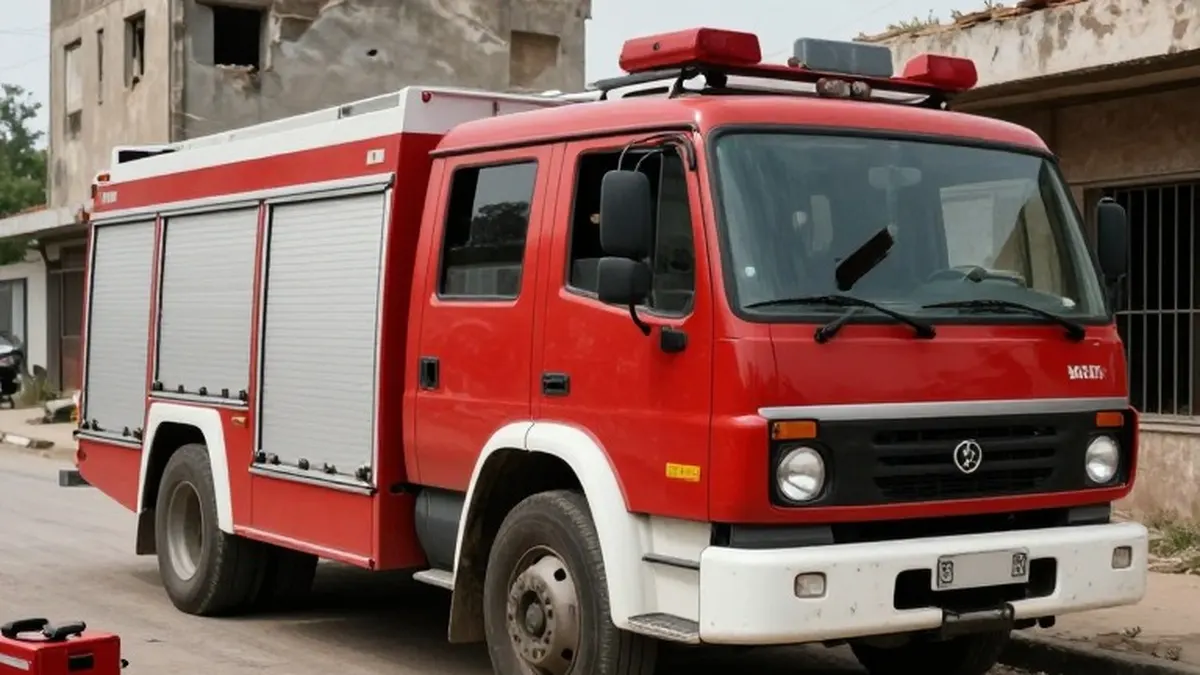
Palestinian Civil Defence crews in Gaza City are increasingly forced to respond to emergencies on foot due to a severe shortage of functioning vehicles. In one recent incident near the al-Qattan Centre, a team heard an explosion but could not deploy their fire engine because the vehicle was out of order. Field officer Abdullah al-Majdalawi explained that the crew grabbed their equipment and ran to the site, taking about ten minutes to arrive. During that time, they transported injured people back and recovered a body from the strike zone.
This incident highlights a broader pattern of delays affecting rescue efforts. In another case in the Sabra neighbourhood of southern Gaza City last month, a vehicle broke down while a team was responding to an air strike. By the time the crew reached the scene, several people had died and others were critically injured. Al-Majdalawi noted that arriving sooner might have improved the survival chances of some of the wounded.
The department’s reliance on alternative transport methods has become a grim reality. During a mission in 2024, a crew had to be transported by a man with a donkey-drawn cart. Al-Majdalawi recalled that people were astonished to see Civil Defence personnel travelling in such a manner, but it was the only option available to them at the time.
The core of the problem is an ageing fleet that has been worn down by years of use and the intense demands of the war that began in October 2023. The only dedicated rescue vehicle in Gaza governorate, a Toyota Hilux pick-up truck, has been out of service for weeks. It is more than 20 years old and requires a power steering pump, tyres, and other critical parts. The crew has attempted makeshift repairs, such as patching tyres with flour dough, but the vehicle remains inoperable.
Without the dedicated rescue truck, teams must use larger fire engines, which are difficult to manoeuvre through streets crowded with tents and market stalls. When emergencies occur simultaneously in different areas, teams face the difficult choice of where to respond first. Raed al-Dahshan, director of Gaza City’s Civil Defence, stated that more than 85 percent of the department’s vehicles are out of operation, leaving only about 15 percent working across the territory.
Many of these vehicles date back to 1994, when the Palestinian Authority was established. International fire-service guidelines generally recommend replacing front-line fire engines after 15 to 20 years, yet many in Gaza have far exceeded this lifespan. The United Nations Office for the Coordination of Humanitarian Affairs warned in May that restrictions on the entry of engine oil and spare parts were severely impacting humanitarian operations, causing vehicles and generators to break down beyond repair.
Maintenance efforts are hampered by the high cost and scarcity of replacement parts. Abd al-Fattah al-Nimra, a maintenance officer, said that mechanics often resort to temporary fixes and substitute components because original parts are unavailable or prohibitively expensive. He noted that even basic items like tyres have become extremely costly, straining already limited budgets.
The situation has become more urgent with the arrival of winter. Heavy rains in early November caused damaged buildings to collapse and flooded displacement sites. Civil Defence teams were only able to respond to a minority of distress calls, with most other callers receiving guidance over the phone. More than 140 Civil Defence personnel have been killed during the war, and the department now has fewer than 1,000 employees across five governorates.
Al-Dahshan warned that without urgent support, the department may soon be unable to respond to calls for help. He emphasized that the time it takes to reach an injured person often determines whether they survive. For the crews, the immediate needs are basic: functioning vehicles, spare parts, tyres, engine oil, and fuel. Al-Dahshan stated that if the world cannot stop the war, it should at least enable humanitarian services to rescue the injured before they die.