Honey Foundation Celebrates 10 Years of Cultivating Jewish Community Leadership
Leaders and officials gathered in Jerusalem for the Honey Foundation's decade anniversary to discuss the diverse roles of community spiritual guides.
By Julian Schulz ·
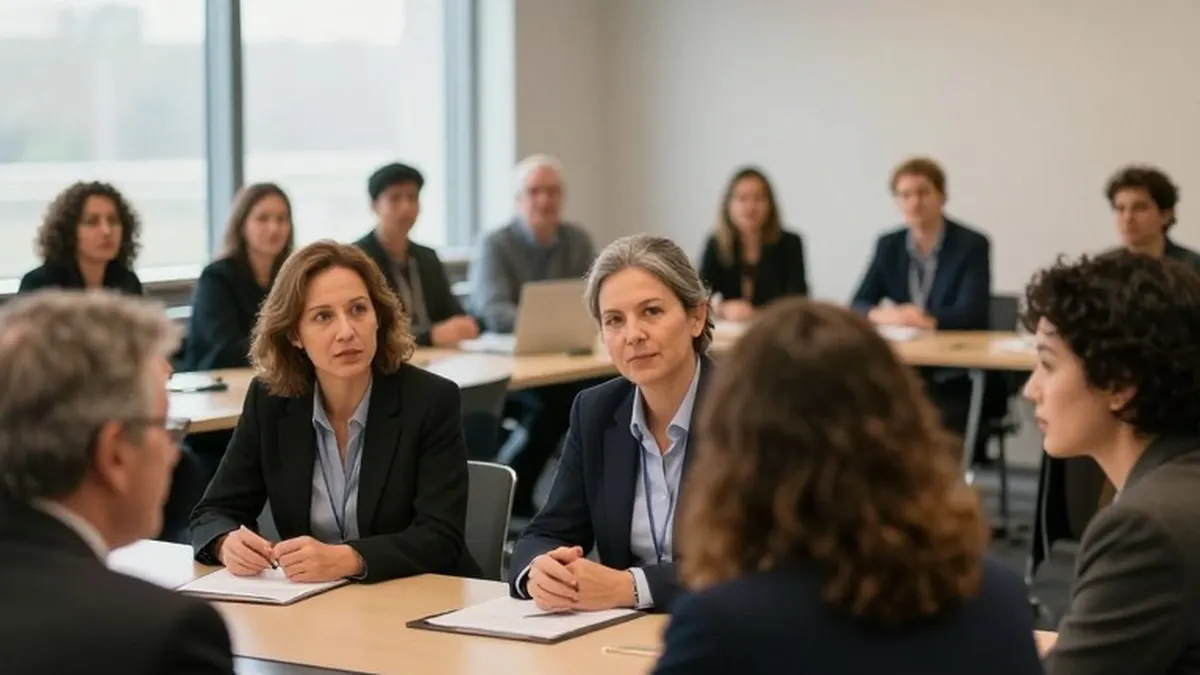
Jewish community leaders from various regions of Israel convened in Jerusalem on Thursday for a significant milestone event. The gathering marked the tenth anniversary of the Honey Foundation for Israel, which is dedicated to supporting figures who guide local communities. Attendees included 54 incoming fellows and alumni who work with groups characterized by distinct religious practices, languages, and age demographics.
The event took place at the Van Leer Jerusalem Institute. Shira Marili-Mirvis, the foundation's CEO in Israel, highlighted the collaborative nature of community work during the proceedings. She noted that no individual can sustain a community alone, emphasizing the critical need for shared responsibility and support networks among leaders.
Established by Bill and Amy Lipsey, who were present at the anniversary celebration, the organization provides financial stipends, mentoring, and professional training to Jewish spiritual leaders. In a pre-event interview with The Jerusalem Post, Marili-Mirvis explained that the foundation focuses on empowering individuals whom communities already naturally turn to for guidance. These leaders handle a wide range of duties, from teaching and leading prayers to providing emotional support during times of grief or personal difficulty.
President Isaac Herzog and his wife, Michal, engaged in discussions with the attendees regarding the broad spectrum of Jewish identity. Michal Herzog observed that the diversity present at the event was uncommon within the broader landscape of Jewish leadership. She reflected on her own secular upbringing, where studying Talmud and reading Rashi's biblical commentary were standard parts of cultural education rather than indicators of religious practice. She expressed regret that this familiarity with Jewish texts has diminished in secular circles.
President Herzog stressed the importance of dialogue both within the group and across Israeli society. He stated that the goal is not to achieve uniformity but to establish clear rules for cooperation. He acknowledged a deep sense of distrust within the system and argued that building trust requires leaders to communicate effectively, a process he described as distinct from political maneuvering.
The conversation also touched on recent events affecting local communities. Michal Herzog recalled a visit to Kfar Manda the previous day, where Lina Qassem Zidan was killed in a grenade attack while shopping. At the site, the president had urged any incoming government to prioritize combating crime in Arab society while protecting citizens' rights. During the Thursday gathering, she noted that the applause from residents during that visit was a sign of gratitude for the recognition of their struggles.
When addressing political dynamics, President Herzog encouraged leaders to set aside their egos to reach compromises. He referenced his recent consultations with Knesset factions, stating that he asked difficult questions because all parties needed to compromise. Michal Herzog added a lighthearted observation about the lack of women in political leadership, recalling a group photo with faction heads where all participants were men. The president agreed that increased representation was necessary.
Two community leaders based in Netanya, both named Esther, shared their personal experiences at the event. One described building a Russian-speaking community that has grown from ten women to approximately 400 members, many of whom arrived in Israel due to the war. She uses shared Shabbat gatherings and trips to foster a sense of belonging in what she described as an insulated group.
The other Esther works with a community of older English speakers in northern Netanya and is focused on attracting younger members. She noted a growing search for spirituality within her group in recent years. For her, the anniversary gathering served as an opportunity to learn from peers with different backgrounds and to build lasting professional relationships.
She concluded by expressing that the event fostered a sense of partnership among diverse leaders. She described the connections made at the meeting as a bond that would endure for years, highlighting the collaborative spirit of the foundation's mission.