New Report Describes Gaza as a Toxic Wasteland After Military Assault
Experts warn that widespread contamination from heavy metals, sewage, and debris poses long-term health risks to the population of Gaza.
By Nia Foster ·
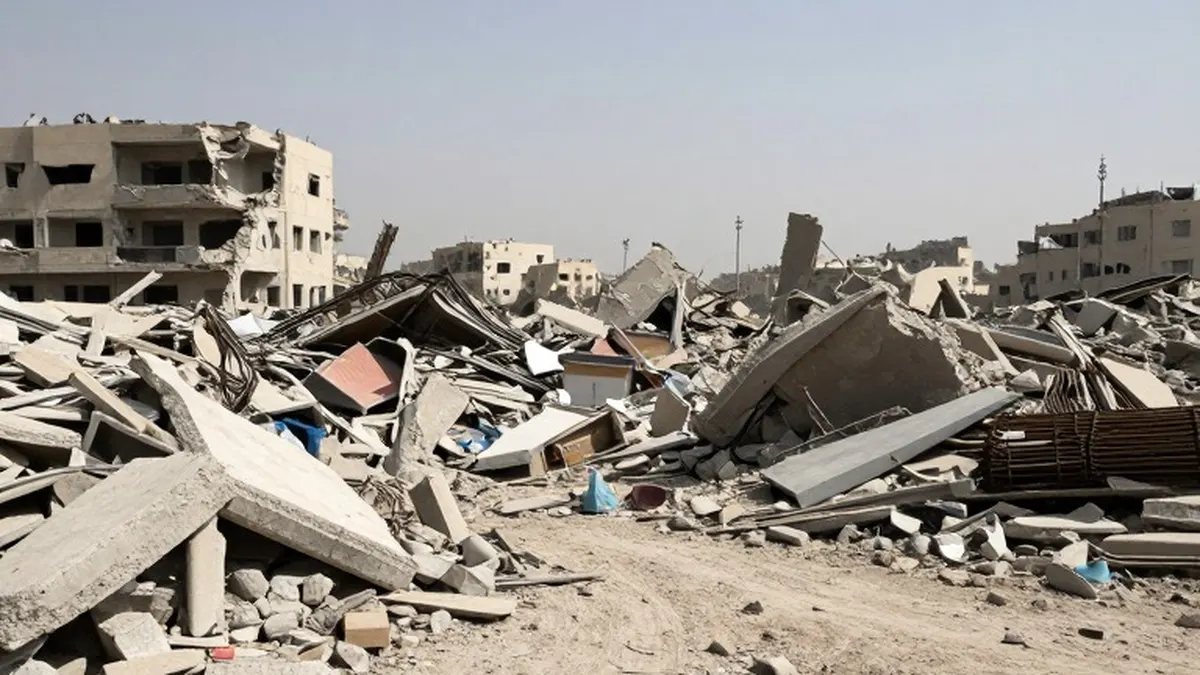
A comprehensive new report reveals that the military operations in Gaza have left a severe environmental legacy, transforming the strip into what researchers describe as a toxic wasteland. The study, conducted by Oxfam and the Conflict and Environment Observatory, indicates that air, soil, and water systems have been significantly compromised, threatening the life support systems that residents depend on for survival.
The findings highlight widespread contamination caused by a mix of heavy metals, explosive residues, asbestos from demolished structures, and untreated sewage. These pollutants are now embedded in the environment, creating hazardous conditions that experts believe will affect the health of Palestinians for decades.
Amitabh Behar, the executive director of Oxfam International, characterized the environmental damage as part of a broader pattern of conflict. He stated that the military assaults on the environment constitute war crimes that threaten life both in the present and for future generations. Behar argued that the degradation of environmental conditions has breached legal obligations under international humanitarian and human rights law.
The report notes that residents are exposed to toxins through multiple pathways, including breathing the air, consuming food and water, and having direct contact with contaminated soil and debris. Unless prioritized clean-up and remediation actions are undertaken, these risks are expected to persist for many years to come.
This assessment follows earlier findings in 2025 and early 2026 by a UN independent international commission of inquiry. That commission concluded that Israel had committed genocide in Gaza and that officials, including Prime Minister Benjamin Netanyahu, incited these acts. The Israeli mission in Geneva rejected the findings as a libellous sham, while Netanyahu remains wanted by the International Criminal Court for war crimes.
The Oxfam report provides the most detailed picture to date of the environmental impact of the conflict, which has resulted in more than 74,000 deaths and at least 175,000 injuries among Palestinians. Thousands of residents remain unaccounted for beneath the rubble. Using satellite imagery, remote sensing, and scientific analysis, the researchers concluded that the contamination is widespread and has serious implications for public health and civilian survival.
The scale of the debris is staggering, with the UN Environment Programme estimating that military operations have generated over 61 million tonnes of waste. This material has turned destroyed homes and infrastructure into a vast reservoir of hazardous substances. Behar described the situation as horrifying, noting that the densely populated and confined nature of Gaza makes continuous exposure to waste and sewage inevitable for the population.
Lama Abdul Samad, a global water and sanitation specialist at Oxfam and an author of the report, explained that addressing the damage will be highly challenging. Contamination is dispersed across urban rubble, farmland, and water systems, while unexploded ordnance continues to limit safe access to most areas. The analysis underscores the urgent need for Israel to allow detailed environmental assessments on the ground to identify risks and options for harm reduction.
As international attention shifts toward the reconstruction of Gaza, Behar emphasized that environmental recovery must not be treated as an afterthought. He warned that rebuilding without simultaneously addressing the extent of contamination risks creating long-term public health consequences for generations. The Israeli government has been contacted for comment regarding the findings.
The report suggests that restoration will require extensive clearance, continuous monitoring, and specialized remediation of affected areas. Key contaminants identified include explosive residues, organic pollutants, and heavy metals, all of which require careful management to ensure the safety of the population.