Israel warns of mass displacement in Gaza if Hamas fails to disarm
Israel's defense minister stated that one million Palestinians could be moved south if Hamas does not voluntarily surrender its weapons, a threat issued amid fresh overnight strikes that killed eight people.
By Nia Foster ·
Israel’s defense minister issued a stark warning on Thursday, stating that one million Palestinians in the Gaza Strip may be forcibly displaced if Hamas does not proceed with the voluntary disarmament it previously promised. The statement, made by Israel Katz, marks a significant escalation in rhetoric regarding the ongoing conflict and the future status of the territory's civilian population.
In a post on the social media platform X, Katz emphasized that Hamas faces a binary choice. The group must either disarm on its own accord or the Israeli military will enforce the process as part of a new military campaign named Operation Gideon's Chariots II. He specified that this operation would include another large scale evacuation of one million Gaza residents toward the southern part of the territory.
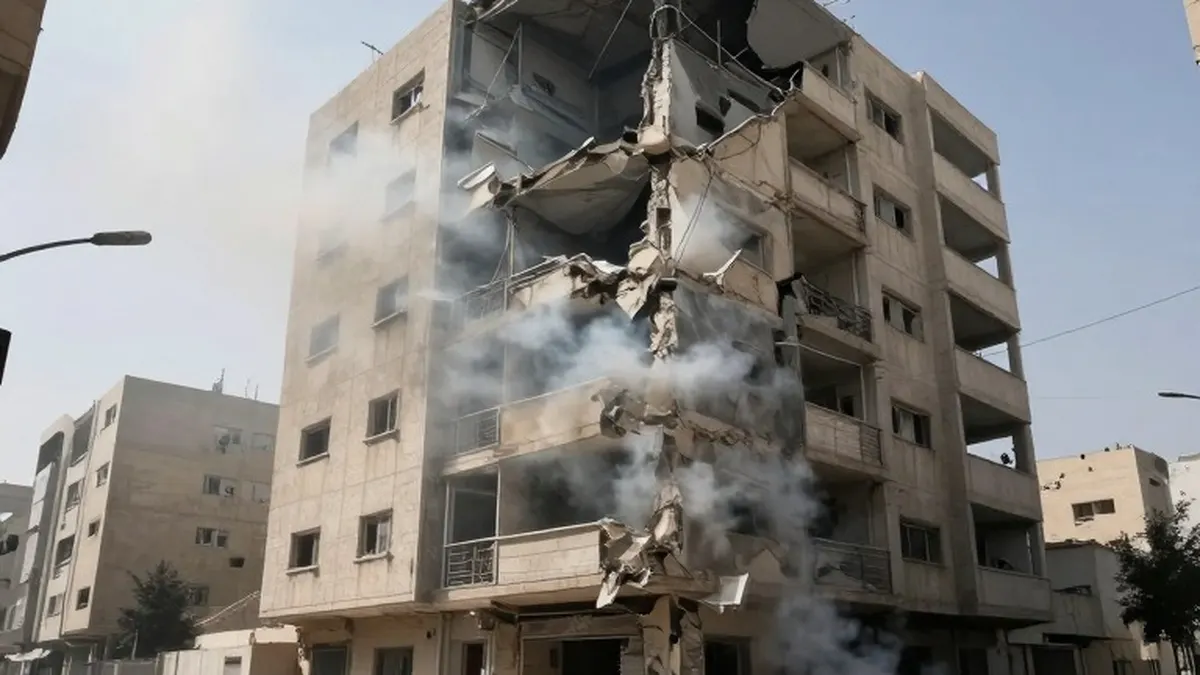
The threat comes at a time of continued military activity. Three Israeli strikes launched overnight into Thursday resulted in the deaths of eight Palestinians in Gaza City and the central Gaza area. Health officials at Al Aqsa Martyrs Hospital and Shifa Hospital, where the victims were taken, confirmed the casualties. The strikes targeted specific locations, including a residential apartment in Deir Al Balah City.
According to health officials, the strike on the apartment in Deir Al Balah killed a man and his wife. In a joint statement, Israeli Prime Minister Benjamin Netanyahu and Defense Minister Israel Katz announced that the overnight attack successfully killed Khaled Abu Nada. Abu Nada was identified as the Hamas official responsible for overseeing economic and education affairs in Gaza.
Shifa Hospital reported that two separate strikes in Gaza City each killed three people, contributing to the overnight total. The Israeli military explained that one of these strikes targeted three militants, though officials did not provide further details on that specific incident. The military did not immediately respond to requests for comment regarding the second strike in Gaza City.
These recent casualties are part of a broader pattern of near daily Israeli fire and airstrikes that have continued for more than a year since a ceasefire deal was reached between Israel and Hamas. The persistence of violence has raised questions about the stability of the truce and the implementation of its terms, particularly regarding the disarmament of the militant group.
The conflict has taken a heavy toll on the population. According to the Gaza health ministry, at least 74,746 Palestinians have been killed in the war, which has lasted more than three years. The ministry, which operates under the Hamas led government, maintains casualty records that are widely regarded as reliable, although they do not distinguish between civilians and militants in their official counts.
Katz is known for his outspoken remarks on the conflict, and his latest statement underscores the Israeli government's current strategy. The mention of Operation Gideon's Chariots II suggests a planned continuation of military efforts aimed at weakening Hamas's military capabilities. The potential displacement of one million residents would represent a major demographic shift in the northern and central parts of the Gaza Strip.
The situation remains fluid as both sides navigate the post ceasefire landscape. While Hamas had committed to disarming, the lack of progress has prompted Israeli officials to outline more aggressive alternatives. The coming days may reveal whether the threat of mass displacement is a negotiating tactic or a precursor to renewed large scale military operations in the region.
For the residents of Gaza, the announcement brings renewed uncertainty. The prospect of another southward evacuation echoes previous movements of civilians during the war. As the Israeli military prepares for potential new phases of operation, the humanitarian outlook for the one million residents potentially affected by the threat remains a critical concern for aid organizations and local leaders.