Japan launches National Agency for Disaster Management to centralize emergency response
The new body will coordinate preparedness for potential megathrust earthquakes and volcanic eruptions, aiming to address gaps in local planning and shelter conditions.
By Tomas Gonzalez ·
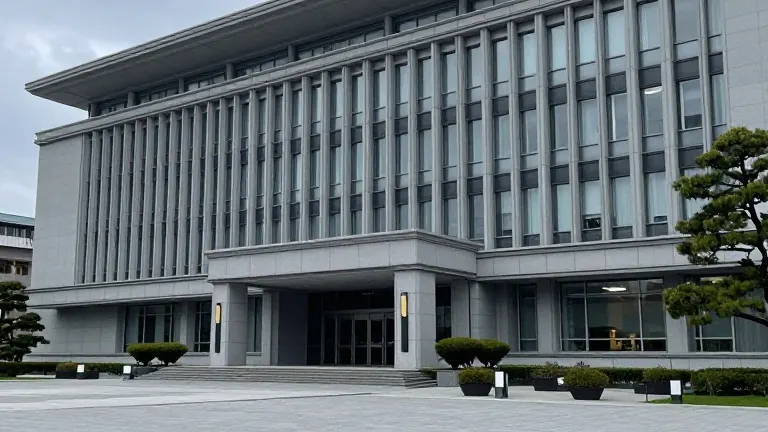
Japan activated a new National Agency for Disaster Management on Monday to centralize the country's response to major natural hazards. The agency was established to fill a structural gap in how the government manages crises, specifically addressing concerns about readiness for events such as a megathrust earthquake along the Pacific coast or an eruption of Mount Fuji.
The agency employs more than 350 staff members tasked with overseeing preparation, emergency response, and reconstruction efforts. It operates under the leadership of Prime Minister Sanae Takaichi and is managed by Reconstruction Minister Goshi Hosono. Hosono, who previously led the response to the Fukushima nuclear crisis, stated that the agency will serve as the central command for disaster response.
Hosono issued emergency requests to local governments and citizens on Monday. He urged residents to verify the seismic resistance of their homes, anchor heavy furniture, review evacuation procedures, and stockpile water and portable toilets for at least three days. He added that individuals should think for themselves and act.
Prior to this formation, Japan relied on temporary response units composed of officials from various ministries. These groups worked together during crises without a permanent interdepartmental command center. Although a reconstruction agency was created after the 2011 disaster to manage the cleanup of northern Japan, no dedicated central agency for disaster management existed.
Hosono noted that less than half of municipal officials have received disaster management training in the past five years. Additionally, only 15% of municipalities have contingency evacuation plans for elderly and disabled residents who require assistance. The government estimates that a Nankai Trough megathrust earthquake could result in approximately 298,000 deaths, 6.5 million evacuees, and the loss of 2.35 million homes. A major quake in the Tokyo metropolitan area is projected to cause 18,000 deaths and displace 4.1 million people.
The agency also aims to improve conditions in evacuation centers, which have long been criticized for lacking privacy, clean bathrooms, and hot food. Plans include installing portable toilets, kitchens capable of serving hot meals, hot water facilities, and cardboard beds. In July, a 7.1 magnitude earthquake in Kumamoto prefecture killed 38 people and damaged over 69,000 homes. Many residents stayed in their vehicles or parking lots because gymnasium shelters often lacked air conditioning during the heat.
The 2011 Tohoku earthquake and tsunami killed nearly 19,800 people, including 3,810 deaths linked to difficult living conditions after the disaster. Experts warn that large earthquakes are likely in the coming decades, though the specific timing and locations cannot be predicted. The government seeks to ensure the population is prepared for these risks.
Source: Greenwich Time