Documentary 'The Lookalike' Explores the Lives of Egyptian Celebrity Impersonators
A new documentary premiering at the Cairo Film Festival examines the personal and professional journeys of three Egyptians who have built careers resembling famous public figures.
By Julian Schulz ·
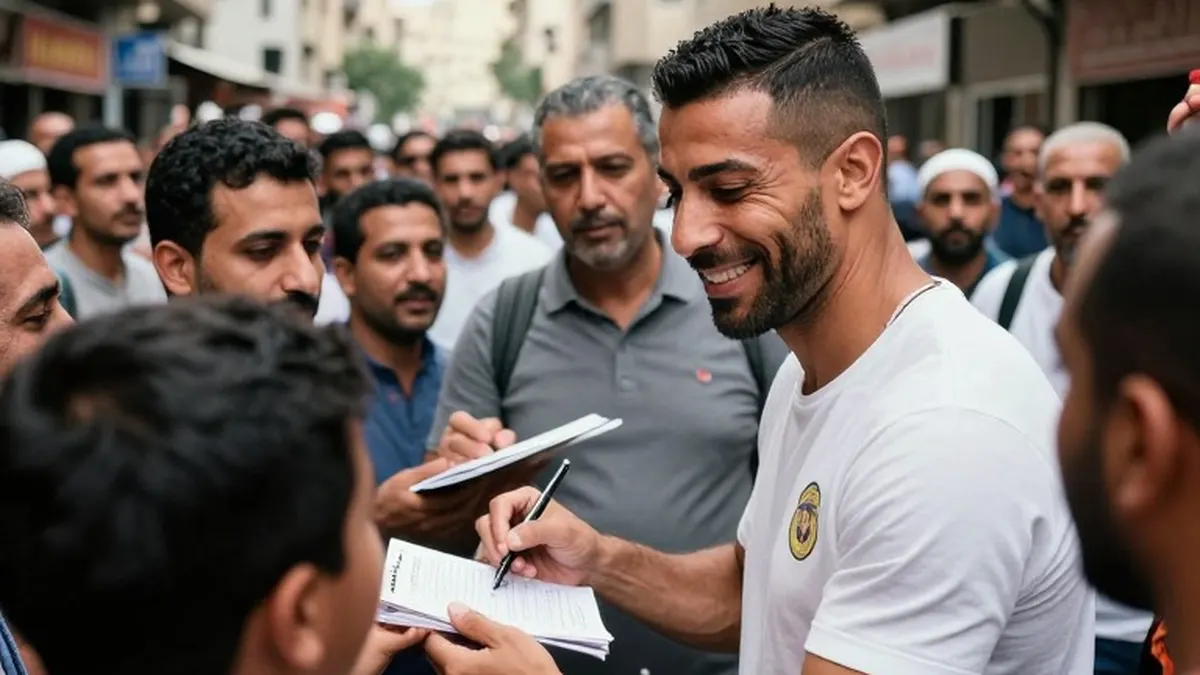
A new documentary titled 'The Lookalike' has premiered at the Cairo Film Festival, offering an intimate look at the lives of three Egyptians who have built their identities around their physical resemblance to famous stars. The film is directed by Nehal Elkoussi and produced by the Al Jazeera Documentary Channel. It follows individuals who resemble the French footballer Kylian Mbappe, the Egyptian singer and actor Mohamed Mounir, and the late television preacher Sheikh Mohammed Metwalli Sha'rawi.
The narrative traces the impersonators as they travel to meet fans and navigate the complexities of living in the shadow of their famous counterparts. The documentary explores how these individuals reconcile their personal identities with the public expectation of being a stand-in for a celebrity. It also reflects on the profound impact that a biological coincidence has had on their daily lives and career trajectories.
Elkoussi explained that the project originated from her childhood observations of Mounir impersonators. However, the idea solidified when she discovered one of the film's subjects on social media. She was struck by the fact that this individual performed dozens of concerts each month and had constructed a sustainable career around his likeness to the star. This discovery prompted her to investigate how lookalikes function as substitutes for the real stars and what drives the audience's fascination with them.
Development on the project began in August 2024, with principal photography taking place over an eight month period spanning 2025 and 2026. The director noted that the process of following these subjects revealed several unexpected insights into public behavior. She recalled being surprised by the genuine joy on the faces of children who encountered the Mbappe lookalike in the streets. These young fans reacted to the impersonator with the same excitement they would have shown for the actual football star.
The filmmaker was also impressed by the professional dedication of the Mbappe impersonator. She described him as a serious and committed content creator who takes his work with great rigor. This subject opened a broader avenue for the documentary, as he was part of a larger community of soccer star impersonators. This group included individuals resembling Lionel Messi and the Brazilian goalkeeper Alisson Becker, allowing the film to highlight Egypt's deep passion for football and its growing popularity in the Arab region following the 2022 FIFA World Cup in Qatar.
The documentary also examines the role of social class in the appeal of these impersonators. Elkoussi observed that for many people, particularly those with fewer resources, a lookalike serves as a tangible connection to a star who might otherwise be out of reach. She noted that audiences in villages or on the streets do not merely want to see a figure on a screen. Instead, they seek a physical presence, wanting to feel that the famous person is there in flesh and blood, ready to interact with them.
Elkoussi argued that this human warmth and direct connection is something that artificial intelligence cannot replicate. She emphasized the seriousness and daily effort involved in these impersonations, describing them as hard work aimed at making people happy. In contrast, she suggested that technology often copies only the surface of a person while draining the soul from the experience.
The premiere at the Cairo Film Festival held special significance for the director, as all three of her subjects attended the screening. Elkoussi made a point to share these moments with them, acknowledging that they are the true makers of the film. She reported that the subjects were pleased with the final product, feeling that the documentary captured their lives and true selves without judgment or criticism. This positive reception from the participants brought the director a great deal of happiness.
More News · National news · Report a business · Got a Story?