Olympic Leadership: Anita DeFrantz, who opened doors for women, dies at 74
The first Black American on the IOC and a key architect of gender parity in the Games has passed away after years of declining health.
By Julian Schulz ·
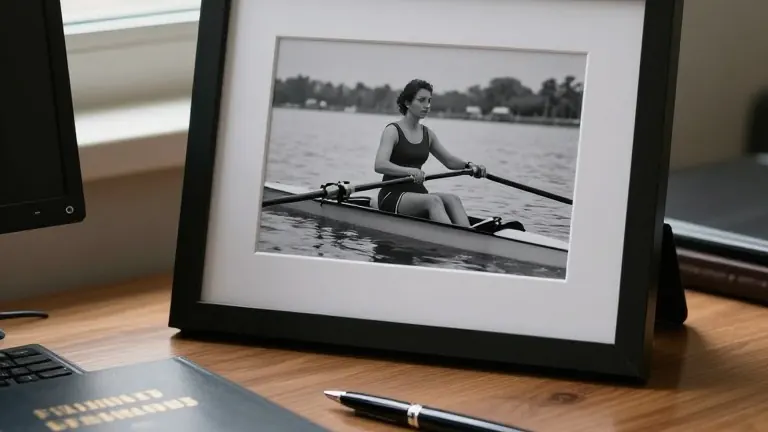
Anita DeFrantz, who reshaped the structure of the International Olympic Committee to include women in leadership roles, has died at the age of 74. Her death was announced Thursday by both the International Olympic Committee and the United States Olympic and Paralympic Committee. No cause of death was provided in the initial releases, though those close to her noted that her health had declined over the past few years.
DeFrantz first gained prominence in 1976 when she captained the women’s eight rowing team to a bronze medal in Montreal. She later attended law school at the University of Pennsylvania, where she trained on the Schuylkill River and joined the national team. Her athletic career intersected with Olympic politics in 1980 when she served as a spokeswoman for the US athletes’ advisory council. She helped lead a lawsuit against the US Olympic Committee regarding the controversial boycott of the Moscow Games, a decision that solidified her resolve to secure a seat at the decision-making table.
In 1986, she became the first American woman and the first Black American appointed to the International Olympic Committee. She later became the first woman to serve as IOC vice president in 1997. For two decades, she chaired the IOC’s Women in Sport Commission, a role that positioned her to advocate for structural changes within the organization. Her tenure coincided with a gradual shift in gender representation, culminating in 2024 when women comprised half of the 10,500 athletes competing in the Paris Games. Today, women hold 46 of the 106 seats on the IOC board.
Kirsty Coventry, the current IOC president and an Olympic swimmer, cited DeFrantz’s influence on her own rise to the top of the organization. Coventry described DeFrantz as a mentor and friend who demonstrated the potential for women in sport from the earliest days of their association. Edwin Moses, the record-setting hurdler who competed in the same era, stated that every woman holding a high-level position in sports today owes a debt to DeFrantz’s efforts.
DeFrantz’s legal background proved essential during the 1980 boycott dispute. Moses noted that her knowledge of the Ted Stevens Amateur Sports Act, which had governed the US Olympic movement since 1978, made her an effective advocate for athletes challenging the committee’s actions. Her ability to negotiate and moderate disputes extended beyond gender equity to include the interests of Paralympic athletes and other groups previously overlooked by the organization.
Donna de Varona, a gold-medal swimmer who served alongside DeFrantz on the women’s commission, recalled a colleague who often stood alone in her positions but continued to push forward. De Varona described DeFrantz as a warrior who fought for the right course even when political support was lacking. Sarah Hirshland, CEO of the US Olympic and Paralympic Committee, and chairman Gene Sykes called DeFrantz one of the most consequential Olympians in the nation’s history in a joint statement.
In a 1997 interview with the Hartford Courant, Bart Gullong, her coach at Connecticut College, recalled how DeFrantz transformed her athletic performance after moving to Philadelphia. He noted that she lost between 45 and 50 pounds and trained intensively, making the national team the following year and the Olympic team the year after. That trajectory set the stage for her medal in Montreal and her subsequent decades of advocacy.
Allyson Felix, a gold-medal sprinter inducted into the Team USA Hall of Fame alongside DeFrantz last year, credited DeFrantz’s work for making her own position on the IOC possible. In a recent interview in Colorado Springs, DeFrantz spoke softly about the attention she received during her induction. She emphasized that the goal was to create opportunities, stating that while one cannot manufacture an Olympian, one can open the door to possibilities.