Public Welfare Foundation Assistant Shares How Family Traditions Helped Him Earn Master's Degree
Zimar Batista, a 2012 fire survivor, credits advice from his grandmother, mother, and aunt for his recent academic completion and current role in Washington.
By Nia Foster ·

Zimar Batista recently completed his master's degree in public policy at George Washington University. He now serves as the Special Assistant to the Office of the President for the Public Welfare Foundation. In a new personal essay, Batista describes how a practice of resilience taught to him in the Dominican Republic helped him navigate financial hurdles during his undergraduate studies at American University.
Batista grew up in the Dominican Republic where he learned to find comfort in simple daily moments. He identifies three women as the primary sources of this resilience: his grandmother, his mother, and his aunt. His grandmother often used the phrase, "piensa de manera positiva, nunca negativa," which translates to always thinking positively and never negatively. Batista states that he now shares this saying with his community to encourage others.
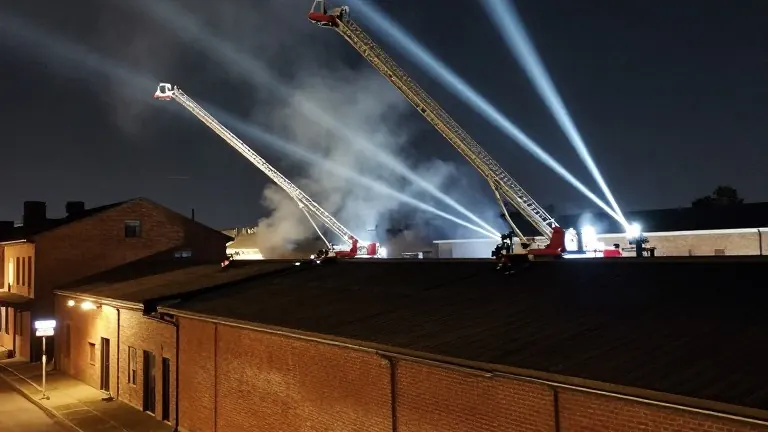
His mother demonstrated this strength during a crisis in 2012. A gas leak caused an explosion that destroyed his grandmother's house in the Dominican Republic. The family escaped the fire but lost personal items including photo albums, clothing, and a collection of plates and glasses. The next morning, his mother woke Batista to walk to school. She packed treats into his lunchbox and sang their favorite morning song during the walk. Batista notes that her focus on being alive and together, rather than what was lost, taught him to meet challenges with a resilient spirit.
His aunt Hilma emphasized the connection between joy and education, stating that joy is the oxygen of learning. During his junior year of college, Batista learned his scholarship would not cover the upcoming semester. He considered pausing his education but instead used the resilience modeled by his family to find creative financial solutions. He completed his bachelor's degree in economics with concentrations in international studies and Spanish before pursuing his current master's degree.
In the essay, Batista outlines three methods for integrating this practice into daily life. He recommends visiting a favorite local spot frequently, such as a park or coffee shop, to inspire creativity. He suggests setting aside time for activities that nourish the senses, like walking or painting. Finally, he advises closing each week with a five-minute journaling session to reflect on what was learned, what one is grateful for, and personal strengths.
Batista previously worked at the Washington Regional Association of Grantmakers. In that role, he managed a portfolio focused on housing justice, education, health equity, civic engagement, and criminal justice. He is also a member of the Funders Harm Reduction Table, which works to increase philanthropic support for criminal justice grantmaking in the region.
Batista is currently pursuing his master's degree at the Trachtenberg School of Public Policy and Public Administration at George Washington University. He describes his journey as a continuation of the lifelong learning path encouraged by his aunt. He aims to use his position at the Public Welfare Foundation to support communities facing similar challenges.