Rail delay pushes opening to 2032
Federal oversight contractors project a 14-month slip, citing utility failures and slow construction on the final Honolulu segment.
By Julian Schulz ·
The federal oversight contractor for the Honolulu rail project now projects a May 2032 opening, a 14-month delay beyond the agency's current target of March 31, 2031. The Project Management Oversight Contractor, or PMOC, issued this assessment in a monthly report covering August construction activities. HART Executive Director and CEO Lori Kahikina described the timeline slip as quite alarming during a presentation to the board's Project Oversight Committee on Friday.
The delay affects Segment 3, which will add six stations between Middle Street and the Civic Center. This section completes the Skyline rail line's 18.9-mile alignment from East Kapolei to downtown Honolulu. The PMOC identified issues with Hawaiian Electric Co. infrastructure and coordination among contractors as primary causes for the schedule slip. The report warned that these delays could consume most of the remaining schedule contingency for the project.
Specific problems emerged in the City Center Utility Relocation contracts, designated CCUR IV and CCUR IV-E. Workers encountered difficulties installing and replacing 138-kilovolt infrastructure. The report noted that improperly installed conduits required replacement, while excessive cable tension and electrical pole foundation issues further slowed the work. This utility work is critical for the City Center Guideway and Stations contract, which covers the final three-mile segment from Middle Street in Kalihi to the Civic Center station.
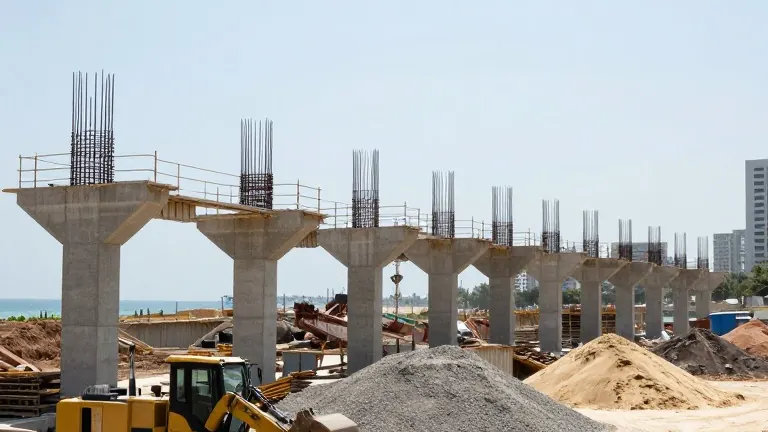
Construction progress by Tutor Perini Corp., the Los Angeles-based firm holding a $1.66 billion contract awarded in 2024, also lagged behind plan. The contractor originally scheduled the completion of one guideway shaft every five days. Production rates dropped to one shaft every 10 days. As of July 31, workers had installed 27 of the 148 required guideway shafts, including three completed in July. The team also finished 14 guideway columns. Tutor Perini planned to add another drilling rig, subject to HART approval to avoid conflicts with utility relocation work.
Design delays for the system's core compounds added further risk. HART issued a notice to proceed to Hitachi Rail Honolulu at the end of 2024, but design work did not begin until the second quarter of 2026. The PMOC noted that this lag could complicate coordination, as Tutor Perini must incorporate these systems designs into its construction plans for the guideway and stations.
The report also questioned the readiness of West Oahu transportation improvements for the rail extension's launch. The scope and schedule for the $254.6 million Pearl Highlands Transit Center and the H-2 access ramp remain uncertain. The PMOC warned that these facilities might not be ready in time for the projected May 2032 opening.
In a separate matter concerning public health and environmental oversight, state legislators plan to hold a hearing next month regarding a diesel fuel leak at the H-POWER plant. The hearing will address how more than 400,000 gallons of leaked diesel fuel remained unannounced to the public until Thursday. The city-owned garbage-to-energy plant is operated by Reworld under an annual $60 million contract with the city's Department of Environmental Services.
The U.S. Environmental Protection Agency confirmed it opened an investigation into the spill due to its proximity to the shoreline. EPA officials stated the agency has assisted the Hawaii Department of Health since August 21, 2026. University of Hawaii Manoa hydrologist Chris Shuler noted that the area's limestone subterranean landscape includes caves and fissures that could allow fuel to move quickly toward the ocean. Reworld Vice President Michael Van Brunt stated that the fuel has stayed on site and has not migrated to the coast, a claim Shuler described as incomplete based on current monitoring data.