Federal judge finds USDA secretary's religious emails unconstitutional
A San Francisco judge ruled that Brooke Rollins violated the First Amendment by sending Christian holiday messages to staff from her official account.
By Tomas Gonzalez ·
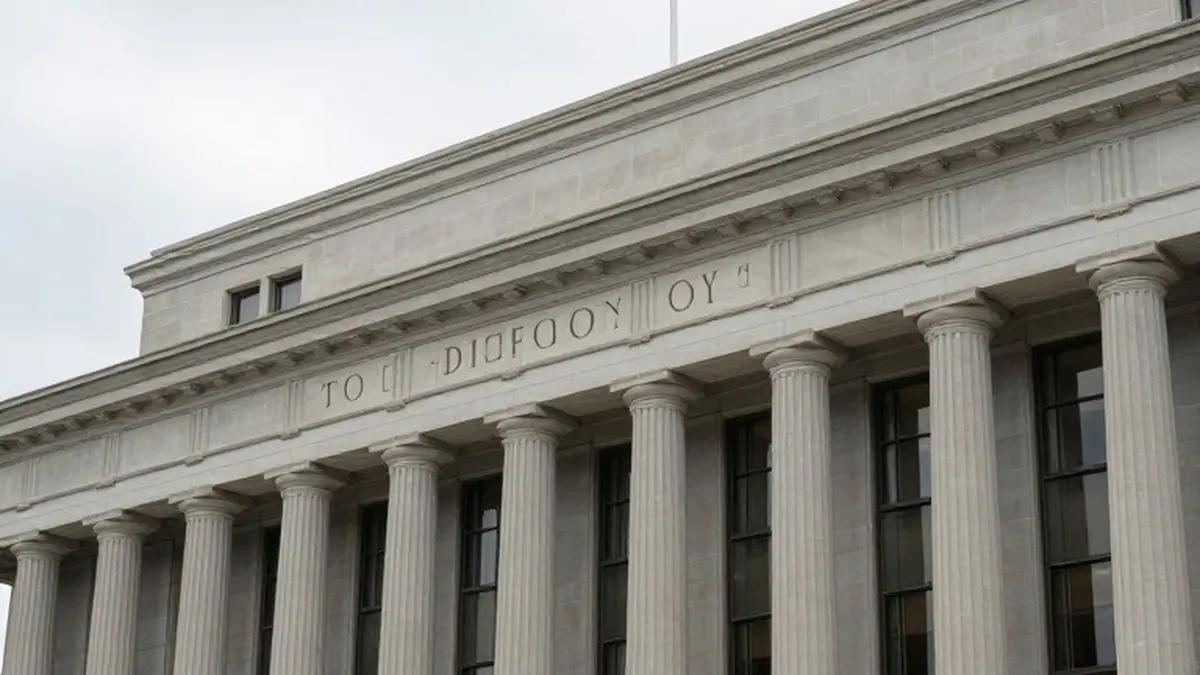
A federal judge in San Francisco has ruled that religious messages sent by United States Agriculture Secretary Brooke Rollins to her staff were unconstitutional. The court determined that Rollins must exercise greater caution to avoid proselytizing when communicating with the agency's workforce.
The ruling was issued on Thursday by US District Judge Trina Thompson. The decision addresses emails that Rollins sent from her official government account to approximately 100,000 employees at the Department of Agriculture. These messages featured Christian imagery and text and were distributed on specific holidays, including Easter, Christmas, Thanksgiving, and Independence Day. Notably, the secretary did not send similar communications for holidays observed by other religious traditions.
Judge Thompson found that the practice violated the establishment clause of the First Amendment. The judge pointed to Rollins' position of authority and her use of an official email channel as key factors. The messages effectively suggested that Christianity was the shared faith of all USDA workers, which the court viewed as an impermissible use of government power to endorse a specific religion.
In one such email sent on April 5 to mark Easter, Rollins wrote to her staff, "And so, like the very first disciples to encounter our risen Lord in the Upper Room almost two thousand years ago, this Easter let us too be alive with hope, full of Paschal joy, and confident in the mission each of us has been called for."
The court noted that employees cannot realistically opt out of reading communications from their agency director. Consequently, the messages could coerce non-Christian staff to hide their own faith or feel pressured to adopt the secretary's beliefs. Thompson emphasized that the volume and official nature of the emails created a dynamic where subordinates might feel compelled to align with the leader's religious views.
The judge also referenced a workplace religious expression policy that Rollins herself adopted. Under this policy, she is required to stop disseminating religious messages if a colleague asks her to do so. The ruling quoted the policy directly, stating that leaders "cannot create a hostile work environment through persistent unwelcome advances" and "cannot use official authority to pressure subordinates."
Despite the restrictions, the ruling clarifies that Rollins is not forbidden from discussing her faith in general. She may share why her beliefs are meaningful to her, invite co-workers to religious events politely, and express her views during appropriate conversations. However, she must ensure these interactions remain voluntary and do not rely on her official title to exert influence.
The lawsuit was brought in May by six USDA employees along with the National Federation of Federal Employees. This labor union represents approximately 19,000 workers within the department. The legal action sought to establish clear boundaries for religious expression in the workplace to protect the rights of all employees regardless of their personal beliefs.
The Department of Agriculture did not respond to a request for comment regarding the judge's decision. The ruling sets a precedent for how federal agency leaders can communicate with large staffs while maintaining a separation between their personal religious practices and their official duties.
This decision is part of a broader discussion about the role of religion in the federal workplace. It highlights the tension between individual expression and the constitutional requirement for government neutrality in matters of faith. The ruling provides specific guidelines for Rollins and other officials to follow in future communications.