Six Citizens Sue White House Over Media Access Restrictions
Plaintiffs argue that banning critical outlets from the executive branch violates the public's First Amendment right to independent information.
By Tomas Gonzalez ·
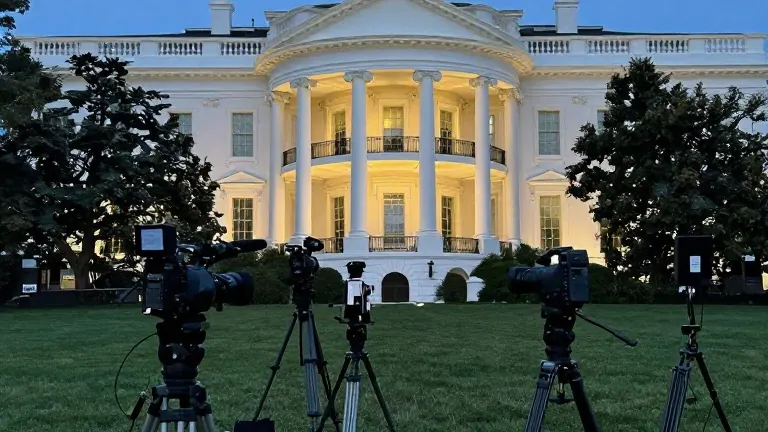
Six U.S. citizens filed a federal lawsuit in New York on Monday challenging President Donald Trump’s ban on critical media outlets from White House premises. The complaint argues that the policy harms the general public by reducing their access to independent reporting on the executive branch.
The suit names Trump, White House Chief of Staff Susie Wiles, Communications Director Steven Cheung, and Secret Service Director Sean M. Curran as defendants. It seeks a broad injunction to stop the administration from restricting press access based on the viewpoint of the reporting. The plaintiffs are not news organizations, but individuals who consume White House coverage for work and civic life.
Katie Fallow, deputy litigation director at the Knight First Amendment Institute, said the First Amendment protects the public’s right to know what its government is doing. She stated that the White House cannot decide what information Americans receive by punishing critical reporting. The lawsuit was filed by the Knight Institute alongside the Media Freedom & Information Access Clinic at Yale Law School.
The administration responded to the suit by citing an unidentified White House official who said no person may demand access to the Oval Office. The official noted that media outlets capable of reporting from outside if they feel their coverage is being manufactured. This comes as a federal judge has already extended an order preventing the enforcement of the ban while related cases proceed.
The plaintiffs include Kenneth Roth, former executive director of Human Rights Watch, and Beverly Gage, a Yale history professor. Other plaintiffs are Daniel Froomkin, a media journalist, Benjamin Wittes, editor of Lawfare, and Ethan Young, a student journalist at the University of Pennsylvania. Peter Schmidt-Nowara, a high school civics teacher in New York City, is also a named plaintiff.
Schmidt-Nowara told the court that he is gravely concerned that administration restrictions are cutting off access to crucial information for his students. Young said he relies on the press corps as a proxy because he cannot personally access White House press spaces. The complaint claims the policy is unconstitutional because it imposes unreasonable, viewpoint-based restrictions on a limited public forum.
This case differs from prior litigation involving CNN, MS NOW, Politico, The Associated Press, The New York Times, and ABC News. Those outlets are currently fighting over specific access disputes, including pool coverage and broadcast license renewals. The new suit aims to protect every news outlet covering the White House from future retaliation, not just those currently banned.
Source: ABC News