Six U.S. military commissaries lost frozen food in August cooling failures
Investigators probe links between American and European grocery outages as experts warn of psychological impact.
By Nia Foster ·
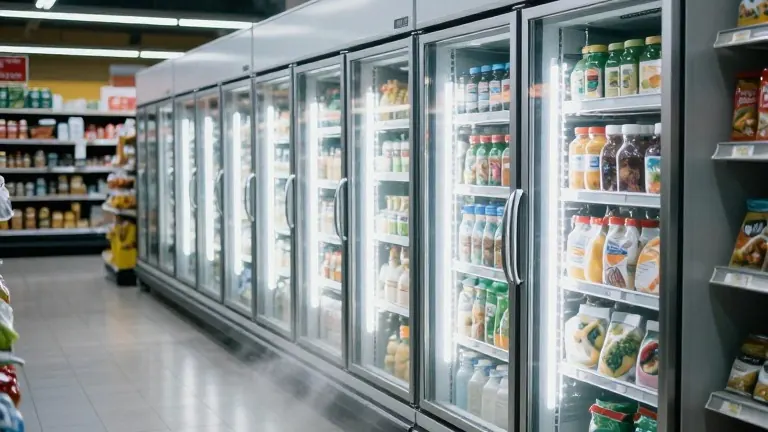
Military families and service members at six bases in the United States lost frozen provisions in late August after refrigeration systems malfunctioned. The outages occurred at Fort Huachuca in Arizona, F.E. Warren Air Force Base in Wyoming, Naval Station Newport in Rhode Island, Columbus Air Force Base in Mississippi, Travis Air Force Base, and Fort Irwin in California. Fort Huachuca confirmed on its Facebook page on August 26 that all frozen food had spoiled. Fort Irwin restricted sales to dry goods following its system failure.
The incidents follow a similar pattern of disruption in Europe. Refrigeration systems at supermarkets in Sweden, Belgium, and Luxembourg were forced to discard inventory this week. Temperatures in some European units reached 122 degrees Fahrenheit. Reuters reported that the identity of the actors behind the European incidents remains unknown. In at least one case, units were adjusted to higher temperatures overnight rather than shutting off completely.
The Army Criminal Investigation Division is currently investigating the U.S. failures. Its Cyber Field Office works with the Defense Commissary Agency and the Defense Criminal Investigative Service to determine the cause. Investigators are also coordinating with French law enforcement to assess whether the U.S. and European events are connected. A cyberattack has not yet been confirmed as the cause of the military commissary malfunctions.
Nicole Parker, a former FBI Special Agent, told Fox News Digital that these events represent a form of psychological warfare. She noted that every human being must eat, making the grocery store a primary target. Parker described the threat as asymmetrical warfare, where attackers disrupt daily life without deploying troops or firing missiles. She stated that while the current incidents are visible in Europe, the threat applies directly to U.S. soil.
Parker emphasized that the response cannot rely solely on law enforcement. She urged elected officials and local leaders to develop plans for keeping communities running when essential services fail. City managers and mayors need to understand potential threats and how to support residents during disruptions. Parker advised families to maintain basic supplies of food, water, and medicine. She also recommended gathering important documents and designating a communication plan for power outages.
The former agent suggested keeping a battery-operated AM radio as part of basic preparedness. She compared the approach to hurricane preparation, a standard practice in her home state of Florida. Parker cautioned against hoarding, noting that practical preparation reduces fear. She said, "I think if you are prepared, you do not have to fear."
The investigation into the August military failures is ongoing. Parker and other experts monitor these systems as critical infrastructure. The focus remains on identifying vulnerabilities before they are exploited. Local leaders are being urged to review their emergency response protocols in light of these recent events.
Source: Fox News