Thousands protest rising bills and unreliable services in Puerto Rico
Demonstrators gathered in San Juan for a Day of National Outrage over electricity costs, worsening basic services and the rising cost of living.
By Nia Foster ·
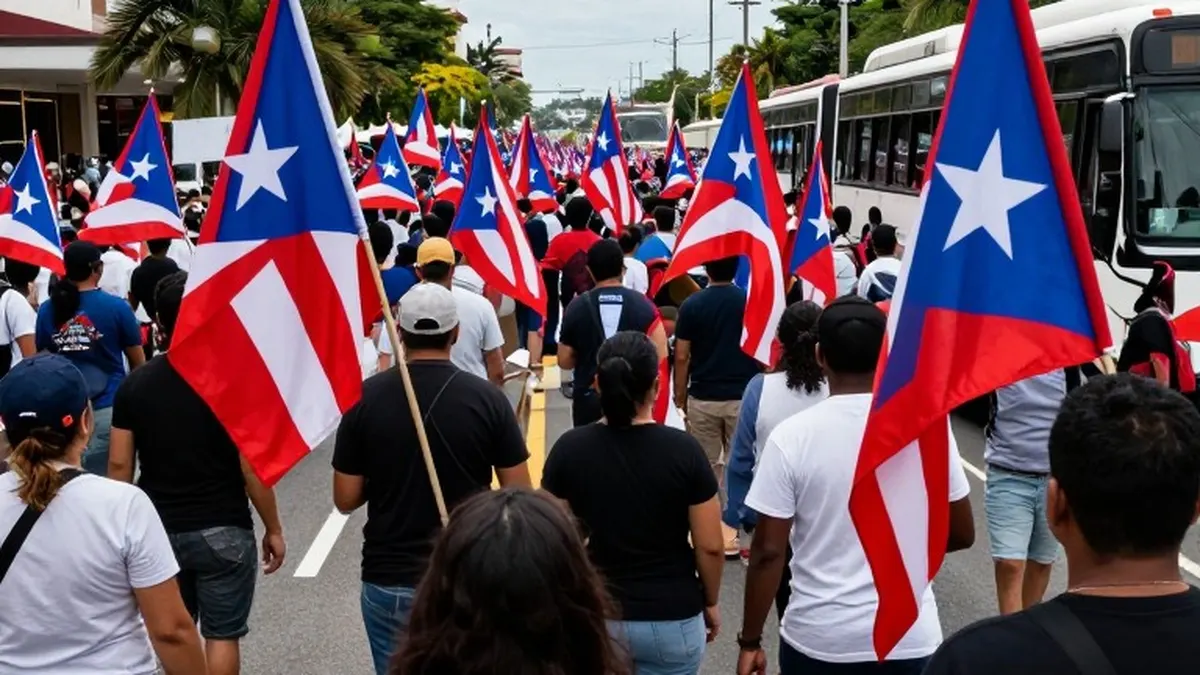
Thousands of people rallied in Puerto Rico’s capital, San Juan, on Friday to protest record-high electricity rates, rising living expenses and deteriorating basic services. The demonstration brought together retirees, university students, bus drivers and others frustrated by conditions in the US territory.
About 30 organisations, including unions and religious groups, organised the gathering outside a shopping mall under the name Day of National Outrage. Hundreds travelled by bus from dozens of cities and towns across Puerto Rico. Citing organisers, local media reported that an estimated 8,000 people attended.
The crowd expanded during the day and eventually occupied one of the island’s principal highways, prompting its closure. It was among the largest protests since Governor Jenniffer Gonzalez took office in January 2025. Participants carried or wore Puerto Rican flags, with some displaying the version used before the island became a US commonwealth in 1952. That flag often expresses cultural pride and can also signify resistance.
For Radames Garcia Badillo, 74, the grievances included unreliable electricity and water supplies, alongside the growing difficulty of covering everyday expenses. He said his neighbourhood loses power at least weekly, with outages lasting several hours. Higher prices had also forced him to buy less. “For us retirees, it is essential to make every dollar stretch,” he said.
Visual arts student Veronica Ishtar described repeated interruptions to electricity service, saying her neighbourhood had experienced 12 outages during the week alone. Her account reflected the frustration voiced at the protest over basic services as residents also faced mounting bills.
Monthly electricity charges recently increased by about 18 percent for some residential customers. According to the US Energy Information Administration, the new price per kilowatt-hour is substantially above the average paid by residential customers on the US mainland. Some demonstrators directed their criticism at Luma Energy, the private company responsible for transmitting and distributing electricity across Puerto Rico.
On Wednesday, Puerto Rico’s Supreme Court approved a move to cancel the government’s contract with Luma, raising concerns about the next steps. Puerto Rico’s Association of Industries warned that cancellation could deter private investment and put existing projects at risk. Crews are still working to repair the electricity grid devastated by Hurricane Maria in 2017.
Leaders from several organisations behind Friday’s demonstration said they would continue pressing for change. Hernaliz Vazquez, executive director of Sierra Club Puerto Rico, called for public anger to become organised action. “We must begin to channel the rage,” she said.