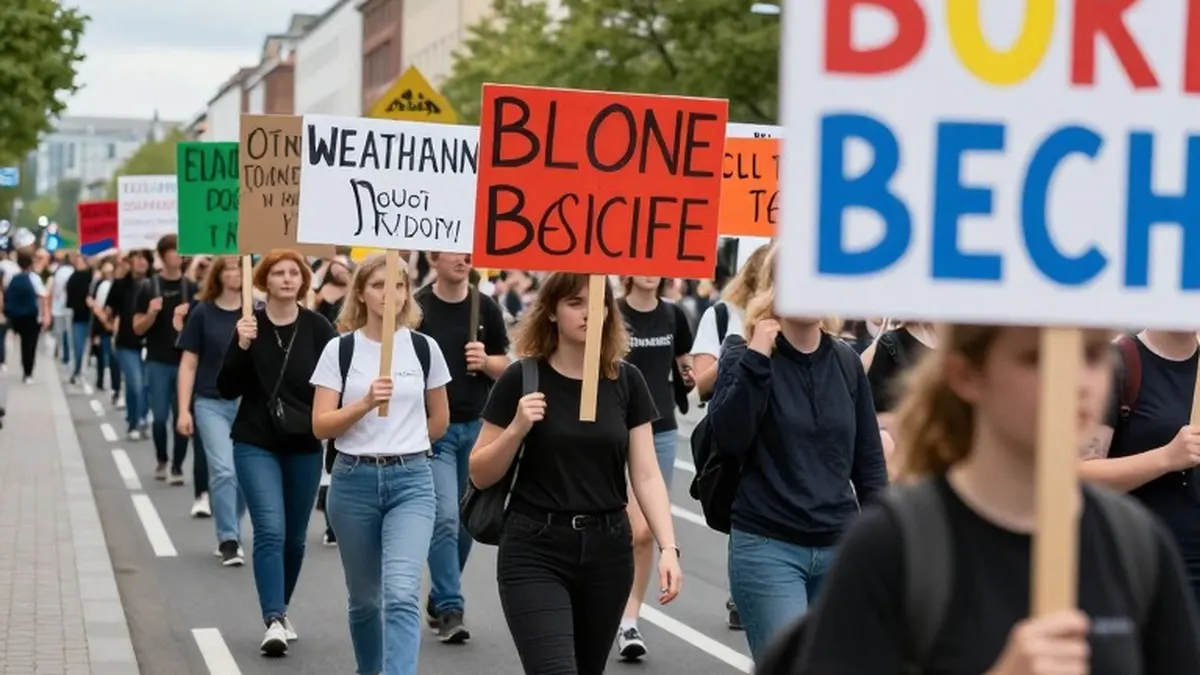
Colombians protest tax hikes and US military ties
Mass demonstrations in Colombia target proposed fiscal changes and rising costs, while leaders debate the scope of cooperation with Washington.
By Tomas Gonzalez ·
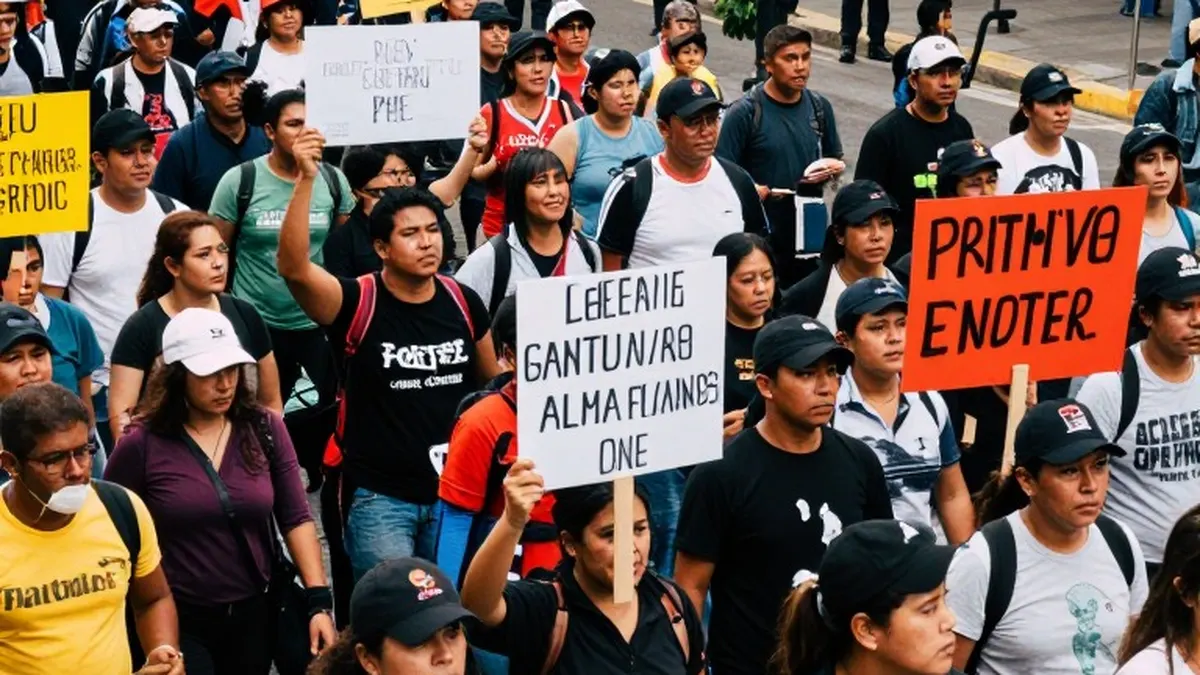
Large crowds gathered across Colombia on Thursday for a second nationwide demonstration against President Abelardo de la Espriella. Protesters in Bogota and other major cities voiced opposition to proposed tax reforms and increasing living costs. The rallies also highlighted growing scrutiny over the government's plans for deeper military cooperation with the United States.
The demonstrations were organized by trade unions, student groups, and opposition factions. Participants specifically targeted proposals to lower the income tax threshold, increase contributions to healthcare systems, and reduce taxes on corporations. These measures form a central part of the administration's strategy to address fiscal challenges.
Leidy Gutierrez, a 21-year-old psychology student, expressed the frustrations of many attendees. She told the AFP news agency that a large part of the population feels vulnerable. According to Gutierrez, the wealthy are the primary beneficiaries of the current economic trajectory.
Under the proposed reforms, Colombians earning more than approximately 985 US dollars a month would become subject to income tax. This represents a significant drop from the current threshold, which stands at about 1,419 US dollars. The government argues these adjustments are essential to raise revenue during a period of fiscal strain.
Officials state that the deficit for next year is projected to reach 9.4 percent of gross domestic product. In response to widespread criticism, the president has already withdrawn a controversial plan to impose higher taxes on basic food products. This concession aims to ease pressure on household budgets while still meeting revenue targets.
Former President Gustavo Petro has actively supported the current demonstrations. He urged citizens to mobilize against policies that he believes threaten household incomes. His endorsement adds weight to the opposition's arguments regarding the impact of the new fiscal measures on ordinary families.
President de la Espriella acknowledged the right of citizens to demonstrate peacefully. However, he issued a warning that he would not tolerate road blockades or what he described as urban terrorism. This stance reflects the government's desire to maintain order while allowing public expression to continue.
While many marches proceeded without incident, some ended in clashes with riot police. AFP reported that authorities used tear gas and water cannons in certain areas to manage the crowds. These incidents underscore the tension between the protesting public and law enforcement during the mobilization.
The protests occurred alongside a diplomatic dispute regarding US military operations. President de la Espriella and US Defense Secretary Pete Hegseth rejected a report from The New York Times. The newspaper claimed that Bogota had turned down a proposal for joint military operations against drug trafficking groups on Colombian soil.
The New York Times cited US officials to report that de la Espriella told Washington he lacked sufficient support in Congress to authorize such operations. This reportedly prompted Hegseth to shorten his visit to Colombia. A US official speaking to Reuters noted concerns in Bogota about congressional backing but did not confirm an outright rejection of the proposal.
De la Espriella denied rejecting any proposal from the administration of US President Donald Trump. He explained that cooperation with Washington is intended to strengthen Colombia's military capabilities rather than to deploy American troops. He emphasized that any such deployment would require formal congressional approval.
During his visit to Bogota on Wednesday, Hegseth praised Colombia's participation in the US-led Americas Counter Cartel Coalition. This initiative is designed to enhance regional military cooperation against organized crime. The recent mobilization marks the second nationwide protest since de la Espriella took office in August, following earlier demonstrations against perceived erosions of human rights and social reforms.