Honduran court convicts four in sex trafficking case linked to missing student
Three US citizens and one Honduran national have been found guilty of criminal association in the 2022 disappearance of Angie Pena, a case that highlights ongoing challenges in the country's justice system.
By Tomas Gonzalez ·
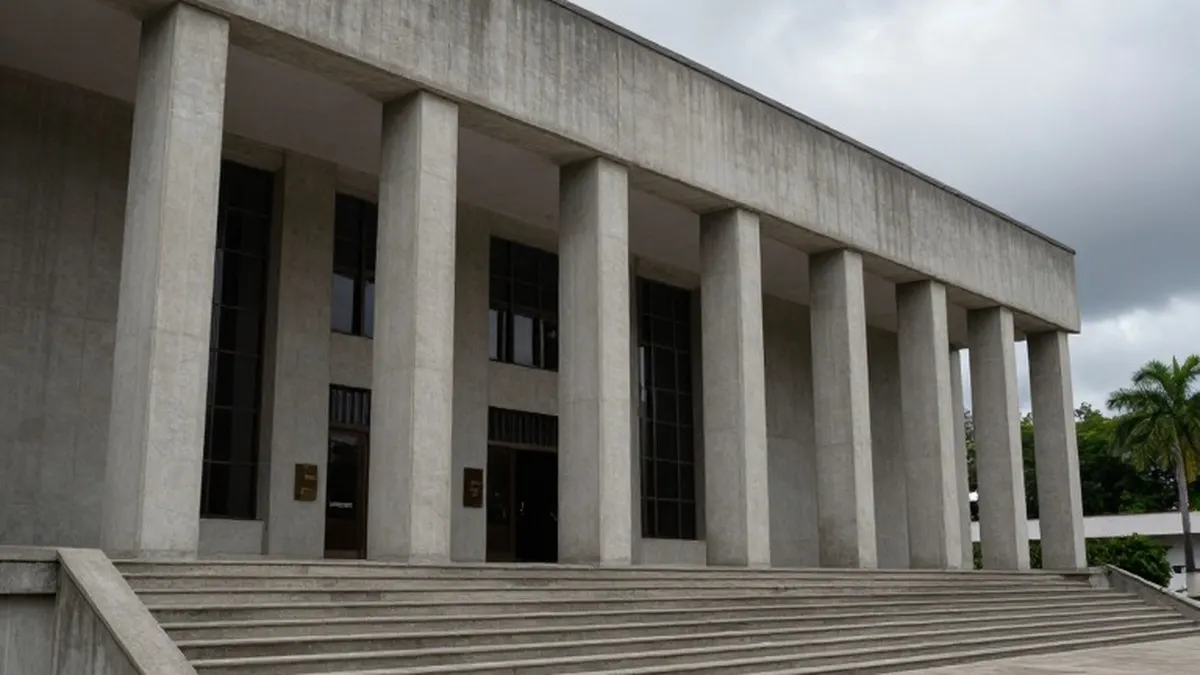
A court in Honduras has issued guilty verdicts for four individuals, including three citizens of the United States, in connection with the 2022 disappearance of a young woman. The defendants were convicted of criminal association related to the abduction of Angie Pena, whose current whereabouts remain unknown. The Public Ministry announced on Friday that it intends to request the maximum prison sentence of 10 years for each defendant, who were found responsible for recruiting women into a sex trafficking network. The next hearing in the case is scheduled for December 9.
The four convicted individuals are identified as US nationals Harold Green, William James Murdock, and Gary Lee Johnston, along with Honduran national Gustavo Trejo. While all four were found guilty of the lesser charge of criminal association, Green and Murdock were acquitted of the more serious charge of human trafficking. The prosecution stated that it would appeal this portion of the decision, arguing that the court found insufficient evidence to directly link these two men to Pena’s specific disappearance and the alleged trafficking activities.
Angie Pena, a 22-year-old university student, vanished on January 1, 2022. At the time of her disappearance, she was jet skiing near Roatan, an island located off the northern coast of Honduras. Initial police theories suggested she may have drowned, but her family maintained that she had been abducted and pressed for a formal investigation. The case gained traction when Pena’s jet ski was recovered in Belize, approximately 90 nautical miles or 170 kilometers from her last known location. This discovery led to a broader investigation into a sex trafficking network known as Delta Teams, which has since been dismantled. The Attorney General’s Office determined that minors were among the victims of this network.
The prosecutor’s office confirmed via the social media platform X that it secured guilty verdicts against the four members of Delta Teams for violating criminal association laws. The court found that the defendants were responsible for locating, recruiting, and transporting women through social media platforms. Despite the convictions, the case underscores the significant hurdles women in Honduras face when seeking justice after experiencing violent abuse. According to the Economic Commission for Latin America and the Caribbean, the country currently holds the highest femicide rate in Latin America at 4.3 cases per 100,000 inhabitants.
Transparency concerns have emerged regarding the handling of the trial, which was not open to the public or the media on Friday. This closed-door process prompted Pena’s family to question the openness of the proceedings. The case has been further complicated by the murder of a key protected witness in August. Following his death, videos surfaced in which Dereck McNeil accused a special unit within the public prosecutor’s office of corruption. The ATIC, the unit in question, denies these claims and states it was not involved in investigating Pena’s disappearance.
Legal representatives for the family expressed that the verdict is a step forward but not a complete resolution. Kenia Paz, a lawyer for the Legal Team for Human Rights which represents Pena’s family, stated that the ruling indicates the Public Prosecutor’s Office must continue its work as the lines of inquiry have not been exhausted. She emphasized that the state’s actions so far do not bring Angie Pena back or reveal her location. Yenely Diaz, Pena’s aunt, told the AFP news agency that authorities had previously described the incident as an accident, suggesting that organized crime was behind the events. The family continues to seek answers regarding what happened to Angie and when she might return.