UN nations settle for 2028 timeline on killer robot rules after Geneva talks
Delegates at the Geneva conference failed to secure a mandate for an immediate binding treaty, opting instead to develop regulations for autonomous weapons by 2028.
By Julian Schulz ·
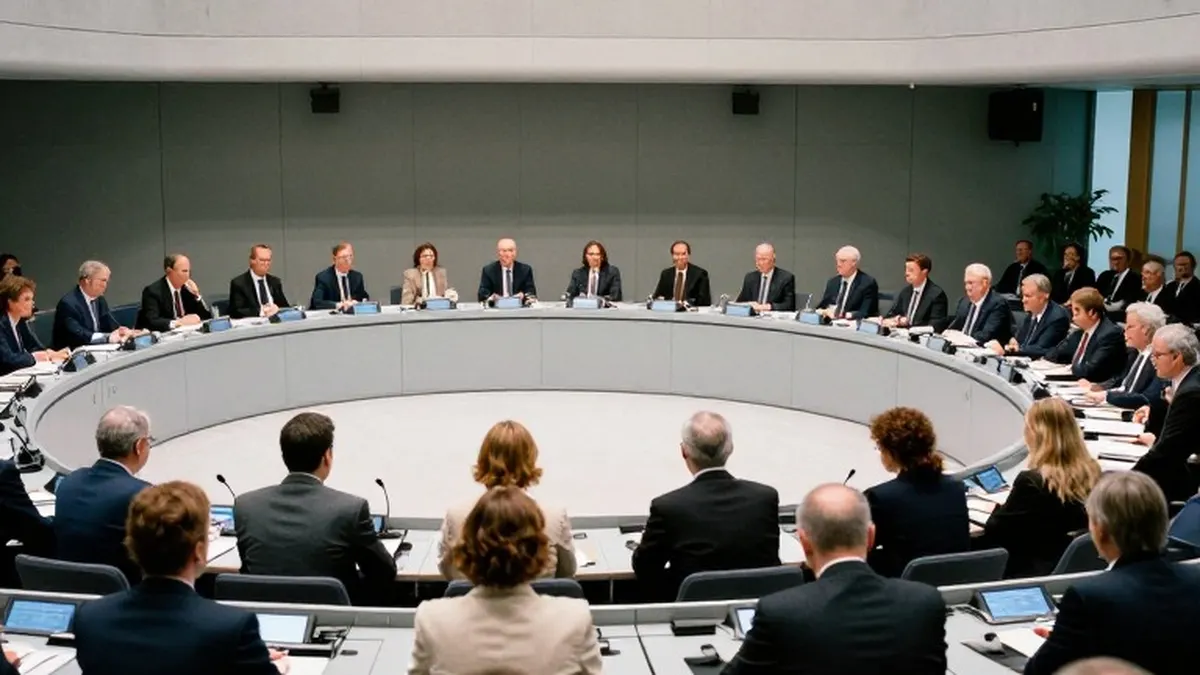
United Nations member states concluded a conference in Geneva this week without agreeing to the swift adoption of legally binding rules for autonomous weapon systems. The 128 nations party to the Convention on Certain Conventional Weapons (CCW) gathered in Switzerland to discuss a new treaty aimed at regulating how these systems are used. The meeting took place amid growing alarm over artificial intelligence driven warfare and widespread concerns regarding a lack of transparency and accountability in modern conflict.
On Saturday, participants fell short of securing a mandate to negotiate a legally binding ban on the technology. Instead, the group agreed to elaborate on a potential accord that would regulate such weapon systems by the year 2028. The outcome drew criticism from rights groups and non-governmental organizations, who described the development as disappointing given the urgency of the issue.
The United Nations defines lethal autonomous weapons systems as a combination of weapons and technological components that operate together to identify, select, and engage targets resulting in loss of life without human intervention. While commonly referred to as killer robots, this is not an established technical or legal designation. These systems are programmed with a specific target profile before deployment and use sensor data, such as facial recognition, to search for and kill matching targets.
The UN notes that not all autonomous systems use artificial intelligence, nor is AI required for them to function. However, the organization warns that when AI is used to identify and engage targets, it can amplify serious legal, ethical, humanitarian, and security concerns. AI-assisted weapons have already been utilized in conflicts including the wars in Ukraine and Sudan, as well as various conflicts in the Middle East.
The CCW, adopted in 1980, serves as a key international humanitarian law instrument designed to ban or restrict weapons that cause unnecessary suffering or affect civilians indiscriminately. Until now, there has been no legally binding instrument under the convention that specifically regulates autonomous weapon systems. Julien Thoeni, the Swiss diplomat who chaired the conference, stated that the process should determine which weapons can be banned and which can be permitted but regulated.
The week-long conference followed a recent agreement by nearly 100 countries that swiftly adopting legally binding rules was important. However, key arms-producing nations, including the United States, Russia, and Israel, opposed the push for a mandate. Decisions under the convention require the agreement of all member states, which proved to be a significant hurdle for the negotiators.
Diplomats told Reuters that negotiations over the final wording of the treaty continued all night after Russian objections to rules of procedure forced the cancellation of some formal meetings. Two EU diplomats told Politico that the US, UK, South Korea, Japan, Turkiye, and Israel resisted the effort to agree on binding regulation. In contrast, diplomats cited by The Guardian said that the European Union, NATO member states, Ukraine, China, and Iran supported a new convention.
Major military powers resisted the new pact, arguing that existing humanitarian law is sufficient and that strict legal obligations could curb their ability to develop and test advanced weapons. Consequently, these nations favored flexible, non-binding frameworks or longer timelines for discussions. Swiss diplomat Thoeni told reporters that some countries rejected the word negotiate, leading the agreed text to refer instead to the elaboration of an instrument.
Stop Killer Robots, a coalition of approximately 300 organizations, called the mandate watered down and noted that it offers no clear route to legally binding rules. Nicole van Rooijen, the executive director of the coalition, told the AFP news agency that delaying the creation of a legally binding instrument puts civilians and humanity at risk. She highlighted that autonomous weapons are already being deployed in combat, including systems that use AI to choose targets.
Critics argue that without a binding treaty, these weapons reduce human lives to sensor data and algorithmic targets, undermining human dignity. Georgia Hinds, a legal adviser at the International Committee of the Red Cross, expressed a fundamental ethical concern about life-and-death decisions being determined by programming. She added that this is a moral red line that cannot be crossed and is not something that can be fixed with better technology.