EU Drafts New Measures to Exclude Russian Athletes and Approves Massive Ukraine Loan
Brussels is drafting a three-part strategy to limit Russian athletes' participation in EU events while simultaneously pushing a 45 billion euro loan for Ukraine to secure its 2027 budget.
By Tomas Gonzalez ·
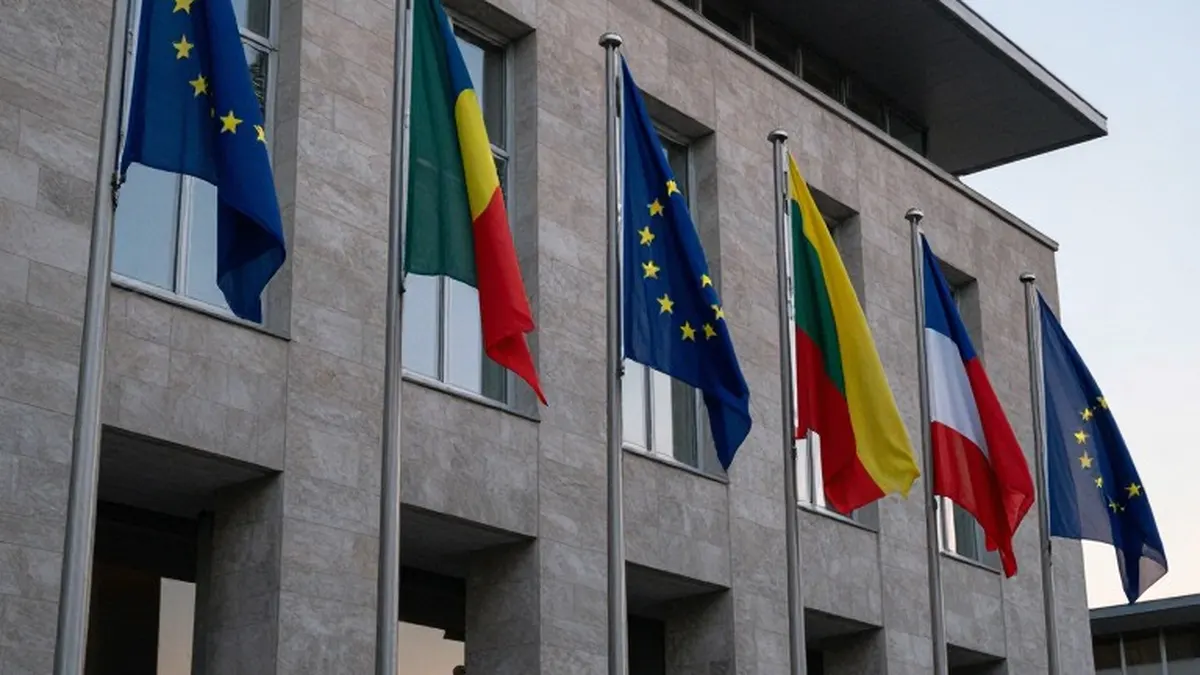
The European Union is intensifying its efforts to prevent Russian and Belarusian athletes from competing under national symbols within the bloc. These moves come as international sports bodies have begun to relax bans imposed following Russia's full-scale invasion of Ukraine in 2022. Brussels is seeking a more coherent, bloc-wide response to replace the current patchwork of national decisions, aiming to protect European nations from losing future hosting rights for major sporting events.
The urgency of this initiative is driven by a crowded sporting calendar. Six European countries have threatened to boycott the 2027 ice hockey world championships in Germany if Russia participates. German ice hockey federation chief Frank Lutz stated earlier this month that the federation rejects the return of Russian national teams to international tournaments. The International Olympic Committee's decision to provisionally lift the suspension of the Russian Olympic Committee has further complicated matters, potentially allowing Russian athletes to compete at the 2028 Los Angeles Olympics under their national flag.
Individual EU member states have already taken unilateral action. Finland has restricted short-term work visas for Russian sports professionals, while Sweden and Estonia are working to block Russian athletes from attending upcoming ski and ice hockey championships. Czech Interior Minister Lubomir Metnar confirmed on November 18 that government directives effectively ban the issuance of visas for Russian athletes participating in the women's under-18 ice hockey world championships. These national measures rely on existing visa rules that classify essential travel narrowly, a category that athletes often do not meet.
Brussels is now developing a three-part legal framework involving visa guidelines, sanctions, and funding. The European Commission is reviewing its EU-wide visa guidelines to potentially include specific language regarding athletes. While the EU Visa Code already allows entry refusal if an applicant is a threat to international relations, updating it requires a qualified majority and may not be fast enough for winter events. Additionally, the Commission is exploring sectoral sanctions that would apply to Russian and Belarusian sportspeople competing with national symbols, a move that requires unanimity among all 27 member states.
The third pillar of the strategy involves the Erasmus+ Sport program, which distributes approximately 80 million euros annually to European sports organizations. Recent updates to the guidelines state that governing bodies authorizing Russian athletes to compete with full national representation are no longer eligible for funding. This financial lever aims to avoid granting reputational benefit to Russia, which the Commission describes as responsible for a war of aggression against Ukraine.
In parallel, the European Commission has proposed a new 45 billion euro loan for Ukraine to address a significant portion of the country's 2027 budget shortfall. The proposal is designed to cover about two-thirds of the projected 70 billion euro deficit. European Commission President Ursula von der Leyen described the plan as the best way to strengthen Ukraine's position at the negotiating table. The loan structure mirrors a previous 90 billion euro agreement from December 2025, which was backed by the EU's borrowing capacity rather than frozen Russian assets.
The new loan allocates 25 billion euros to Ukraine's defense sector, 10 billion euros to the national budget, and 10 billion euros for macro-financial assistance to stabilize foreign currency reserves. The Commission notes that the loan will be repaid by reparations due from Russia. However, the proposal faces political hurdles as it intersects with discussions on the EU's next multiyear budget for 2028 to 2034. German Chancellor Friedrich Merz has threatened to halt budget negotiations unless all member states contribute financially to Ukraine, a stance that challenges net recipient countries like Hungary, Slovakia, and the Czech Republic, with Bulgaria expected to join their opt-out regarding interest costs.
EU leaders are scheduled to debate the proposed 1.8 trillion euro EU budget at a summit in Brussels on November 26 and 27, with a final agreement targeted for December 17 and 18. The budget includes 100 billion euros earmarked for Ukraine from 2028 onward. A key unresolved issue is how to handle the interest payments on both the new and previous loans, which could reach 6 billion euros annually. Officials must decide whether these costs will be deducted from the Ukraine envelope or covered by a separate instrument.
Diplomats in Brussels are pushing to finalize all agreements before the end of 2026. There is significant concern that the 2027 European election cycle, particularly the French presidential election in the spring, could upend spending decisions. Polls suggest that far-right leader Marine Le Pen, who has pledged to end financial support for Ukraine, is poised to replace Emmanuel Macron. This timeline pressure adds urgency to the current summit discussions in Brussels.
The convergence of these two major issues, sports exclusion and financial support for Ukraine, highlights the EU's attempt to align its soft power and economic instruments with its geopolitical stance. As the bloc prepares for its upcoming summits, the outcome of these negotiations will likely set the tone for European policy toward Russia and its relationship with Ukraine for the coming years.