Wisconsin Ash Forests: Indigenous Craftsmen Adapt to Beetle Invasion
As the emerald ash borer decimates black ash trees across the region, Ojibwe artisans pivot to new materials and rethink their relationship with the natural world.
By Nia Foster ·
April Stone sat in her Ashland, Wisconsin studio, listening to music, as she recalled the first signs of the emerald ash borer. She remembered watching news reports about a Menards shipment of firewood arriving from a quarantined area. The insect, native to Asia, was first detected near Detroit in 2002. Since then, it has spread to all 72 Wisconsin counties and 37 other states, reaching as far south as Louisiana.
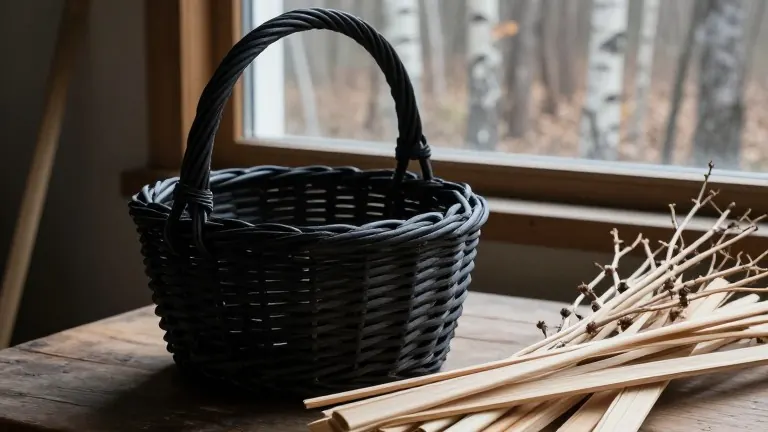
Stone, a member of the Bad River Band of Lake Superior Ojibwe, is a full-time artisan who makes black ash baskets. Like many residents of the Northwoods, she has been saying goodbye to the region's ash trees. The loss is prompting Indigenous communities to consider the future of their traditional crafts as the insect continues to move through the forests. In Stone's studio, a pile of ash splint, pounded out and stacked over years, sits against a wall. Stone and her students call this mound "the nest."
Ash baskets have served daily purposes for generations. The arrival of the borer has led Stone to explore other materials. She now works with grapevines, cedar, cattail, bulrush, and basswood. Stone said she has begun to establish relationships with these other plants because conditions are changing. She noted that she must adapt to survive. "It’s also made me appreciate and honor other beings," Stone said. "So I have to adapt too."
Black ash trees are a keystone species. They tolerate wet conditions, helping to regulate groundwater tables. They prevent swamping and runoff that can harm other species, including manoomin, or wild rice. Colin Peters, a doctoral candidate in plant pathology at the University of Minnesota, is researching the insect. He explained that losing these trees removes the structure they provide to the soil. This can change erosion rates in riparian and swamp areas.
In the Upper Peninsula of Michigan, Richard Siewertsen found a dying stand of ash trees in the Ottawa National Forest. He pointed out a tree with a missing top and a distinct D-shaped exit hole on the trunk, marking the borer's presence. Siewertsen remembered bumper stickers that read, "Don't move firewood; it bugs me," but he said he only started noticing the damage in recent years. He did not look for the beetle before.
Siewertsen serves as the culture and language revitalization coordinator for the Lac Vieux Desert Band of Lake Superior Chippewa Indians. He crafts lacrosse sticks for his community. He works with the U.S. Forest Service to harvest ash trees for this purpose. The wood is valued for its light weight and strength. The Forest Service's current prescription for the pest is to leave trees in the forest, prohibiting cutting and selling. However, the service still allows Siewertsen to harvest ash wood for his craft.
Siewertsen noted that some people are discussing switching to sugar maples to make the sticks. He raised a question about cutting into a different resource. The beetle also adds an educational layer to the game. Siewertsen uses lacrosse sticks that display the borers' carvings as teaching materials. He shows children how the insect relates to the environment while they learn to play.
Back in her studio, Stone reflected on her surroundings. She reached a conclusion that differs from the typical Western instinct to control pests. She chose to do nothing. In Ojibwe, the word for insect is manidoons, meaning "little spirit." The plural form, manidoonsag, refers to their role as helpers and messengers. Stone said she realized she needed to ask what these insects were trying to tell her.
This approach involves observing how trees react to the insect rather than trying to control it. Stone acknowledges that the death of the trees changes the story told by the baskets for future generations. She believes people may live more minimally and in balance. "Because for me, it’s all about the balance, and baskets teach balance," Stone said.