Nine killed as Bahamas-bound jet crashes beside South Florida road
Federal investigators are examining the crash of a private jet in Palm Beach County after pilots reported icing and turbulence before a steep descent.
By Tomas Gonzalez ·
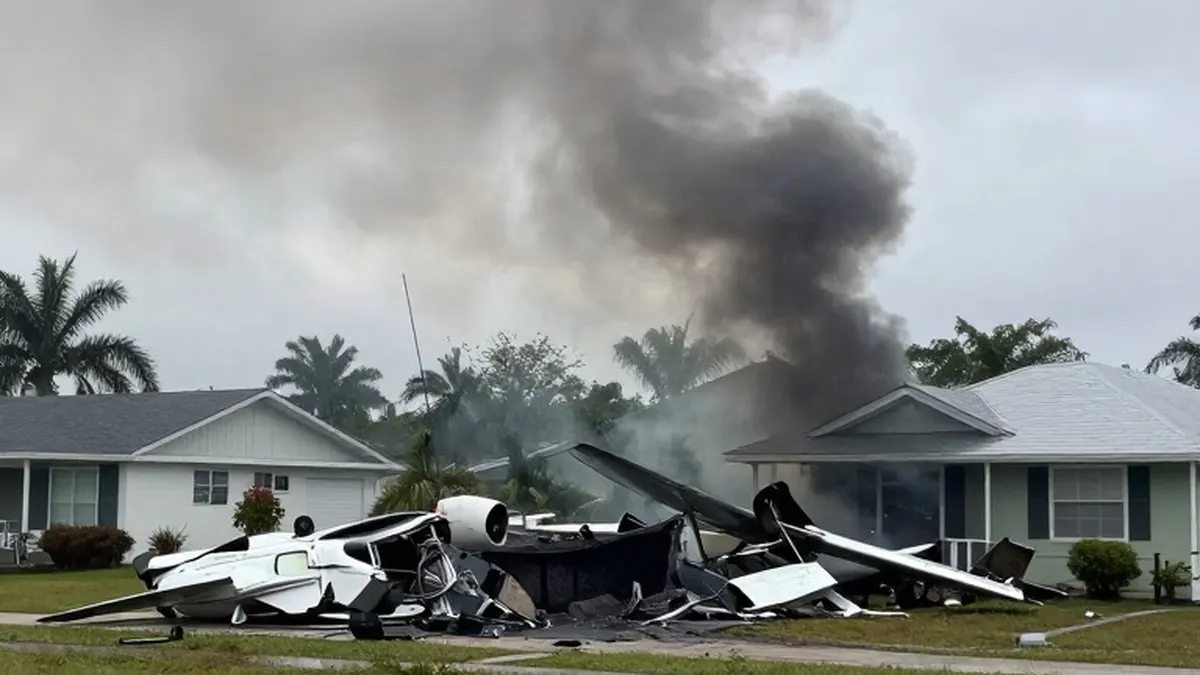
A private business jet traveling from Texas to the Bahamas plunged into a South Florida neighborhood on Sunday, killing all nine people aboard and erupting in flames beside a busy road. Transportation Secretary Sean Duffy said the Learjet 60 crashed at 12:50 p.m. in Palm Beach County. Authorities had not immediately identified those on the aircraft or determined what caused it to fall.
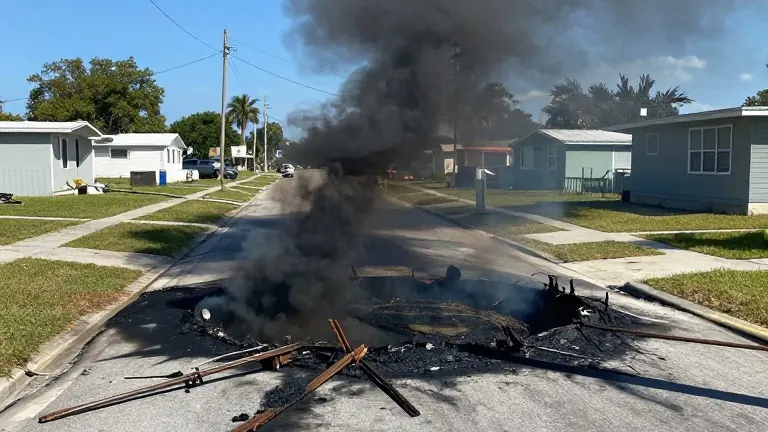
Palm Beach County sheriff's officials placed the crash in Greenacres, a city of 45,000 residents about 7 miles southwest of West Palm Beach. Videos taken by people in vehicles showed the aircraft diving toward the ground before exploding close to homes and passing traffic. Fire burned around broken pavement at a crater, and dense black smoke spread across the site.
Florida Gov. Ron DeSantis said there were no immediate reports of deaths or injuries among people on the ground. Speaking to reporters at the scene, he described the aircraft's plunge as resembling a missile strike and said it had left a large crater beside the road. County authorities were evacuating about 600 people from a nearby mobile home community during the federal investigation, and officials said the road would remain closed until further notice.
The Federal Aviation Administration said the jet had taken off from Austin-Bergstrom International Airport and was bound for the Bahamas. Airport spokesperson Jim Reynolds confirmed that it was a private aircraft but could not immediately provide information about its occupants. Duffy said the FAA was sending personnel to assist the National Transportation Safety Board's investigation.
Air traffic control recordings and flight tracking data documented a rapid deterioration during the flight. While traveling east at 35,000 feet, the pilots reported turbulence, ice and precipitation and sought permission to climb another 2,000 feet. Shortly afterward, the jet began a steep descent that accelerated from 10,000 feet per minute to 20,000 and then as much as 30,000 feet per minute, taking it beyond its design limits.
Recordings captured by LiveATC.net showed that, minutes before impact, the pilot had described manageable ice accumulation and moderate turbulence that was moving the aircraft vertically by as much as 700 feet. As the situation worsened, the pilot declared an emergency and transmitted distress calls, reporting both the accelerating descent and excessive speed. The aircraft banked sharply right before striking the ground.
Heavy rain fell across the region on Sunday. The National Weather Service said a flood watch for excessive rainfall would remain in place through Monday afternoon. Authorities had not established whether the weather caused the crash.
Aviation safety expert Steve Arroyo said icing and turbulence were possible contributing factors and could have caused the aircraft to stall at cruising altitude. He said investigators would examine numerous possibilities, including the pilot's response to the conditions reported over the radio, while keeping other explanations open at this early stage.
The NTSB said investigators were expected at the crash location on Sunday and Monday. The agency scheduled a media briefing for Monday in West Palm Beach.
Source: NPR
More News · National news · Report a business · Got a Story?