Army Files Emergency Motion to Detonate Unstable Chemicals in Iowa
The move aims to bypass a recent court order, with officials citing rising risks as temperatures fall below 30 degrees Fahrenheit.
By Nia Foster ·
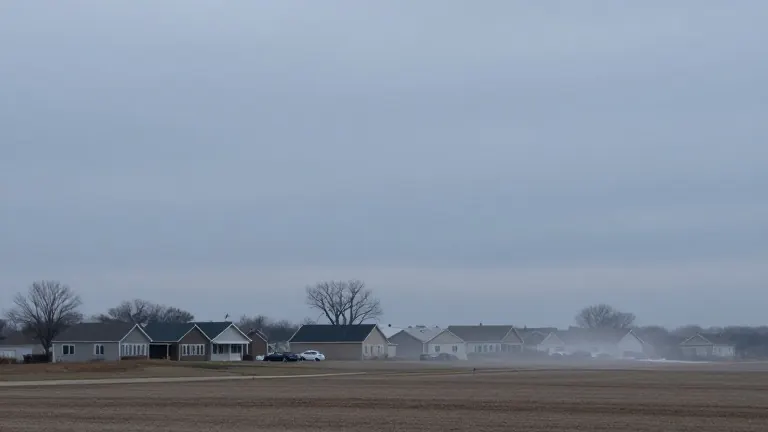
Residents of Middletown, Iowa, face a new potential threat this week as the U.S. Army moves to detonate several tons of unstable bomb-making chemicals. The military has filed an emergency request with the 8th U.S. Circuit Court of Appeals to override a hold placed on the operation. Officials argue that the changing weather makes the situation more dangerous, requiring immediate action to protect personnel and nearby communities.
The appeals court granted a request from environmental groups on Thursday to pause the detonation. This decision halted a permit that had previously cleared the way for the work in the small community, located about 160 miles southeast of Des Moines. The operation was originally scheduled for Friday but was pushed to Monday after residents expressed concerns about health and environmental impacts.
Government lawyers submitted their filing late Saturday, stating that the Army needs to act swiftly. They argued that protecting human health and the environment demands action now rather than further delay. Environmental organizations criticized this maneuver, describing it as an attempt to bypass the judicial process and avoid public demands for transparency.
In a joint statement on Sunday, the Iowa Environmental Council, Sierra Club, and Earthjustice questioned whether the Army had fully considered all alternatives. Thien Chau, an attorney for Earthjustice, said the military appeared more focused on sidestepping the courts than meeting community demands for stronger protections. He noted that the Army had not provided sufficient notice to affected communities, some of which are as far as 100 miles from the site.
The instability stems from the discovery of degraded lead azide in March at the Iowa Army Ammunition Plant. Staff found several dozen barrels of the material, which is used in munitions production. Crystallization of the chemical created a dangerous situation, leading the Army to assemble experts in chemistry, engineering, and environmental safety to develop a disposal plan.
EPA documents indicate that neutralizing or decomposing the drums with other chemicals was considered. However, officials stated that handling the drums increased the probability of an accidental and fatal detonation. The risk grows as temperatures drop, with forecasts predicting lows below 30 degrees Fahrenheit. An uncontrolled explosion could occur if the chemicals are not treated before the weather turns colder.
Nearly 400 people live in Middletown, but thousands more in surrounding areas could be affected by the operation. The detonation will release an air plume containing lead particles that will disperse and settle on the ground. Lead is toxic to both humans and animals. Officials recommended that some residents vacate the area because the vibrations from the two planned blasts could break old windows. Other residents were advised to stay inside, keep windows and doors closed, and bring pets and livestock indoors.