Geelong Ginkgo, a Favourite Wedding Backdrop, Named Victorian Tree of the Year
A 20-metre ginkgo planted in 1859 in Geelong's botanic gardens has won the National Trust's 2026 Victorian tree of the year award.
By Julian Schulz ·
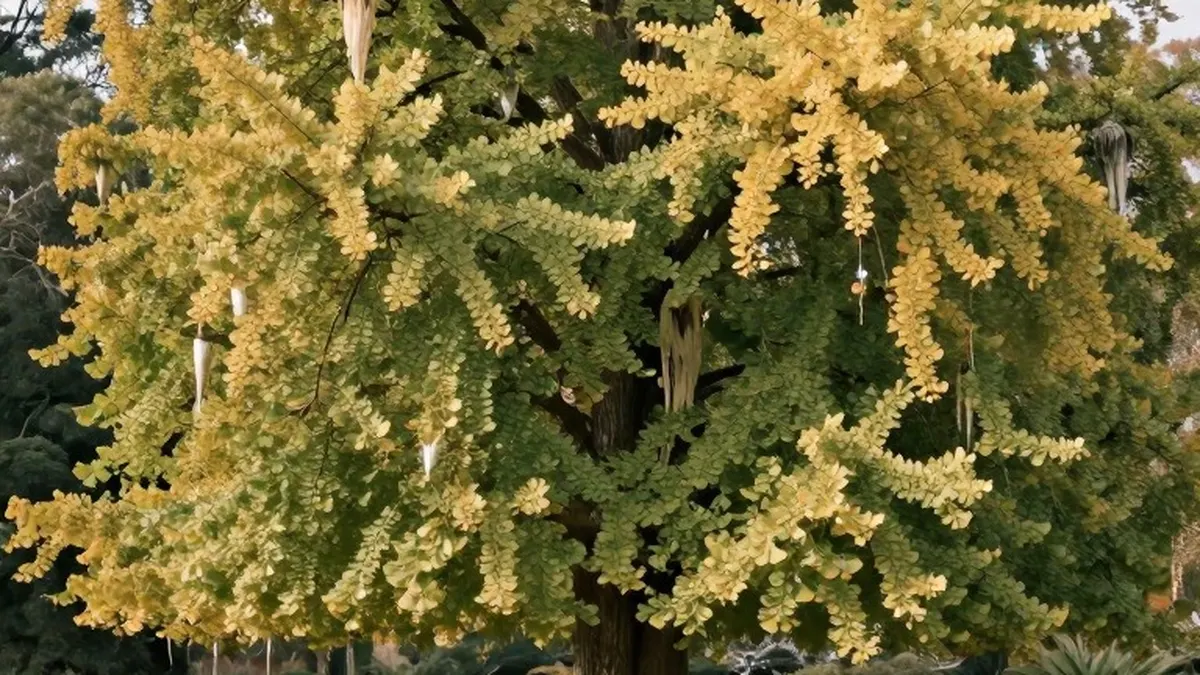
A ginkgo tree that has stood in Geelong's botanic gardens for more than 160 years has been named Victoria's tree of the year for 2026. The tree, long a favourite setting for wedding photos, was announced as the winner on Tuesday by the National Trust of Australia (Victoria), which runs the awards.
Rising about 20 metres, the ginkgo biloba is the largest of its kind in the state and possibly in Australia. It beat eight other finalists and collected 27% of the 4,435 public votes cast. The smooth bark apple myrtle in Prahran came second, and a myrtle beech in Apollo Bay finished third.
Only trees on the National Trust's significant tree register are eligible. The register recognises 2,500 trees across Victoria for their cultural, scientific and historic value. More than 40 trees were nominated this year, and a panel of 12 experts and arboriculturists cut the list to nine finalists.
Justin Buckley, the National Trust Victoria's executive manager of gardens and landscapes, called the ginkgo a "very popular winner". "It's a really special tree, and very well loved in that area," he said.
The tree was planted in 1859, about two decades after Geelong was formally established as a township. Its seeds came from China, and one rumour holds that a ship's captain brought them when stopping at the Geelong port. Over the years, garden workers and volunteers have helped it flourish. It has developed stalactite-like growths on its trunk and branches, which appear only on much older female ginkgos, and it bears fruit with a reputation for being smelly.
Ginkgos, also called maidenhairs, are among the most ancient trees on earth, dating to the Jurassic period more than 160m years ago. In Japan they symbolise hope, longevity and peace, after six survived the 1945 atomic blast in Hiroshima. They were thought to be extinct in the wild for many centuries before being revived.
Sheree Parker, the botanic gardens supervisor, said the ginkgo was among the first trees planted in the park and is its "most visited and talked about". She said it is just starting to awaken after dormancy, and that many couples choose to marry beneath it on the lawn. Staff at the City of Greater Geelong had campaigned hard for the win, regularly urging people on social media to vote.
The competition began in 2016 to celebrate Victoria's best-loved trees and to call for stronger protection of green spaces. A recent urban greening framework released by Stonnington city council found that more than 17.9 hectares of tree canopy had been lost on private land in that inner Melbourne suburb over the past decade.
The National Trust is urging the Victorian government to give automatic statutory protection to trees on its register and on council registers, and to adopt a "retain first" planning principle that makes removal a genuine last resort. The government introduced uniform protection of canopy trees in the past year, but Buckley said it remains "quite limited", leaving "large scope" for significant trees to be removed without a permit.
"Big significant trees are virtually irreplaceable," Buckley said, warning that growing populations and demand for housing will put heavy pressure on trees. He said trees lack the protection given to heritage buildings.
Source: The Guardian