Brands Are Paying to Sponsor Real-Life Communities, and Not Everyone Thinks It Will End Well
Platforms like Offline are connecting grassroots clubs with corporate sponsors, dividing experts on whether the money saves these communities or ruins them.
By Nia Foster ·
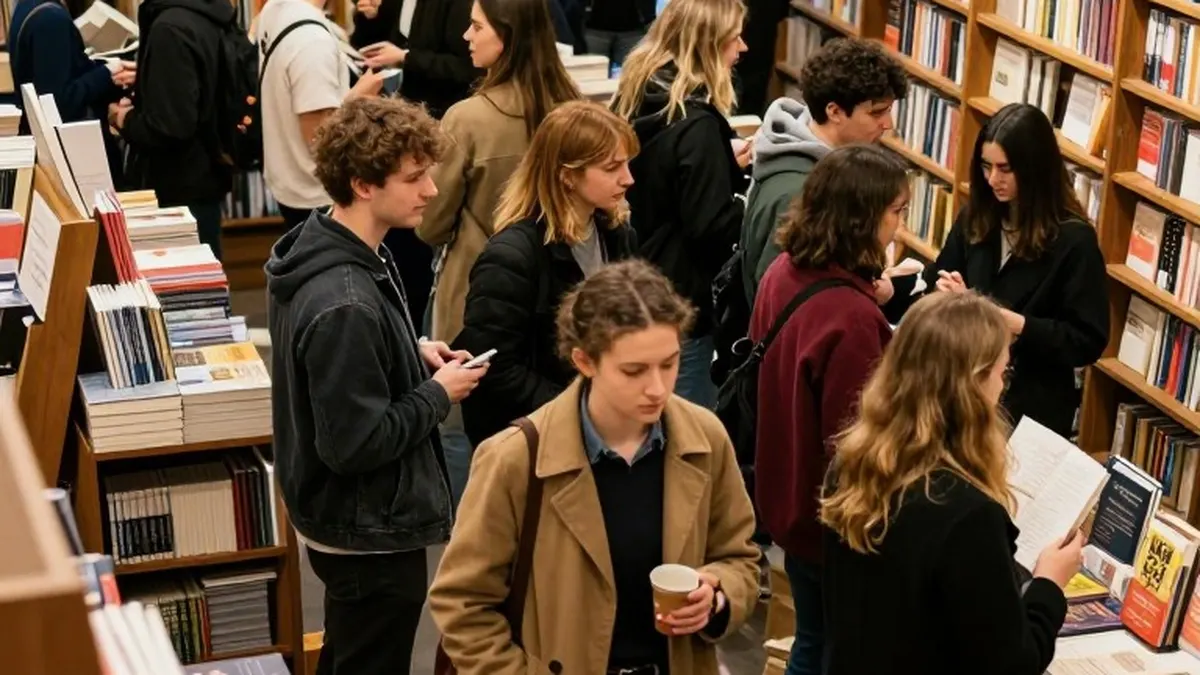
On a brisk Saturday in October, more than 80 people crowded into the small Corner Bookstore on New York City's Upper East Side for a quarterly book crawl organized by Lit Club NYC, a local literary community. Some attendees described themselves as "slightly over sci-fi" while others were in their "rom-com era." The event had a corporate backer: Tinder.
The partnership was arranged by Offline, a platform that links hosts of gatherings across the United States with advertisers eager to sponsor their events. Offline founder Andrew Roth, 28, says the aim is to help advertisers "deliver outsized media performance and drive growth" while also helping hosts keep their gatherings financially sustainable.
Kelly Chervin, 35, started Lit Club in March 2025 to meet other Latina readers and bond over books, but she has bills to pay. "If we want to have a literary community be around sustainably, then paid partnerships are part of that," she says. For the Tinder collaboration, she earns $20 per attendee and must provide deliverables such as social media posts promoting the partnership, including one recent Instagram line reading, "You can now discover events like these on the @tinder app!"
Roth began his career in 2020 by founding DCDX, a Gen Z-focused research and consulting company, while studying at Vanderbilt University. The firm worked with major brands including Chipotle, Hinge and Spotify, and was recently acquired by Visible Ventures for an undisclosed sum, with Roth staying on as a Board Advisor. In 2024, a DCDX advertising campaign for fragrance company Le Monde Gourmand at in-person community events planted the seed for Offline. "Can we bring those [advertising] dollars into the real world and help these communities be preserved?" he recalls wondering. He and fellow entrepreneur Chris Banks officially launched Offline in September 2025.
On the platform, hosts of everything from mom groups to run clubs to literary circles create profiles detailing how often they meet and typical turnout. Brands then match with events that fit their target audience and post campaign briefs that hosts can pitch ideas to. Roth says Offline now features more than 900 communities, with hosts earning an average payout of $2,500 to $3,000 per event. "The language we always use is 'intimacy at scale,'" he says.
Other hosts are weighing similar choices. Michael Lombardo, 43, took up bird watching in 2019 and founded the free McGolrick Bird Club in April 2023, named for Brooklyn's McGolrick Park, where around 100 people now gather every Saturday morning. The freelance graphic designer and writer connected with Offline earlier this year and says any partnership would have to benefit the community, but he is open to it. "I do need to support my family," he says. "I have two children."
Experts are split on what advertising money means for these groups. Amit Kumar, an assistant professor of marketing, psychological and brain sciences at the University of Delaware, is hopeful. "As long as they actually are allowing people to engage with one another and connect with one another, there's a potential benefit to that," he says. Cornell University sociology professor Benjamin Cornwell disagrees, arguing that an organic community stops being organic once a profit-motivated company fuels it. Members may "lose faith in the original purpose" and some will "drop out," he says, adding that while the fallout may not be immediate, "it's inevitable."
Back at the book crawl, opinions varied: some attendees thought it was cool that Tinder is branching into in-person events, others disliked the implication that the gathering was a ruse to find a significant other, and some were fine with it as long as the company did not feel too pushy. Chervin faced the tension directly in September, when she partnered with an AI company at an event and appeared in an ad for Meta's AI tool Muse. The move sparked debate among members, and while she lost no paid subscribers, "a few people did tell me they don't think they can come back," she says.
Roth stands by the model Offline is building. "If 10 years from now people look at us and say, 'Oh, these are the evil guys that bastardized IRL,' so be it," he says. "But I'll look at that and say, you know, we paid out a billion dollars to organizers, and we've created I don't know how many more events."
More News · National news · Report a business · Got a Story?