Grief and Memory: A John Hopkins student reflects on the 25th anniversary of 9/11
Sebastian Alderman explores how the loss of an uncle killed in the North Tower continues to shape family dynamics and personal identity years later.
By Nia Foster ·
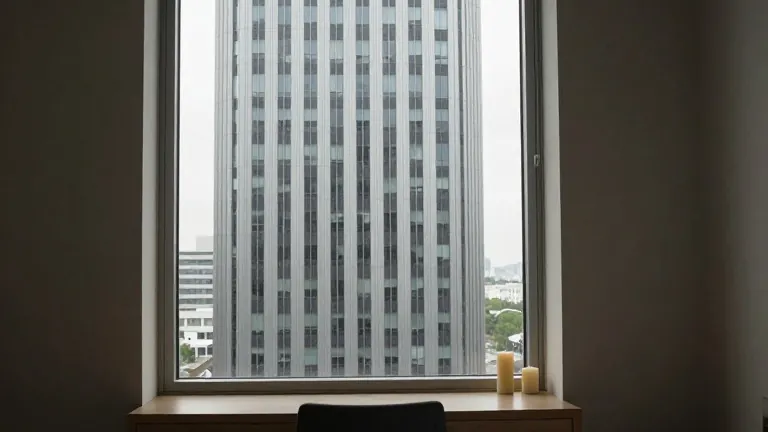
Sebastian Alderman’s uncle, Peter, died in the North Tower of the World Trade Center on September 11, 2001, while Alderman was not yet born. Alderman, a senior at Johns Hopkins University from Tulsa, Oklahoma, marked the 25th anniversary of the attacks this year by looking out the window of their childhood bedroom. The view included a tall, narrow corporate Gothic tower designed by Minoru Yamasaki, the same architect who created the Twin Towers. The building’s vertical windows and grey-silver exterior served as a constant visual reminder of the event that defined their family history.
Alderman was born in 2005, during the early years of the War on Terror. Their sister arrived two months after the towers collapsed. Peter was 25 years old on the morning he died. He had returned to New York City early for work on either September 8 or 9, 2001, and was heading to a business meeting on the 106th floor of the North Tower. He felt the impact of the first plane, coughed through the smoke, and emailed his sister a goodbye message before the structure collapsed. His body was never recovered.
The loss created a complex dynamic within the Alderman household. Alderman notes that the death of a child is often described by the Korean proverb as being buried in the heart, unlike a parent who is buried in the ground. Because Peter’s body was never found, the grief remained internal and unresolved. Alderman, who never met their uncle, describes feeling a deep sense of injustice and a persistent presence of Peter’s ghost. This feeling has influenced how Alderman processes their own identity and relationships with family members, particularly their father, who speaks less about his late brother.
Alderman, who studies Anthropology and History on the pre-med track, observes that grief does not simply dissipate over time. Instead, it moves sideways, permeating silence, anger, and other relationships. The family’s dynamic has been shaped by the shared loss of a person who was part of the group before Alderman’s birth. This ongoing process has made it difficult to discuss the event openly, leading Alderman to write as a way to organize fragmented thoughts about a tragedy that predates their own life experience.
The personal loss is contextualized within the broader historical impact of the September 11 attacks. Alderman cites data from Brown University's Costs of War Project, which states that U.S. military action in Syria, Yemen, Afghanistan, Pakistan, Iraq, and other regions killed 4.5 million people between 2001 and 2021. Roughly half of those killed were civilians, and 38 million people were displaced from those regions. The project notes that the United States spent approximately $7 trillion over 20 years under four presidents without achieving its stated objectives in the War on Terror.
Alderman reflects on the disparity between individual tragedy and global statistics. Peter is one of nearly 3,000 people killed in the New York City attacks, but he is also part of the millions affected by subsequent conflicts. The anniversary prompts consideration of how national grief was leveraged to justify military interventions. Alderman describes the post-9/11 period as a time when the U.S. chose revenge over healing, leading to a cycle of violence that isolated fear within the country. This historical context adds a layer of complexity to the personal mourning, as the family’s loss is intertwined with global political decisions.
The physical environment of Alderman’s childhood home reinforces these memories. The tower outside the window, mirroring the design of the World Trade Center, stands as a tangible link to the past. For Alderman, the anniversary is not just a date on a calendar but a recurring emotional event triggered by specific visual cues. The experience of mourning a relative never met continues to influence their perspective on family, history, and the legacy of the attacks in American life.