Can Pochettino's trademark intensity take root at an unathletic Manchester United?
Mauricio Pochettino built his reputation on aggressive, high energy pressing, but the numbers suggest the Manchester United squad he is inheriting is the least athletic in the Premier League.
By Nia Foster ·
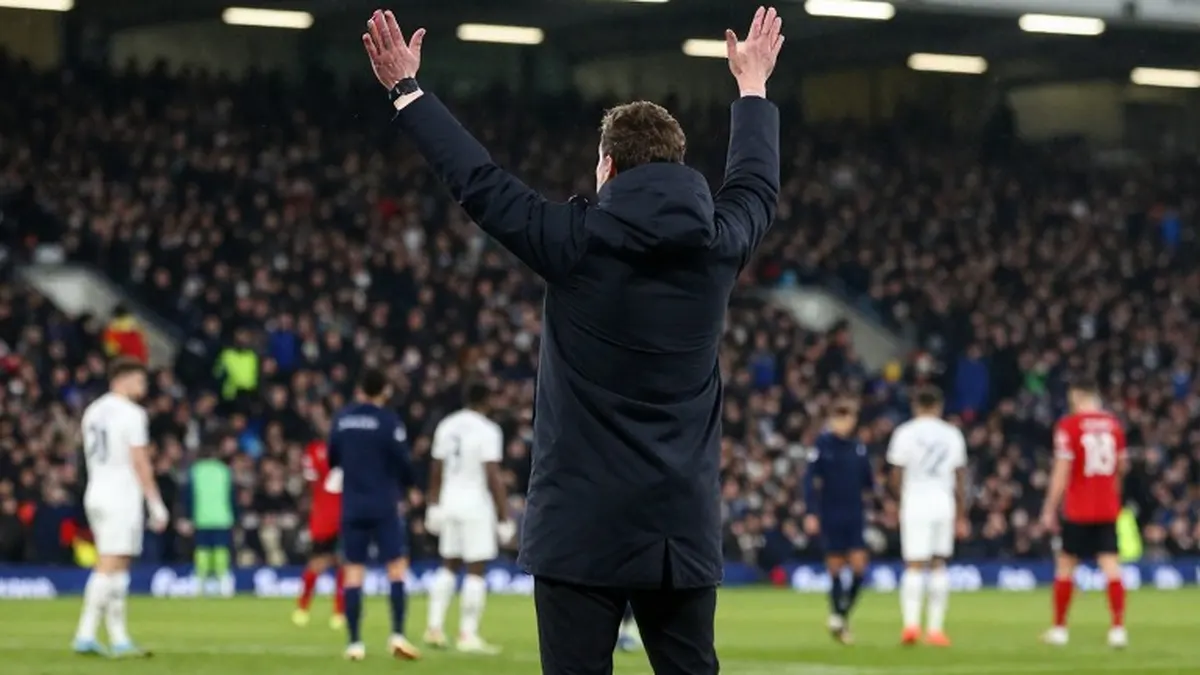
Mauricio Pochettino has been handed a two-part mission as he leaves the United States men's national team: drag Manchester United out of the Premier League relegation zone, then mold them into contenders. His teams have always been defined by aggression and energy, yet the data suggests he is taking over a squad singularly ill suited to that approach.
A caveat first. Running statistics are a blunt instrument, and senior figures at some of England's best recruiting clubs view them with outright suspicion. Sergio Busquets rarely had to sprint at Barcelona, because keeping the ball and controlling territory forces opponents to do the running. United's 112.5 kilometers covered per game, fewer than 18 of the other 19 top flight teams, did not by itself put them in the bottom three. Liverpool sit below them on that measure and Manchester City above, and each United player is covering only about 45 meters less per game than last season, when the team had nearly 10 percent less possession yet won more.
Physical data becomes relevant, though, when a club hires a coach who prizes dynamic athletes and demands an intense press high up the pitch. That is Pochettino's identity. It made him the perfect match for a young Tottenham side with a point to prove, and it explains why Paris Saint-Germain's Neymar and Kylian Mbappe axis was such an obviously awkward fit.
The template also held up with the USMNT, despite doubts that players could sprint their way through a tournament straight after a grueling club season. Pochettino did not ask much, Tim Ream, then 38, said in the summer, just "to use your brain while physically, you were killing yourself." It worked. The Americans' 10.16 passes allowed per defensive action ranked sixth among the 48 World Cup teams, alongside Germany, Spain and the Uruguay side coached by Pochettino's mentor Marcelo Bielsa, and no knockout round team forced opponents to misplace a higher share of passes than the United States' 22.8 percent.
That success, however, came with a player pool that was strong, organized and above all athletic. According to Gradient Sports, a leading external provider of physical data, United are the least athletic team in the Premier League, cut adrift alongside Nottingham Forest on a score combining accelerations, decelerations, sprint distance and maximum speed. In average top speed of outfield players, they rank 19th out of 20, five percent slower than Bournemouth and Liverpool.
It is possible United only look unathletic because Michael Carrick wanted controlled possession rather than headfirst counterattacks. The personnel readings are hard to ignore, though. Harry Maguire, Lisandro Martinez and Ayden Heaven, the three center backs who have started most league games, all rank in the bottom third or lower at their position for top speed, accelerations and decelerations and share of high speed runs. Midfielders Andrey Santos, Kobbie Mainoo and Youri Tielemans tell a similar story, while Carlos Baleba, the one central midfielder with an impressive athletic profile, is out injured after his hamstring went on a driving run.
The pressing numbers from Opta are just as stark. Santos pressures 56.2 percent of opponent touches, Tielemans 56.8, Bruno Fernandes 57 and Mainoo 57.3, all in the bottom 12 among midfielders with at least 300 minutes played. Up front, Marcus Rashford, Bryan Mbeumo, Matheus Cunha and Amad Diallo hold first, third, fifth and sixth among the division's least pressing forwards.
Pochettino has adapted before. The Chelsea squad he took over in 2023-24 did not look comfortable hunting the ball, yet finished above league average for PPDA, opponent pass completion, ball recoveries and final third duel success. United's players also showed last season that another gear exists.
Even so, the timing is curious. United could have hired Pochettino at least half a dozen times in the past, only to move for him now with a squad that looks ill matched to his principles. The data cannot show whether the players gave everything for Carrick or have more to give, but it is enough to ask why the club's decision makers believe this group is ready to play Pochettino's way.
More News · National news · Report a business · Got a Story?