Colorado voters approve tax for I-25 rail service
Residents in 31 Front Range cities backed Issue 7A, securing $295 million annually to launch trains between Denver and Pueblo by 2032.
By Nia Foster ·
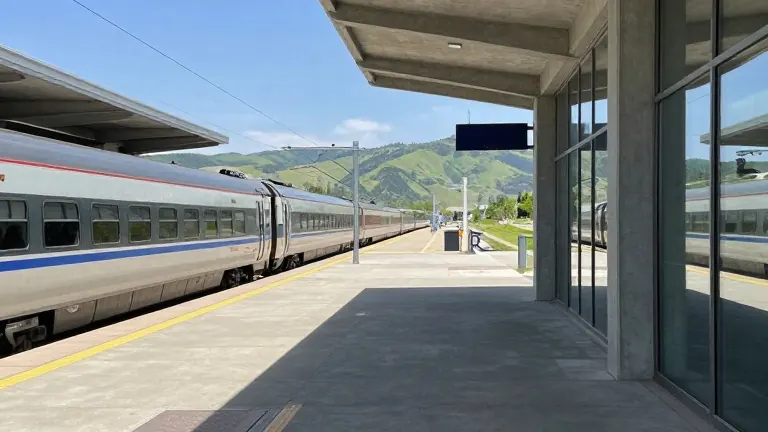
Resident voters in 31 Colorado municipalities approved a new sales tax to fund passenger rail service along the Interstate 25 corridor. The measure, known as Issue 7A, passed with 55% support against 45% opposition. This vote authorizes the Colorado Connector, or CoCo, a long-planned rail project aimed at reducing car traffic and linking major cities from Pueblo to Fort Collins.
The approved tax rate is 0.333%, which adds approximately 33 cents to every $100 purchase made within the district. Officials estimate this revenue stream will generate $295 million each year. The district general manager, Sal Pace, described the result as a historic win for a project that has been under development for decades. He stated that the vote demonstrates Colorado's willingness to invest in connecting its communities rather than letting the highway divide them.
Governor Jared Polis praised the outcome in a statement released on election night. He noted that the new service will link communities, lower traffic congestion, improve air quality, and save residents time and money. Polis, who is set to leave office in January after serving two terms, has been a prominent supporter of the CoCo initiative during his tenure.
The project follows a multi-phase plan finalized earlier this year. District officials already have sufficient funding to begin service between Denver and Fort Collins by 2029. This northern segment will operate as a joint service with the Colorado Department of Transportation and the Regional Transportation District. RTD has previously struggled to complete its own Denver-to-Boulder commuter route, the B Line, which voters first approved in 2004. Pace said the success of the ballot measure allows for service expansion to all planned stops within five years.
The full route is designed to offer 10 daily round trips north of Denver and eight round trips on the southern segment. Permanent stations will be built in 12 locations: Pueblo, Colorado Springs, Sterling Ranch, Littleton, Denver, Westminster, Broomfield, Louisville, Boulder, Longmont, Loveland, and Fort Collins. The plan also includes special event stops at the future Denver Broncos facility at Burnham Yards and the planned Denver Summit soccer stadium near I-25 and Broadway.
To realize these plans, the rail district must finalize access agreements with the private railroads that own the tracks. Pace said negotiations with BNSF, which operates the northern segment, are close to completion. Discussions with BNSF will resume next week. The southern segment between Denver and Pueblo is jointly owned by BNSF and Union Pacific. Those negotiations are expected to begin in early 2027.
Infrastructure upgrades are a major part of the cost structure. The tracks north of Denver require the installation of positive train control, a federal-mandated signaling and safety system for passenger lines. John Putnam, chair of the rail district board, identified this system as the project's largest single capital expense. He and other officials emphasized that their five-year engagement with the railroads has prepared them for these financial demands, unlike the earlier B Line project where lease costs ballooned unexpectedly.
Support for Issue 7A was backed by a campaign that raised about $1.3 million. Donors included the Denver Broncos, the Colorado Rockies, Conservation Colorado, and individual contributors such as Pat Stryker. The funding was used to promote the benefits of the rail line to voters across the Front Range.