Eisenkot's Knesset moves test haredi coalition math
The change bloc is seizing control of legislative bodies while facing a difficult choice on the speaker role that may complicate talks with religious parties.
By Julian Schulz ·
Gadi Eisenkot faces a structural conflict as he attempts to form a government. His party, Yashar, has secured immediate control over key Knesset bodies, but the personnel choices made in that process may alienate the haredi parties he needs for a stable majority. This tension emerged two weeks after the election, as the new leadership began reshaping the parliament before a coalition was finalized.
Eisenkot outlined four non-negotiable principles for his future government. Israel must remain a Jewish and democratic state, the Declaration of Independence must guide government values, universal service must apply to all citizens, and Hamas’s military and governing capabilities must be destroyed. While these goals are clear, the path to achieving them through coalition building is not.
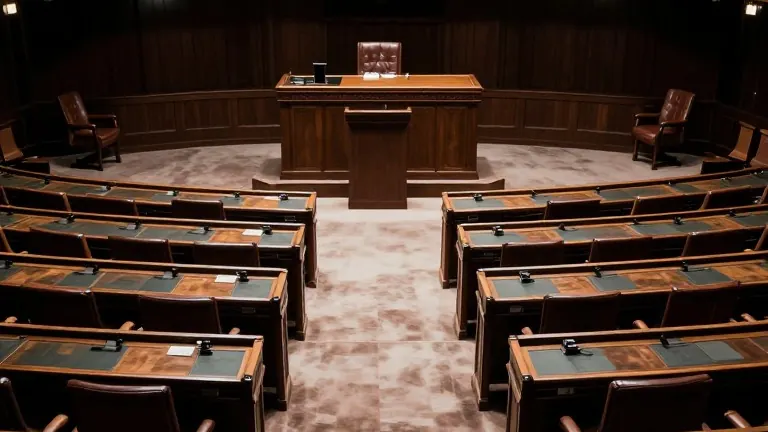
On Wednesday, the 48 members of the change bloc joined with the 19 Arab MKs to elect Roy Folkman as chairman of the Arrangements Committee. This body oversees the Knesset’s internal operations and committee assignments. With Folkman at the helm, Eisenkot’s group can now direct which bills receive hearings and how quickly they move through the legislative process, such as inquiries into October 7 or reversals of judicial reforms.
The next major decision involves the replacement of Knesset speaker Amir Ohana. Eisenkot and his allies reportedly chose Matan Kahana over Yesh Atid leader Yair Lapid. Kahana is a religious politician and former fighter pilot from the political Right. His selection allows Eisenkot to frame the parliamentary shift as a center-right transition rather than a left-wing takeover, a move intended to attract Likud or Religious Zionist Party members.
However, Kahana’s history with the haredi community is contentious. During the 2021-2022 Bennett-Lapid government, he served as religious services minister and pushed to open kashrut certification to competition. He also sought to empower municipal rabbis to convene conversion courts and increase female representation on religious councils. United Torah Judaism’s Moshe Gafni shouted “Antiochus!” at Kahana in the plenum during this period, comparing the minister to the villain of the Hanukkah story.
The kashrut reform was eventually repealed by Shas in July, four months before Eisenkot selected Kahana. Additionally, Kahana has been a vocal advocate for universal conscription. In a Knesset speech two years ago, he stated that “We all enlist, we all serve, and we all fight for one another.” He argued that those who decline service should receive nothing from the state, whether they are secular Israelis or haredim from Beitar Illit.
This stance directly conflicts with one of Eisenkot’s four principles, which the haredi parties are unlikely to accept. Yet, forming a government without them is arithmetically difficult. The change bloc has 48 seats. Adding the 13 MKs from Shas and United Torah Judaism would provide exactly 61 seats, the minimum required for a majority. This option is favored by Yisrael Beytenu head Avigdor Liberman, but it requires a draft law that all parties can accept.
The choice of Kahana signals a willingness to prioritize a center-right coalition over immediate haredi goodwill. If Eisenkot intends to include the haredi parties, the speaker nomination may be a costly signal. He has demonstrated that his bloc can remove Netanyahu from parliamentary leadership. He has not yet demonstrated that he holds the specific majority needed to place himself in the Prime Minister’s Office.