Democrats win Congress; Trump's $5,000 dividend faces immediate scrutiny
The promised payment was conditioned on Republican control, but fiscal experts and bipartisan leaders now question its feasibility and legal basis.
By Tomas Gonzalez ·
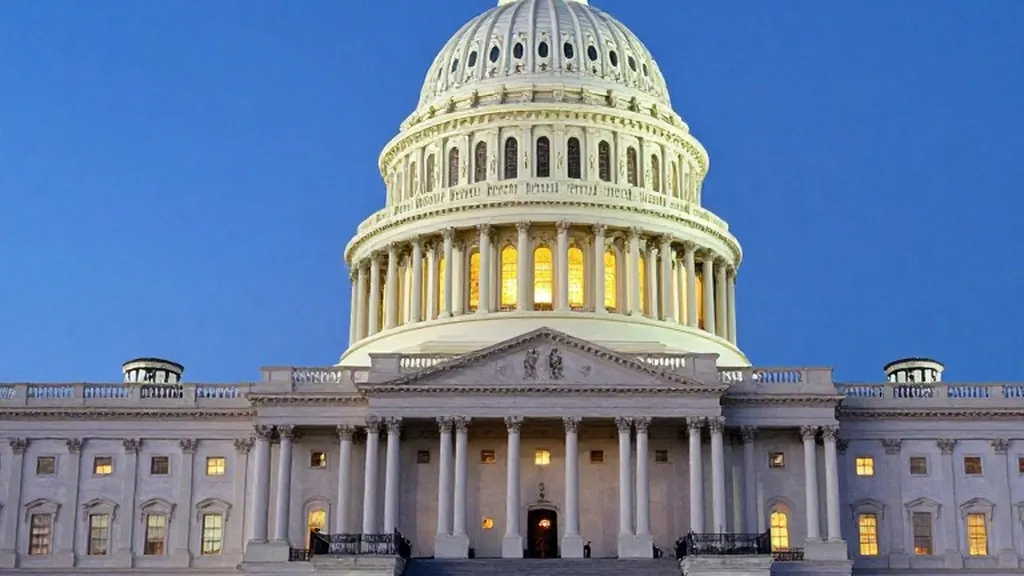
President Donald Trump’s pledge to send a $5,000 check to every American adult if Republicans maintained control of Congress has arrived as a major point of contention following the midterm elections. Democrats captured majorities in both the U.S. House and Senate, with at least 250 House seats and a 54-44 Senate majority as of November 6. This outcome complicates the administration's plan, which was explicitly tied to the GOP retaining power in both chambers.
The promise was made at the Republican Midterm Convention in Dallas, where Trump declared, "If the Republicans win, you win with us and you get $5,000. It will be called the Trump dividend." He framed the payment as a reward for the nation's economic success, comparing it to corporate shareholder dividends. However, the payment was never a guaranteed policy but a conditional offer that hinged on an electoral result that did not favor the proposing party.
Fiscal experts have long noted that the cost of the dividend would be staggering. The U.S. Census Bureau estimates there are approximately 245 million adult citizens, meaning the total cost could reach $1.2 trillion. This figure would place significant strain on the federal budget, which already faces a nearly $1.8 trillion annual deficit. Erica York, a senior economist at the Tax Foundation, described the plan as unlikely to happen, noting that the new tariffs are not projected to generate enough revenue to cover the cost over a decade.
House Speaker Mike Johnson, a Republican, stated on Sunday that the payment would require congressional approval. "I would assume, yes, he'd need Congress to act, and that's a creative idea," Johnson said. He pledged to work with the president to find consensus, though he acknowledged the challenge of passing such a large spending bill with a small Republican margin. Trump, however, initially suggested that Congress might not need to authorize the payments, though he did not specify how the administration could spend more than $1 trillion without legislative action.
Bipartisan criticism has emerged regarding the timing and nature of the pledge. Some Republicans, including Texas Congressman Chip Roy, questioned the idea of creating dependency. Democrats viewed the promise as an attempt to buy votes in a tight race. Election law expert Rick Hasen of UCLA noted that while the promise is likely legal under the First Amendment, it is not the first time a candidate has offered a financial incentive. He compared it to historical promises like George McGovern’s 1972 pledge to give every American $1,000 a year.
The White House has pointed to tariff revenues as a potential funding source. Vice President JD Vance told Fox News that some of the money would come from tariffs, specifically citing the administration's collection of $21 trillion in revenue. However, lawmakers did not include a separate tariff dividend in the One Big Beautiful Bill Act, which became law in 2025. Sen. Bernie Moreno of Ohio said he would introduce legislation to fund the proposal, but analysts say securing the 60-vote supermajority in the Senate will be difficult, especially now that Democrats hold the majority.
With Democrats controlling both chambers, the path to enacting the Trump dividend is significantly longer. The new Congress will likely focus on oversight and other priorities, such as the war in Iran and the dismantling of the Department of Education. The $5,000 payment is just one of several financial promises made by the administration, including a $90 Medicare payment and a $500 refund for some Affordable Care Act enrollees. PolitiFact found that the largest payment, the $5,000 check, remains far from certain due to these legislative and fiscal hurdles.
The election results also reflect voter frustration with the cost of living and the war in Iran. According to the AP Voter Poll, about 8 in 10 voters said inflation has caused a financial hardship. This context makes the promise of a large cash payment more appealing to some, but also more scrutinized by others who worry about the long-term impact on the national debt. Kenneth Rogoff, a former chief economist at the International Monetary Fund, warned that the payment would blow up the deficit and increase the odds of a debt crisis.
As the new Congress prepares to convene in January, the Trump dividend will likely become a test of the relationship between the White House and the new Democratic leadership. Democrats have signaled they will use their oversight powers to rein in administration policies. The dividend, which was designed as a symbol of Republican economic success, now faces a reality check in a chamber where the opposing party holds the gavel. The final decision on whether the checks will be issued remains with the new lawmakers.
The administration has not withdrawn the promise, with Trump stating, "The 5,000's going to happen, 100%." However, the mechanics of how this will be achieved are unclear. The White House has not released a formal plan for how the money will be distributed or funded. As the political landscape shifts, the $5,000 dividend stands as a prominent example of how campaign promises can become complex legislative battles once the election is over and the new balance of power is established.