El Mozote Anniversary Marks 45 Years Without a Single Conviction
Despite the identification of 767 victims and 558 children killed in 1981, no member of the Atlácatl Battalion has faced trial for the massacre.
By Nia Foster ·
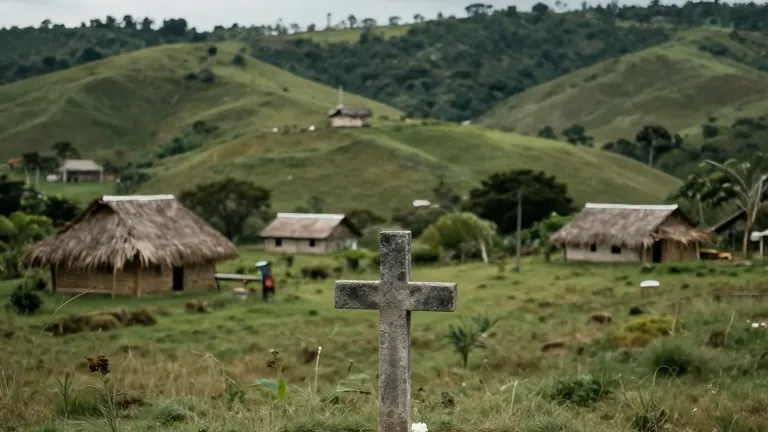
For the families of El Mozote, the 45th anniversary of the 1981 massacre brings a specific and painful reality: no perpetrator has been prosecuted. While 767 victims have been identified by name, and an estimated 1,000 civilians are believed to have died, the legal system has yet to hold any member of the Atlácatl Battalion accountable for the killings.
The violence occurred in December 1981 in the Morazán department of El Salvador. The Atlácatl Battalion, a special forces unit, launched what they called Operation Rescue. The troops targeted a suspected encampment of the Farabundo Marti National Liberation Front, or FMLN, and surrounding rural villages. Lieutenant Colonel Domingo Monterrosa Barrios commanded the counterinsurgency force during the four-day operation that took place between December 10 and 13.
The battalion was trained and equipped by the United States, receiving M-16 rifles and tactical instruction. Monterrosa attended the U.S.-run School of the Americas in Panama. During the massacre, U.S. Army Sergeant Major Allen Bruce Hazelwood accompanied Monterrosa to the site in a helicopter. Despite these ties, the U.S. government initially dismissed the events. Three senior officials from the Reagan administration testified to Congress that no evidence of a massacre existed and that Salvadoran forces were improving their humanitarian record.
The international community learned of the killings in January 1982, when Raymond Bonner of The New York Times and Alma Guillermoprieto of The Washington Post broke the story. Their reporting described a scene of widespread killing where machetes and bullets were used against civilians. The U.S. media response was mixed and often critical of the two journalists. The Wall Street Journal published an editorial titled “The Media’s War,” labeling the reporting a “propaganda exercise.” This editorial appeared six months before Bonner was reassigned to the business desk in New York.
The failure to prosecute has persisted for decades. The massacre is now often reduced to a political gesture or a subject for documentaries, rather than a case for the courts. The source notes that the media’s focus on objectivity and balance may have allowed the event to fade from public consciousness. By framing the reporting as partisan, critics argued that the massacre was a leftist plot to demonize the government, a narrative that stuck in the American mind for years.
The lack of accountability affects the perception of justice in the region. For the survivors and the families of the 558 children killed, the absence of trials suggests that the event remains unresolved. The source argues that the media apparatus, driven by economic interests and a desire for neutrality, often shapes how such events are perceived. This framing can make it difficult for the public to see the massacre as a definitive historical fact rather than a contested narrative.
The 45-year mark highlights the gap between the identification of victims and the legal processing of the event. The names of the 767 known victims are compiled, but the legal machinery has not moved to match the historical record. The anniversary serves as a reminder of the specific units involved and the international connections that supported them.
No new trials are currently scheduled for the Atlácatl Battalion members. The anniversary will be marked by public recognition and governmental addresses, but no legal proceedings are expected to begin this year. The case remains open in the public eye, awaiting a legal outcome that has eluded the families since the 1980s.