Fitzharris Publishes Medical Biography of Joseph Bell
The historian traces the diagnostic methods of the Edinburgh surgeon who inspired Arthur Conan Doyle's famous detective.
By Nia Foster ·
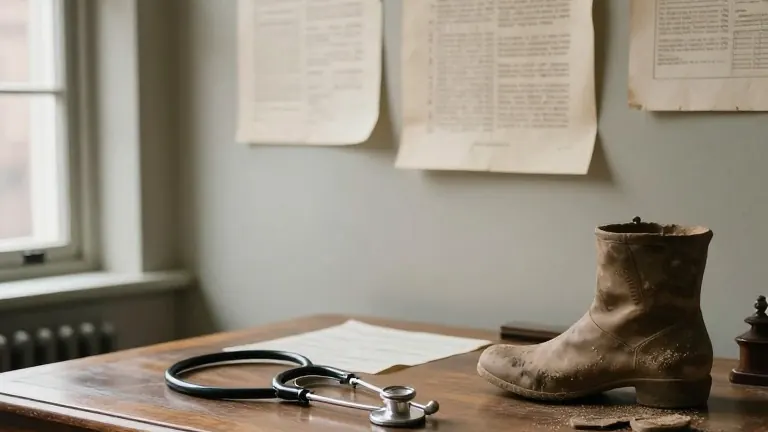
Medical historian Lindsey Fitzharris has released a new biography that examines the diagnostic habits of Joseph Bell, the Scottish surgeon who served as the primary model for Sherlock Holmes. The book, titled Sleuth-Hound: The Case of the Real Sherlock Holmes, details the professional life of the physician at the University of Edinburgh who influenced the creation of one of literature's most recognizable characters.
Bell was known for his ability to deduce a patient's occupation, personal routines, and medical conditions through simple observation. Fitzharris notes that Bell once determined the specific route a patient took on foot by analyzing the type of clay dusted on the individual's boots. Arthur Conan Doyle later adapted this specific incident for his novel The Sign of the Four.
Fitzharris approaches the subject through a medical history lens, a perspective she states was absent from previous commercial publications about the surgeon. The only prior major work on the topic was a 1982 book by Ely Liebow. While Liebow's volume provided some background for Sherlockian enthusiasts, Fitzharris argues that a dedicated medical analysis was necessary to fully understand Bell's methods.
The author brings a long history of investigating medical figures to this project. In 2017, she published The Butchering Art, a biography of Joseph Lister, the pioneer of antiseptic surgery. Her 2022 book, The Facemaker, profiled Harold Gillies, a World War I surgeon who developed techniques for facial reconstruction.
Fitzharris has also worked across various media to explore historical deaths and medical breakthroughs. In 2020, she hosted a documentary for the Smithsonian Channel that examined the final days of figures such as Pablo Escobar and Harry Houdini using virtual autopsies and blood sample analysis. Last year, she collaborated with her husband, caricaturist Adrian Teal, on an illustrated children's book about medical failures that led to new discoveries.
The new book returns to the setting of the mid-19th century Edinburgh where Bell practiced. During this period, the city was a hub for surgical innovation, including the early use of ether. Bell also worked alongside a local police surgeon on high-profile murder cases, blending his clinical skills with an investigative mindset that Doyle would later fictionalize.
Source: Ars Technica