Israel accelerates data centre expansion in push for global AI influence
Israel is easing approval processes for AI data centres and planning major investments, but electricity constraints threaten the pace of its expansion.
By Nia Foster ·
Israel is speeding up data centre construction as it seeks a larger role in the global artificial intelligence industry, combining regulatory changes with major infrastructure projects. Prime Minister Benjamin Netanyahu announced a national AI development plan in June and said in September that Israel aimed to become the world's third AI power within five years.
The country already has a substantial connection to Nvidia, whose Israeli operations form its largest research and development presence outside the United States. The chipmaker acquired Israeli networking company Mellanox for nearly $7bn in April 2020. Over the past three years, Nvidia has doubled its Israeli workforce to 6,000 across seven research and development centres. A planned campus in Kiryat Tivon, near Haifa, would accommodate up to 10,000 employees.
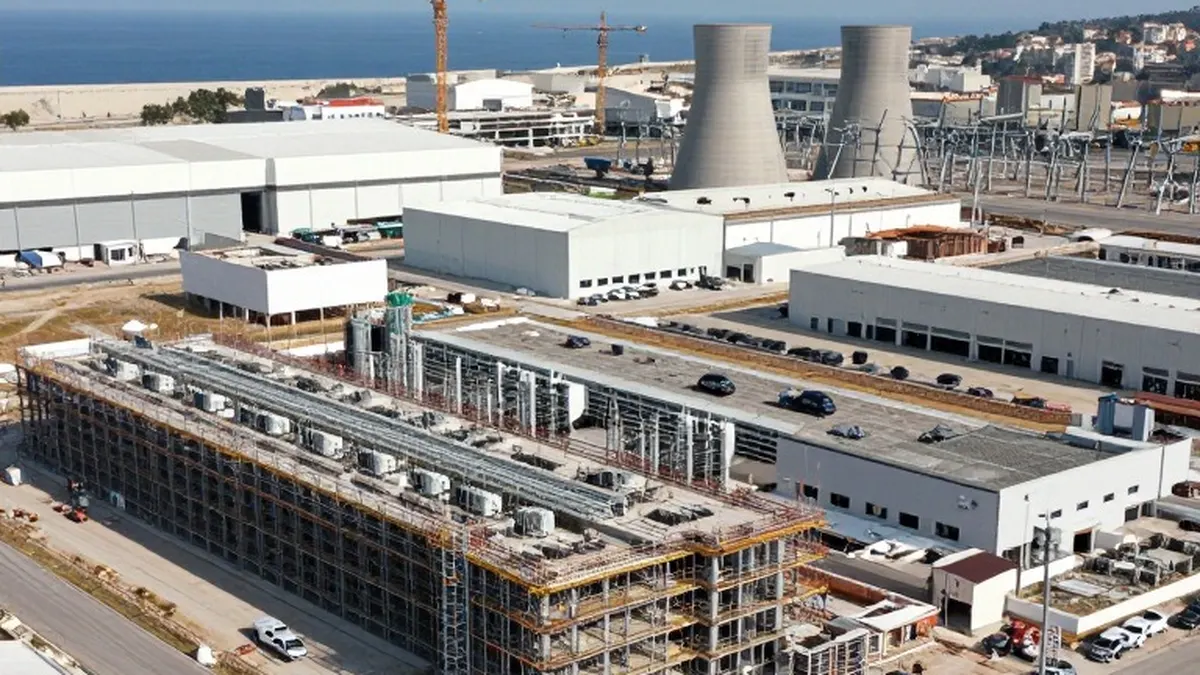
Central to Israel's expansion is the Ofek Data Center, planned north of Ashdod's port and scheduled for completion in the second half of 2029. It would become the country's largest data-processing facility. A consortium including US digital infrastructure company Serverfarm and the Israel Infrastructure Fund is financing the project, with an initial cost of $1.5bn and another $5bn planned for subsequent upgrades.
Ofek is designed to connect directly to European markets through an underwater fibre-optic cable and use Nvidia graphics processing units to accelerate computing workloads. Its capacity is expected to start at 130MW and later reach 200MW. According to Israeli media reports, an adjacent 850MW gas-fired power station will supply it directly.
Israel has 67 data centres, according to research group Data Center Map. In February, the government began an initiative to classify AI data centres as national infrastructure, allowing projects to bypass local regulation. However, heavy demand for grid connections prompted the Israeli Electrical Authority in October to impose a 200MW capacity cap on all new data centres.
Electricity remains a central obstacle. London-based independent researcher and AI governability adviser Rajiv Dalal told Al Jazeera that faster approvals do not resolve the challenge of powering new facilities. He said Israel faces grid constraints and dependence on imported hardware, while its ambitions require reliable electricity, much greater capacity and consistent access to advanced chips. Energy and Infrastructure Minister Eli Cohen has called for developing nuclear power alongside offshore natural gas resources.
Analysts see strategic objectives behind the investment. Harvard public policy scholar Mark Esposito told Al Jazeera that domestic data centres can give countries control over a crucial part of the AI economy, even when immediate commercial returns are uncertain. Brookings Institution senior fellow Mark Muro said local infrastructure also supports more stable inference, the process of generating outputs from trained models, with benefits for businesses, electricity grids and military capabilities.
The expansion comes as Europe faces power grid bottlenecks, lengthy permitting and public opposition to data centres. Moving computing workloads abroad can provide flexibility, while European Commission estimates put the premium for keeping data within EU boundaries at 30 percent or more. Domestic facilities also allow sensitive information to remain under European jurisdiction. Analysts warned that greater reliance on foreign computing infrastructure, potentially including Israel's Ofek facility, could introduce additional geopolitical dependencies.