Cannabis prices drop during Thanksgiving holiday despite industry challenges
While general inflation drives up holiday costs, cannabis dispensaries offer significant discounts during Green Week, a trend that benefits consumers but pressures retailers facing a revenue slump.
By Julian Schulz ·
As Americans face rising expenses for travel, food, and beverages this Thanksgiving, one popular holiday commodity is experiencing a price decline. The period leading up to the holiday, known in the industry as Green Week or Green Wednesday, has become a major sales event for marijuana dispensaries. This time of year now rivals the April 20 holiday in terms of foot traffic and revenue for cannabis retailers across the country.
Shoppers are taking advantage of steep discounts, doorbuster specials, and exclusive products during this peak season. Long queues form at dispensaries nationwide as customers wait to interact with budtenders. The cannabis market in the United States is valued at $30 billion, with legal sales occurring in 24 states and the nation's capital, according to Whitney Economics, a firm specializing in cannabis business research.
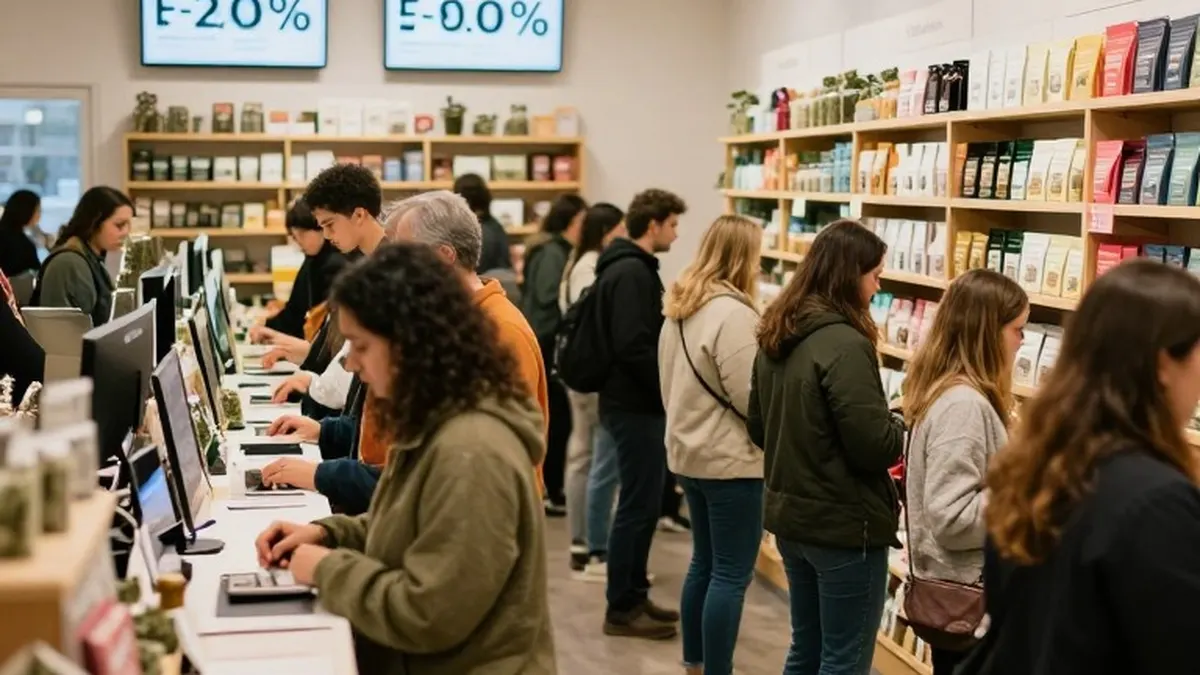
At The Forest, a dispensary in Baltimore, the holiday rush was evident early in the week. Customers purchased items such as THC gummies for Friendsgiving gatherings, sparkling infused beverages for curious relatives, and pre-rolls for evening walks. Digital screens inside the store highlighted various offers, including 25% off edibles, 30% off for medical patients, and an additional $5 discount for donating cans of food to a holiday drive.
Kelley Vinton, a 36-year-old regular at the store and medical marijuana user, noted that she typically maintains a strict weekly budget. However, she allowed herself to purchase extra items for a pre-dinner walk with her cousins. Vinton described the tradition, explaining that the group smokes a joint before dinner to relax and prepare for the meal.
Despite the popularity of the holiday sales, the industry faces financial headwinds. Deep discounts have squeezed retailer margins and contributed to a revenue decline in the legal market. Whitney Economics reported that 2025 marked the first year since 2014, when Colorado and Washington first legalized recreational sales, that the industry saw a dip in revenue. This downturn was driven by an oversupply of plant material and falling prices.
Beau Whitney, founder and chief economist at Whitney Economics, described the situation as a race to the bottom. He explained that while consumers benefit from lower prices and greater affordability, the pricing pressure is hurting business operators. The reclassification of medical cannabis to Schedule III by the federal government this year, a category shared with drugs like codeine and anabolic steroids, contrasts with the federal status of recreational marijuana, which remains a Schedule I drug with a high potential for abuse.
The industry has seen a slight rebound in 2026, with sales increasing by about 5% compared to the same period last year. However, forecasts for the end of 2026 and the outlook for 2027 remain modest. Whitney attributed this trend to a shift in consumer behavior that began in 2024 as inflation and the cost of essentials like gas rose.
Previously, customers would enter dispensaries with a fixed budget and add products to reach that spending limit if discounts were available. Now, consumers are using the savings from discounts to cover other personal expenses, such as groceries and fuel. They adjust their cannabis purchase amounts based on their individual economic situations rather than sticking to a pre-set limit.
For store owners, succeeding during high-volume weeks like Green Wednesday is essential. Christina Betancourt Johnson, who manages The Forest, prepared for the influx of customers by stocking the store with edibles, pre-rolls, and snacks for those waiting in long lines. The store also offered branded giveaways and non-THC gummy samples.
Employee Thomas Bourne interacted with a regular customer who purchased a vape, noting that the purchase seemed light for the holiday season. He teased the customer, telling him he would need to return for his cousin walk essentials. The customer nodded, indicating he planned to come back for more.
More News · National news · Report a business · Got a Story?