Macron sets Dec. 18 deadline for EU budget deal after Brussels talks stall
Leaders failed to agree on the 2028-2034 framework or a $49 billion loan for Ukraine, forcing a reset before France's April elections.
By Julian Schulz ·
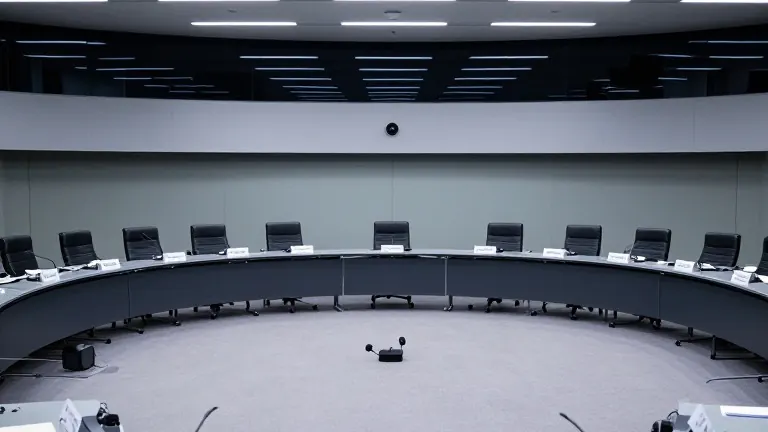
French President Emmanuel Macron established a hard deadline of December 18 for an agreement on the European Union's next seven-year budget after 27 member states failed to reach a consensus in Brussels. The talks concluded on Thursday without a final vote on the financial framework for 2028-2034 or a new $49 billion loan to support Ukraine's economy and military.
The European Union's budget is funded primarily by member states based on their economic size, typically representing 1% to 1.2% of the bloc's average gross national income. While smaller than national budgets, the allocation drives intense debate over priorities. Leaders spent more than 12 hours in negotiations, splitting over traditional spending on agriculture and infrastructure versus new demands for debt reduction and support for Kyiv.
Macron, who faces presidential elections in April, stated that France could not relaunch budget discussions after December 31. He warned that signing a deal would be impossible if it occurred too close to the vote. His remarks followed comments from Hungarian Prime Minister Peter Magyar, who described the day's outcome as yielding zero results and suggested an agreement before Christmas was unlikely.
German Chancellor Friedrich Merz emphasized the need for solid finances without increasing debt, representing a group of net contributors that includes the Netherlands and Sweden. Dutch Prime Minister Rob Jetten agreed that the budget must be downsized to reach a deal, stating he was prepared for a marathon negotiation process that could last until the end of the year.
A coalition of countries led by France and Italy, known as the friends of cohesion, defended existing funds for farmers and infrastructure projects in poorer regions. Czech Prime Minister Andrej Babis argued that cohesion policy ensures a similar quality of life across borders, citing the need for new highways and hospitals in his country. Agriculture and cohesion policy each account for roughly one-third of the total budget.
European Council President Antonio Costa called for unanimity on the budget's size and funding sources before the year ends. He proposed a new EU-wide tax on digital services, which would collect roughly 5 billion euros annually from online advertising and data usage. This move aims to generate revenue without relying solely on national contributions.
The Ukraine question remains a central point of contention. The proposed spending package includes a 100 billion euro envelope for Kyiv over seven years. Four countries, including Hungary and the Czech Republic, oppose using budget funds for military aid. Merz threatened to block the deal if all members did not commit to Ukraine, while Babis insisted that Ukraine's financing be negotiated separately from the main budget.
Kremlin spokesman Dmitry Peskov responded to the EU's plans by saying they would make Ukraine less inclined toward peace. The leaders are scheduled to meet again on December 17 and 18 to finalize the terms of the multi-year financial plan.