Israel Begins Gaza Border Fence Upgrades Drawing on Lessons From October 7
The Defense Ministry is strengthening the Gaza border fence, preparing for winter damage and introducing measures to address drone threats and improve early warnings.
By Julian Schulz ·
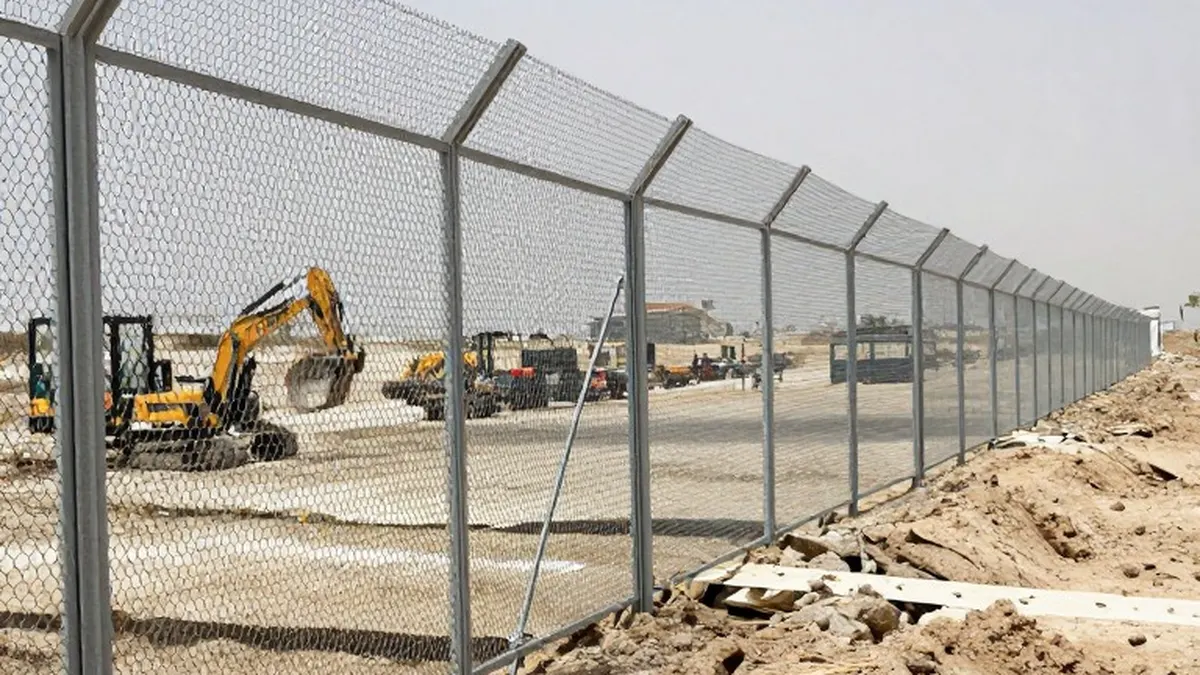
Israel's Defense Ministry began work in November to upgrade the security fence along the Gaza Strip, drawing on lessons from the October 7 attack and the war against Hezbollah. The project is being carried out by the ministry's Borders and Seam Directorate, led by Maj.-Gen. Eran Ofir, and covers five areas of improvement to the barrier known as Hourglass.
One part of the work involves strengthening gates along the border between Israeli and Palestinian territory. The changes are intended to make the gates harder to breach while preserving access for military forces in the northern and southern brigade sectors of the Gaza Division. Separately, secured openings are being installed to enable troops to cross quickly from one side of the fence to the other.
Engineers are also assessing the terrain and geographical conditions along the border and adapting their work ahead of winter. Seasonal streams can cause flooding and soil erosion in the area, creating a risk of damage to the fence. The engineering preparations are intended to address those conditions.
Another element involves introducing technologies and operational methods to counter threats flying at very low altitudes, particularly fiber-optic drones. Hezbollah used these drones against Israeli soldiers in southern Lebanon, where they posed a significant defensive challenge at the height of the war. Similar technology to address such threats is expected to be introduced along Israel's other borders, especially its frontier with Lebanon.
The fifth component consists of preparations to incorporate advanced intelligence-gathering systems. Those systems are intended to strengthen early warnings of different threats and improve security around the border.
The Hourglass fence came under criticism after attackers breached it at dozens of points along the 64-kilometer Gaza border on October 7, allowing thousands of terrorists into Israeli territory. Modeled on the barrier at Israel's border with Egypt, it was primarily designed to delineate the border, slow infiltration attempts and use technological systems to warn of incursions.
The Israeli military had nevertheless come to rely on the assumption that the barrier could not be crossed, or that troops could strike any terrorist cell approaching it to attempt a breach. During the attack, a small number of Israeli soldiers confronted thousands of terrorists without adequate weapons or sufficient artillery and air support. General Staff investigations concluded that the fence performed its intended role, but changing border conditions prompted the decision to upgrade it.
Investigations after October 7 also found that Hamas had tested various explosive devices against the fence before the attack to establish how to break through it. Southern Command failed to identify those tests as preparations for a future massacre and chose not to share the details with the Borders and Seam Directorate.
Source: The Jerusalem Post