U.S. Forces Disable Commercial Ship Testing Iranian Naval Blockade
American military strikes the stern of a bulk carrier attempting to bypass the embargo on Iranian ports, marking the 130th day of the ongoing maritime restriction.
By Tomas Gonzalez ·
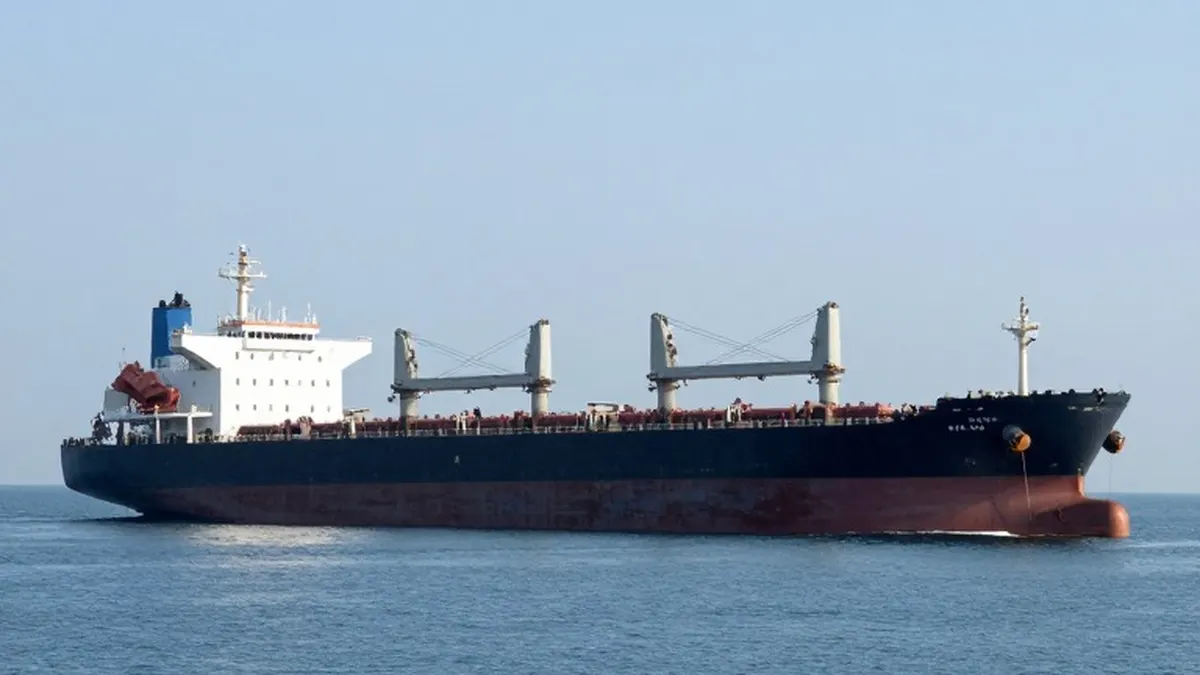
U.S. Central Command announced on Friday that American forces disabled a commercial vessel on Thursday that was attempting to evade the naval blockade imposed on Iranian ports. The incident involved a bulk carrier identified as the Palau-flagged M/V Pacific Archer. According to the military, the crew of the ship made multiple attempts to pass through the blockade despite receiving repeated warnings from U.S. forces.
The vessel had departed from Bandar Abbas, a major port city in southern Iran, when it was targeted. U.S. military aircraft launched precision munitions that struck the stern of the Pacific Archer. The impact successfully disabled the ship's propulsion system, effectively halting its movement. The military reported that the civilian crew remained unharmed during the operation. Centcom also released an unclassified eight-second video showing the moment the munition hit the vessel.
This latest action is part of a broader maritime strategy that American forces have maintained since resuming the blockade in mid-July. Prior to this current phase, the U.S. had enforced a similar blockade from mid-April until late June during the initial stages of the conflict between the United States, Israel, and Iran. The objective of the blockade is to restrict the flow of goods and resources through Iranian sea routes.
Adm. Brad Cooper, the commander of Centcom, highlighted the economic impact of these measures in a statement released on October 16. He estimated that the blockade has cost the Islamic Republic approximately $25 billion in oil revenue. Cooper noted that this financial loss directly affects the Iranian Revolutionary Guard. He emphasized that, aside from approved humanitarian aid, Iran has had no exports or imports by sea, imposing devastating costs on the country's security apparatus.
The military marked the 130th consecutive day of the blockade last weekend. In a post on the social platform X, Centcom stated that the operation is preventing the Revolutionary Guard from exporting billions of dollars worth of crude oil. The command provided updated statistics on Friday, noting that its forces have redirected 158 compliant commercial vessels. In contrast, six other ships that refused to comply with the blockade orders have been disabled.
Centcom urged all mariners operating in the Gulf of Oman and the approaches to the Strait of Hormuz to pay close attention to the blockade warnings issued by its forces. The command continues to monitor the waterway to ensure the effectiveness of the maritime restriction. The situation remains tense as the U.S. maintains its firm stance on limiting Iran's economic activity through sea routes.
The conflict involving Iran is set to reach the nine-month mark on Saturday. President Trump commented on the duration of the war on Thursday, stating that the conflict will end sort of whenever he decides to wind it down. His remarks reflect the administration's flexible approach to determining the timeline for a resolution to the hostilities.
Financial details regarding the conflict were provided earlier this month. During a Senate Armed Services Committee hearing on November 13, Pentagon budget official Arthur Miller informed Sen. Richard Blumenthal that the war had cost taxpayers $48.3 billion. This figure encompasses munitions costs, equipment replacement expenses, and general operational costs. However, Miller clarified that this total does not include the full extent of damage inflicted on U.S. military facilities in the Middle East by Iranian forces.
More News · National news · Report a business · Got a Story?