Prince George's County identifies 10 sites for potential micro-housing
County planners aim to address a 36,000-unit shortage by exploring smaller homes, though 94% of local land remains zoned for single-family units.
By Tomas Gonzalez ·
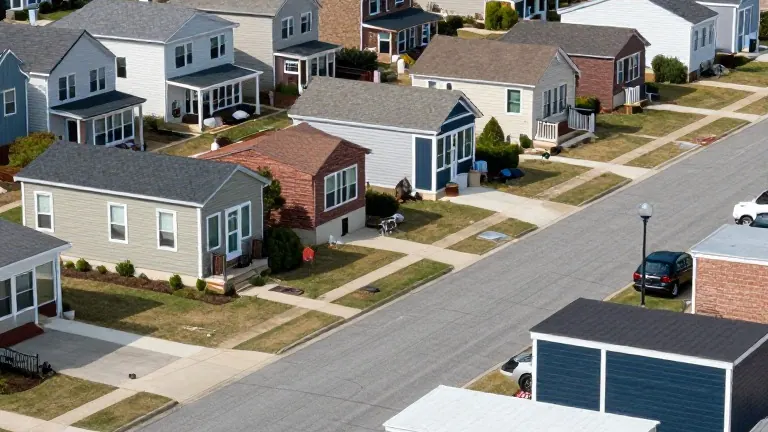
Prince George's County officials have identified approximately 10 parcels of county-owned land suitable for compact housing developments, according to Jonathan Butler, director of the Department of Housing and Community Development. The agency is currently evaluating these sites with planners as part of an effort to expand homeownership options.
The push for smaller dwellings responds to a projected shortage of 36,000 housing units by 2030, as calculated by county planners. Andrea Gilles, chief of the community planning division at the Maryland-National Capital Park and Planning Commission, stated that the county is not keeping pace with the number of new homes required to meet regional demand.
"We are not keeping pace with the amount of rooftops or houses that [the Metropolitan Washington Council of Governments] has said we need moving into 2030," Gilles said. She added that the issue extends beyond unit counts to the specific types of housing available to changing populations.
Casey Dawkins, a professor of urban studies and planning at the University of Maryland, attributed the shortage to a gap between stagnant incomes and rising housing costs. "Incomes haven’t been rising as fast as housing prices have," Dawkins said. "There’s a growing number of people who simply don’t have enough income to sort of buy that first home."
County Council members Jolene Ivey and Sydney Harrison hosted a town hall in Largo last week to discuss "microhousing communities" with residents. Ivey noted that she and Harrison have spent months meeting with planning staff to understand the challenges of building smaller homes. She emphasized the need to involve potential buyers and neighbors early in the decision-making process.
Gilles outlined several forms of compact housing during the session, including tiny homes of 400 square feet or less, pallet homes of 300 square feet, and cottages of 900 square feet. She also described clusters of smaller detached homes built on reduced lot sizes or grouped around shared green spaces. "What the research is telling us is that there is a desire for many different housing types that we don’t see today," Gilles said.
Current regulations pose a major barrier to this expansion. The Prince George's County Planning Department reports that 94% of all residential land in the county is zoned exclusively for single-unit housing development. Dawkins said that implementing compact housing would likely require a new zoning category or a reduction in allowable lot sizes. "One of the biggest barriers is probably the zoning itself," Dawkins said.
Brittney Drakeford, an urban planner and county native, pointed to older neighborhoods like Cottage City and Seat Pleasant as examples of smaller-scale housing that has become less common in new construction. She noted that current lot coverage requirements make it virtually impossible to replicate those neighborhoods today, despite research showing that smaller lots and houses support affordability.
A 280-square-foot tiny home built by Prince George's County Public Schools students illustrated these regulatory hurdles. The home on wheels was auctioned in October but drew no bids. County Executive Aisha Braveboy purchased the unit for the county. Under current rules, a home on wheels cannot serve as a permanent primary residence.
Ivey and Harrison plan to hold additional community listening sessions across the county to gather feedback on preferred housing types and resident concerns. Ivey encouraged residents to submit their thoughts directly to her office. "We have all kinds of housing already in Prince George’s County, except for this," Ivey said.