Sanchez Faces Rail Crisis as Train Crash Kills 69 Before Election
A deadly collision near Toledo has shifted Spain's November 29 election debate from housing to infrastructure accountability.
By Tomas Gonzalez ·
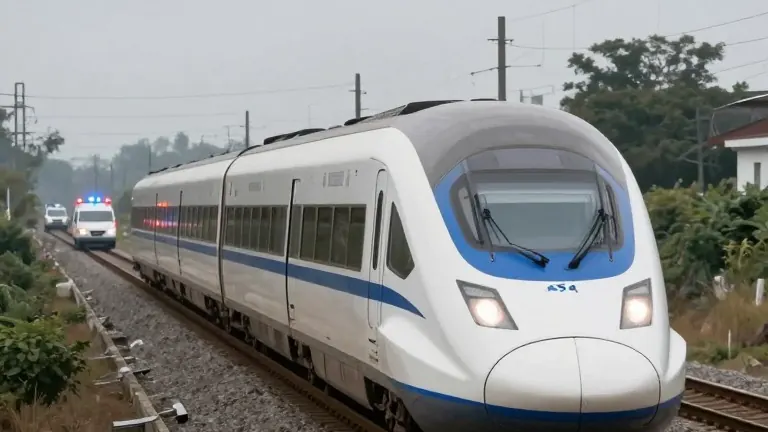
Sixty-nine people died in a high-speed train collision near Toledo on Wednesday morning. The crash occurred at 8.53 a.m. local time, when a train traveling from Madrid to Seville struck the rear of a stationary train on the same track. This second fatal accident in nine months has abruptly altered the trajectory of the upcoming election.
Prime Minister Pedro Sanchez posted a message on X shortly after 9 a.m., declaring there were many reasons to be optimistic about the country. His Socialist Party had planned to focus the campaign on the housing crisis. However, news of the crash emerged less than an hour later, forcing the government to pivot its messaging immediately.
The Popular Party, led by Alberto Nunez Feijoo, is currently leading in the polls. Feijoo stated that the moment is to respect the dead while answering the tough questions Spaniards are asking. He announced that his party would suspend campaign activities for two days. This pause contrasts with the far-right Vox party, which plans to continue its critique of the government.
Santiago Abascal, the leader of Vox, posted on X that the party would not maintain a complicit silence. He described the handling of affairs under Sanchez as criminal and vowed to work tirelessly until Spain rid itself of the current government on November 29. Hundreds of demonstrators, mostly from the far-right, gathered outside the Transport Ministry to demand Sanchez's resignation. A banner at the scene read that Spain can no longer take it.
Officials have identified a failure in the LZB train-control system as a primary factor in the crash. This system has been used on the Madrid-Seville line since the 1990s. Transport Minister Oscar Puente described the network as reliable and safe, though he acknowledged the limits of equipment and human error. His comments did not stop the debate over the state of the infrastructure.
Isabel Pardo de Vera, the former head of Adif, the state railway infrastructure manager, criticized the government. She questioned the pace of the transition from the older LZB system to the European Rail Traffic Management System. Her remarks raised questions about whether warnings regarding the network were adequately addressed by the current administration.
The crash revives memories of the 2013 derailment at Angrois, which killed 80 people. Spain's high-speed rail network carried approximately 45 million passengers last year. It is considered a flagship public service alongside the healthcare system. Public confidence in the system remains low following the previous disaster.
A survey conducted in January after the last fatal crash found that 57 percent of respondents believed rail services had deteriorated since Sanchez took office. Nearly 60 percent said they had little or no confidence in the railway system. The current accident has intensified scrutiny of the government's management of essential services.
Sanchez's political position is complicated by other challenges. His party has faced corruption scandals involving his inner circle, including investigations targeting his wife and brother. The government also faced criticism after 80,000 migrants crossed into Ceuta in late July. Right-wing parties and security personnel accused the Socialists of failing to invest in border infrastructure despite warnings.
The election is scheduled for November 29. Analysts suggest the crash gives the conservative opposition new grounds to challenge the government on competence. Yolanda Roman, a public affairs director, noted that the political framing of the election changed dramatically. The Socialists are now at 26.7 percent in the latest polls, trailing the Popular Party at 31.5 percent. Vox holds the third position with 19.1 percent.
Source: Al Jazeera