SpaceX Rejects Three Military Contracts; Spanish Rocket Nears Final Assembly
The private launch giant passed on US Space Force deals, while a European small-lift vehicle completes its integration phase ahead of a 2027 debut.
By Andrew Fletcher ·
SpaceX has officially declined three launch contracts offered by the United States Space Force, marking a significant shift in how the company allocates its commercial and government work. The decision came as a surprise to industry observers, given the usual high demand for the company's launch services. By passing on these military assignments, SpaceX is signaling a continued focus on other priorities within its vast portfolio, including the development of its Starship vehicle and civil space missions.
This rejection coincides with new technical findings regarding the Starship program. A NASA safety panel indicated that the vehicle may require as many as 22 on-orbit refueling operations to support a lunar landing mission. This figure underscores the complexity of the in-space propellant transfer technology that is central to the ambitious lunar architecture. The company continues to refine these processes, which are critical for ensuring the mission's success and safety.
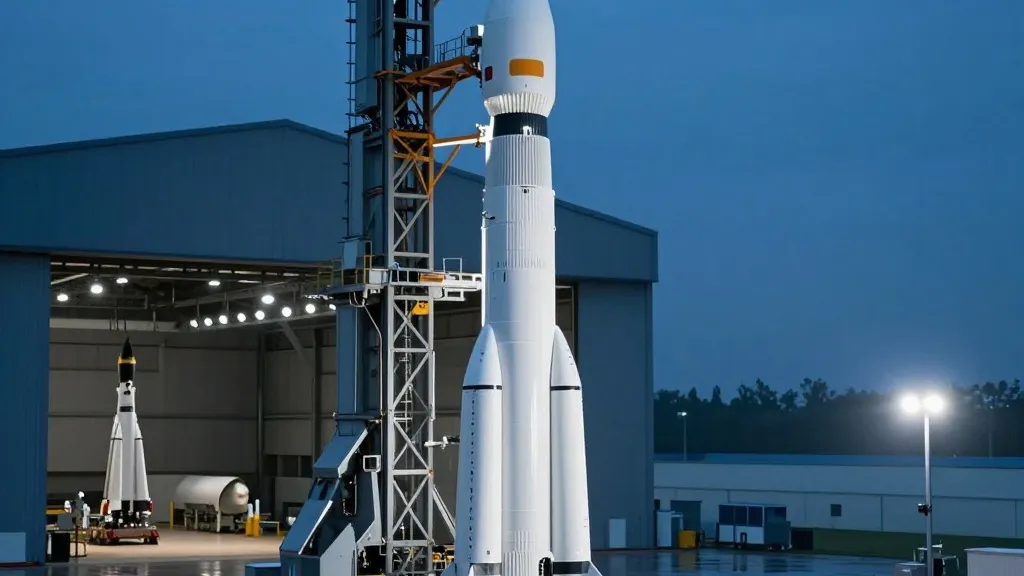
While American news dominated the headlines, significant progress was made in Europe. PLD Space, a Spanish aerospace company, announced that its Miura 5 rocket is nearing final integration. The vehicle is scheduled for its inaugural launch next year, representing a major milestone for the small-lift sector in Europe. The company has already manufactured three units of the Miura 5, with the first two designated for qualification tests of key system elements.
Raúl Torres, the CEO of PLD Space, provided an update on October 19, highlighting the benefits of their production approach. He noted that manufacturing three vehicles simultaneously allowed their teams to work continuously across different production stages. This parallel development strategy enabled the engineers to apply lessons learned from each qualification campaign directly to the final launch vehicle, ensuring a more robust and tested design before its first flight.
The current status of the Miura 5 program involves rigorous testing at the company's facility in Teruel. One second stage is now fully integrated and has begun system-level testing under conditions that mimic actual operating environments. This phase includes a wet dress rehearsal and a static hot-fire test, which are essential steps to verify the reliability of the rocket's propulsion and control systems. The company targets a first flight for this small-lift vehicle before mid-2027.
In North America, another startup is preparing for a significant capital raise. Reaction Dynamics, based in Canada, is seeking to raise $350 million to support its growth. The company plans to use the funds to expand its workforce from its current 68 employees to more than 350. This hiring push is intended to accelerate the development of its Aurora rocket, a small-lift vehicle that the company hopes will reach orbit in 2028.
Reaction Dynamics is not stopping at a single vehicle. The company has also announced plans to develop a medium-lift rocket named Borealis. This next-generation vehicle is targeted for a debut by 2031, indicating the company's long-term strategy to capture a larger share of the launch market. The move reflects a broader trend in the industry where startups are aiming to scale up their operations and vehicle capabilities rapidly.
These developments highlight the dynamic nature of the current space launch landscape. From major players like SpaceX making strategic contract decisions to emerging companies like PLD Space and Reaction Dynamics advancing their hardware, the industry is moving quickly. Stakeholders are watching these milestones closely, as they set the stage for the next decade of space exploration and commercial activity.
As the industry looks ahead, the focus remains on execution and reliability. Whether it is integrating a Spanish small-lift rocket, testing a NASA safety panel's refueling assumptions, or raising capital for Canadian startups, the common thread is the push toward more frequent and accessible space access. The coming months will reveal how these initiatives progress toward their respective launch windows.
Source: Ars Technica