Supreme Court rejects Poppleton residents' challenge to La Cité Development
The denial closes a two-year legal battle over the stalled redevelopment of a West Baltimore neighborhood.
By Tomas Gonzalez ·
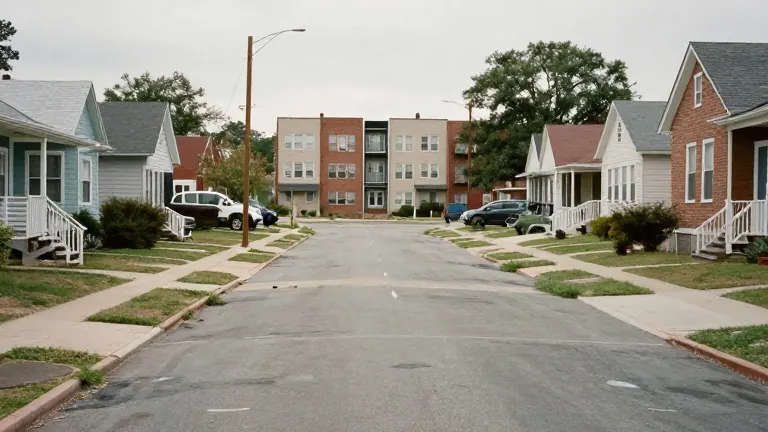
The U.S. Supreme Court denied a petition to hear the case concerning the failed redevelopment of the Poppleton neighborhood in West Baltimore. This decision ends a two-year legal fight initiated by residents who claimed the project harmed their community.
The Poppleton Neighborhood Association and six residents filed the original lawsuit in federal court in 2024. They sued New York-based La Cité Development and other parties. The suit came two decades after the developer promised to transform the area into a district resembling Manhattan.
The plaintiffs argued that the eminent domain process left them suffering from neighborhood destruction with limited rebuilding. Today, much of the area consists of vacant land owned by the city but controlled by La Cité. The developer has completed only a two-building apartment complex on North Schroeder Street.
A grocery store promised at that complex never opened. Earlier this year, state lawmakers redirected a $500,000 grant intended for the store to Open Works Baltimore, a nonprofit planning a second location in West Baltimore.
After losing in federal court, the residents appealed to the 4th Circuit Court of Appeals. A panel of judges ruled that the residents had standing to sue and had been harmed. However, the court found no legal recourse because the plaintiffs' homes had never been formally taken.
This year, the residents petitioned the Supreme Court, which accepts only a small fraction of cases. Sonia Eaddy, president of Poppleton Now and one of the plaintiffs, said the current residents and their property values are suffering from the redevelopment. She stated that the case was about exposing how cities use eminent domain to benefit private developers at the expense of residents. "This case is bringing the awareness," Eaddy said.
Tom Prevas, the Baltimore attorney who represented the residents pro bono, said he felt morally compelled to push the case to the high court. "They’re getting a really raw deal," Prevas said of the neighborhood. "They have gotten a raw deal, and they continue to get a raw deal. And people should be helping them more than they are."